• Skip to primary navigation
  • Skip to content
  • Skip to footer

We Made a Difference. We Made it Together. WEMADEIT.

  • About WEMADEIT
    • Donor
    • Partners
      • Toronto Metropolitan University
      • Ontario Tech University
      • University of Waterloo
      • Western University
  • For Students
    • Blog
    • Getting There
      • Engineering Disciplines
      • Student Life
      • Where Can I Study?
      • What You Don’t Know About Engineering
      • ENG BLING
    • Black Students
    • Indigenous Students
    • 2SLGBTQIA+ Students
    • Women and Girls
  • For Parents
    • Where Can You Study Engineering?
    • What is Engineering?
  • For Undergrads
    • Gaining work experience
    • Peer Mentorship
    • One Awards
    • Next Generation in Power
    • New Grad Program
  • For Teachers
    • Teacher Resources
  • Getting Involved
  • Contact Us
    • Newsletter Signup

wemadeit

Interested in getting your hands dirty and making a real difference in the engineering space?

by wemadeit

Interested in getting your hands dirty and making a real difference in the engineering space?

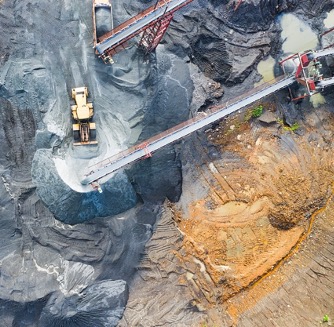
Interested in getting your hands dirty and making a real difference in the engineering space? Check out geotechnical engineering, a branch that focuses on soil mechanics! Now — what is soil mechanics?

Put simply, it’s the examination of the different components that make up the ground, to figure out how it’ll affect an engineering project. This may seem insignificant, but it’s super important — you can’t build a foundation on soil that can’t support it! Because of this, geotechnical engineering affects both our environment and people’s safety!

In this field you get to:

🏠 Support the designing of new buildings, bridges and roads

🪨  Analyze the land to determine its safety and reliability

🌿Assess how the structure would affect the environment

⛰️ Calculate and assess how much weight the ground can take, and also the stability of cliffs and slopes

Cool, right? Want to learn more? As a branch of civil engineering, you can specialize in geotechnical engineering while earning a civil engineering degree!

#geotechnicalengineering

Filed Under: Uncategorized

Have you ever considered all the cool opportunities out there in computer engineering?

by wemadeit

Have you ever considered all the cool opportunities out there in computer engineering?

Calling all computer lovers 🚨Have you ever considered all the cool opportunities out there in computer engineering? These engineers create and test things that are run and used by computers, like software and hardware. Here’s a list of awesome things you could work on with one of these degrees:

  1. Video Games 🎮: Are you a gaming fanatic? Well, why not make that your career? There are so many opportunities for people with computer engineering backgrounds in the gaming industry. Use your programming skills to turn a designer’s vision into reality!
  2. Hacking ⌨️ : You’ve probably heard of hacking before, but did you know that it can be done for good? That’s right — ethical hacking is a thing. Ethical hackers get paid to look for and find any weaknesses in an organization or business’s online system.
  3. Medical Technology 🏥: When you think of computer engineering, your mind might not jump right to saving lives, but that’s exactly what you can do in this field. By designing things like information systems for hospitals, both treatment and diagnoses can improve from more data available!

Image source: https://www.pexels.com/photo/a-woman-playing-a-video-game-7915289/

Sources: https://www.murdoch.edu.au/news/series/series-articles/future-in-technology/have-you-thought-about-these-eight-careers-in-gaming

https://www.csoonline.com/article/3238128/what-is-ethical-hacking-and-how-to-become-an-ethical-hacker.html
https://www.careerguide.com/ask/t/what-are-the-most-interesting-things-i-can-do-while-working-as-a-computer-engineer
https://www.uopeople.edu/blog/5-reasons-why-youll-fall-in-love-with-computer-engineering-jobs/

Filed Under: Uncategorized

Always been interested in flying objects? Curious about the vast unknown above our heads🤔?

by wemadeit

Always been interested in flying objects? Curious about the vast unknown above our heads🤔?

Always been interested in flying objects? Curious about the vast unknown above our heads🤔? Why not check out aerospace engineering — these engineers design and create all sorts of flying machines! Here are 3 cool things you could work on with a degree in aerospace:

  1. Aircraft Designs ✈️: How many times a day do you look up to the sky and notice an airplane flying overhead? Now, imagine being part of the team creating them! Aircraft designers make these powerful machines for both air and space travel.
  2. Space Missions 🚀: When we’re younger, many of us dream about being astronauts. Aerospace can help make this a reality! Join a space expedition as a pilot or crew member, or even as a mission or payload specialist! Whether you’re interested in tech or flying a spacecraft, aerospace is an amazing entry point!
  3. Technical Communicating 🗣️: Never underestimate the value of good communication — being able to explain technical terms and words in an easy-to-understand way is extremely valuable! And, technical communicators do just this! They’re the link between the crew up in space and the people down on Earth!

Image credit: https://www.pexels.com/photo/flight-sky-earth-space-2166/

Sources: https://news.fit.edu/archive/8-cool-jobs-can-get-aerospace-engineering-degree/

https://www.bachelorsportal.com/articles/607/5-jobs-that-make-studying-a-bachelors-in-aerospace-worth-it.html

Filed Under: Uncategorized

Decoding Engineering Jargon: Making Sense of Complex Projects

by wemadeit

Decoding Engineering Jargon: Making Sense of Complex Projects

Sometimes, when reading about different engineering projects, the words they use can make it feel like they’re speaking a completely different language! Have no fear, we’re here to break down some of these terms 👊:

⚙️ STEM: You’ve probably heard this one before, but maybe you don’t know what it stands for! STEM is an acronym that means science, technology, engineering, and mathematics.

⚙️ Sustainability: With climate change being a big concern for engineers, this term gets used a lot! It refers to using the Earth and its natural resources in a way that won’t compromise our planet, or negatively impact humans years down the road.

⚙️ Artificial Intelligence: Also known as AI, this refers to a computer or computer controlled robot that is able to carry out tasks that require some kind of thinking — meaning it normally would have to be done by humans!

⚙️ Machine Learning: This refers to technology that, through the use of AI, is able to learn and improve its systems and processes without being programmed — or from any help from humans. It’s able to do this by observing and studying patterns and data!

Sources:

Image Source: https://www.pexels.com/photo/young-annoyed-female-freelancer-using-laptop-at-home-3808008/

Sources: https://www.mcgill.ca/sustainability/files/sustainability/what-is-sustainability.pdf

https://www.britannica.com/technology/artificial-intelligence

Filed Under: #shareABLE, engSPIRATIONAL

Engineering a Better World: Goal #11: Sustainable Cities and Communities

by wemadeit

Engineering a Better World: Goal #11: Sustainable Cities and Communities

Have you ever considered how a city apartment building could be used to help reduce carbon dioxide from the atmosphere? Engineers across the globe are asking questions just like this to help make cities and communities more sustainable, as well as to contribute to the SDGs. The SDGs, also known as the Sustainable Development Goals, are 17 goals laid out by the United Nations that aim to make the Earth a better and more sustainable place to live.

Here are 3 innovative and unique ways engineers are working towards Goal #11: Sustainable Cities and Communities.

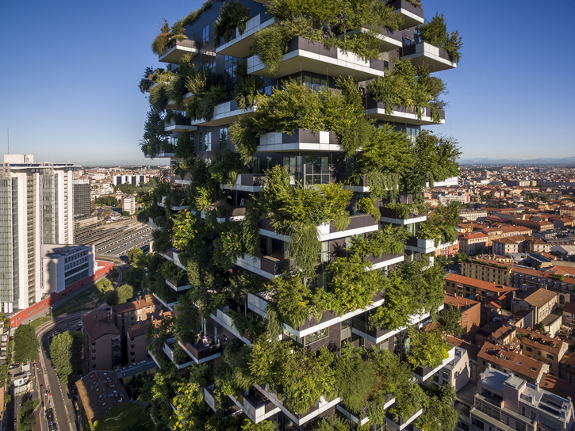
Vertical Forest

Have you ever looked at the top of an apartment building and noticed a few trees growing on the roof? Well, picture that times about 800! This is called a Vertical Forest, and was first designed in Milan, Italy. It was created with the purpose of reducing air pollution and producing new, clean oxygen within cities. Trees are able to do this through the process of photosynthesis. Their leaves take in carbon dioxide, water, and energy from the sun, and turn it into food for them to eat, producing oxygen in the process! This is especially impactful in cities, which account for 70% of the world’s carbon dioxide emissions. These buildings are not only beautiful, but help our cities stay healthy!

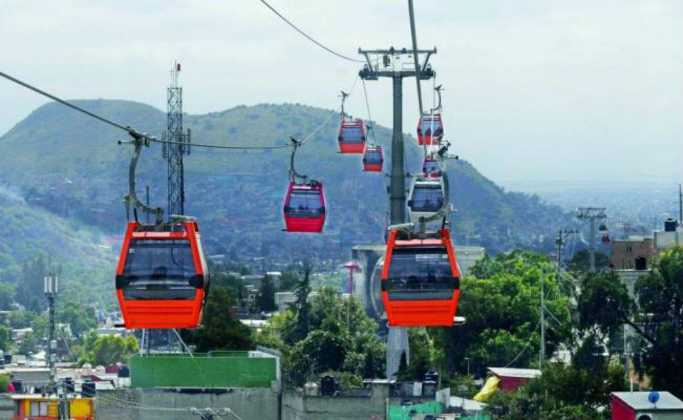
Mexicable Gondolas

Cities have a lot of traffic due to the people who drive into the city to work, and those who already live there. This is the case in Mexico City, where serious traffic is not just an annoyance, but a health concern as well. As a car is driven, it burns gasoline which creates harmful pollutants that enter the atmosphere. In Mexico City specifically, which is surrounded by mountains, that pollution stays trapped above the city. In 2016, Mexico City only had 26 days with acceptable air quality levels! As a solution to this, the city introduced gondolas called the Mexicable, which allows citizens to glide overhead of the traffic. These produce less emissions, and it is estimated that its invention allowed 5800 cars to be taken off the roads, reducing 17,400 tons of carbon emissions. The use of gondolas as public transportation is a sustainable way to travel and reduce car use!

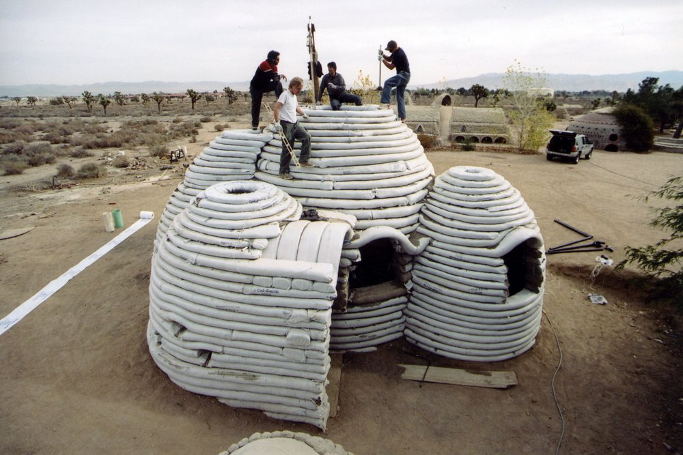
Calearth Sandberg Homes

Did you know that across the globe, about 1.6 billion people don’t have access to adequate housing? The non-profit organization CalEarth is helping change this with SuperAdobe — sustainable, durable and low-cost homes using sandbags! The structures are made in a dome shape by layering long sandbags on top of each other. This simplistic design does not require heavy machinery and can be constructed by anyone. To make the design permanent, a layer of plaster is applied to the outside, protecting the home from weather. They’ve been endorsed by the United Nations, and these sandbag homes can currently be found in at least 49 countries across the world!

Through engineering, we have the power to make the Earth a better place and improve the quality of life of people everywhere. Whether it’s in a big city or a rural community, by putting our minds together to come up with unique, sustainable solutions like these, everyone benefits.


Sources

https://www.stefanoboeriarchitetti.net/en/project/vertical-forest/
https://www.smartmeetings.com/magazine_article/vertical-forests-new-green-architecture

https://www.c40.org/why_cities#:~:text=Cities%20consume%20over%20two%2Dthirds,levels%20and%20powerful%20coastal%20storms.

https://www.usda.gov/media/blog/2015/03/17/power-one-tree-very-air-we-breathe#:~:text=Through%20a%20process%20called%20photosynthesis,and%20released%20by%20the%20tree.

https://www.bdcnetwork.com/blog/public-transportation-future-four-new-sustainable-technologies

http://gondolaproject.com/category/engineering/

https://www.theguardian.com/world/2016/jul/06/mexico-city-chokes-on-its-congestion-problem

https://yaleglobal.yale.edu/content/cities-grow-so-do-numbers-homeless#:~:text=Based%20on%20national%20reports%2C%20it’s,population%2C%20may%20lack%20adequate%20housing.

https://www.arch2o.com/7-innovative-low-income-housing-materials-that-might-save-the-world/

https://www.calearth.org/intro-superadobe

https://www.calearth.org/alumni-projects2

Filed Under: #shareABLE, Engineering Disciplines

The World of Animal Prosthetics

by wemadeit

The World of Animal Prosthetics

Are you an animal lover? Have you ever been curious about how engineering could possibly help the millions of species that exist on Earth? One of the ways engineers can do this is through the use of prosthetics!

Prosthetics are artificial limbs or devices, created with the purpose of replacing missing body parts for people who have either lost limbs, or were born without them. This isn’t just for humans though — this technology is now being increasingly applied to animals.

The world of animal prosthetics is very broad, and has great variation. The prosthetics are made by licensed mechanical engineers who help increase an animals’ mobility based on their specific needs. This includes body parts such as tails, fins, legs and beaks!

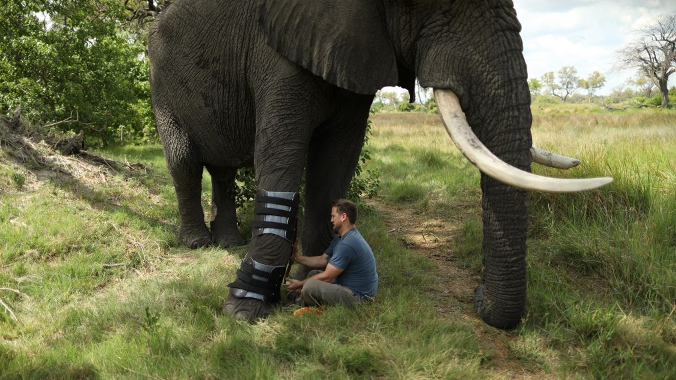
For dogs with mobility problems, for example, where their front legs or back legs are injured, the use of a specifically designed cart with wheels allows them to be able to move freely. An eagle who lost part of its beak was able to be helped by engineers by 3D printing a new, sturdy one made of plastic! An elephant who lost the lower half of its leg stepping on a landmine was able to have a new, artificial leg after engineers created one for her.

With this being said, the potential to help is endless. Mechanical engineers in this profession draw on their wide bank of knowledge to come up with appropriate and advanced solutions using the most beneficial materials.

Filed Under: #shareABLE, engSPIRATIONAL

Next Page »

Footer

Menu

  • About WEMADEIT
    • Donor
    • Partners
      • Toronto Metropolitan University
      • Ontario Tech University
      • University of Waterloo
      • Western University
  • For Students
    • Blog
    • Getting There
      • Engineering Disciplines
      • Student Life
      • Where Can I Study?
      • What You Don’t Know About Engineering
      • ENG BLING
    • Black Students
    • Indigenous Students
    • 2SLGBTQIA+ Students
    • Women and Girls
  • For Parents
    • Where Can You Study Engineering?
    • What is Engineering?
  • For Undergrads
    • Gaining work experience
    • Peer Mentorship
    • One Awards
    • Next Generation in Power
    • New Grad Program
  • For Teachers
    • Teacher Resources
  • Getting Involved
  • Contact Us
    • Newsletter Signup

Search

Teacher Login

Register | Lost your password?

  • Facebook
  • Instagram
  • Twitter

© 2026 · WEMADEIT | Site Design by rtraction