• Skip to primary navigation
  • Skip to content
  • Skip to footer

We Made a Difference. We Made it Together. WEMADEIT.

  • About WEMADEIT
    • Donor
    • Partners
      • Toronto Metropolitan University
      • Ontario Tech University
      • University of Waterloo
      • Western University
  • For Students
    • Blog
    • Getting There
      • Engineering Disciplines
      • Student Life
      • Where Can I Study?
      • What You Don’t Know About Engineering
      • ENG BLING
    • Black Students
    • Indigenous Students
    • 2SLGBTQIA+ Students
    • Women and Girls
  • For Parents
    • Where Can You Study Engineering?
    • What is Engineering?
  • For Undergrads
    • Gaining work experience
    • Peer Mentorship
    • One Awards
    • Next Generation in Power
    • New Grad Program
  • For Teachers
    • Teacher Resources
  • Getting Involved
  • Contact Us
    • Newsletter Signup

wemadeit

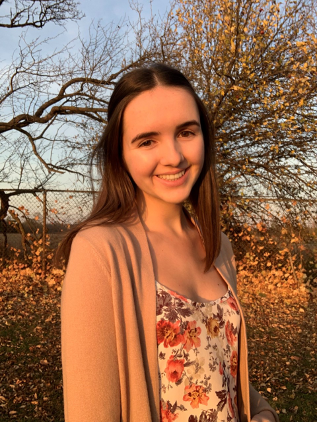
engHERO: Amanda Marshal

by wemadeit

engHERO: Amanda Marshal

What is one thing you wish you knew about engineering when you were in high school?

When I was in high school, I wish I had more knowledge on the various disciplines beyond the generic answer that civil builds bridges, mechanical builds cars, mechatronics builds robots, etc. The disciplines are all so much more than that and even have specialties within themselves. I think this is important as regardless of what path you take you will specialize at some point and that will determine your long-term career. Engineering itself is very broad and it is crucial to understand the interworking’s of it.

What made you want to pursue engineering?

What I love about engineering are the vast opportunities and options that it offers. A career in engineering is challenging, everchanging, and fast-paced, I personally find that interesting and intriguing. A career in engineering is also reputable as it is a well-respected field and therefore is a profession to be proud of. Also, I knew I would enjoy learning the application of the material as it can be applied to explain how everyday things operate.

What branch of engineering is your major and how did you decide on it?

I chose to major in Electrical Engineering. The decision came after lots of questions, considering countless pros and cons, and a few coin tosses. That said, what it really came down to was what I could see myself doing. While considering all the majors that my university offers, I couldn’t imagine myself 10 years down the road doing anything else.

What do you plan on doing with your engineering degree?

After I graduate, I hope to apply my skills somewhere that I can be challenged while working on something that I enjoy. I hope to eventually end up in a role where I can lead my own team and motivate them to complete meaningful projects.

What advice would you give to a young female who is considering the field of engineering, but isn’t sure if it’s right for them?

If any young female has an interest in math and a field of science, I encourage them to pursue engineering. The variety of disciplines within engineering allow for specialization in an area of specific interest and it is a highly rewarding career path. Within the engineering community, there are many resources and support systems for females in engineering, I would recommend using these resources to meet other females in engineering and to get involved within the community.

Filed Under: #shareABLE, engHEROES, engSPIRATIONAL Tagged With: engHERO, engineering, hero, western university

5 Ways to Help Reduce Food Waste

by wemadeit

5 Ways to Help Reduce Food Waste

In the past couple of decades, food waste has been identified by a major issue in many countries. According to a study in 2014, the amount of preventable food waste discarded annually in Canada amounted to over $31 billion in losses, with approximately 47% of food waste produced by consumers. 

Food waste food has many environmental, economic and social impacts. For example, when food ends up in the landfill, a greenhouse gas that is 21x more potent than carbon dioxide is produced and enters the atmosphere and it is estimated that these emissions make up 7% of all of the greenhouse gases produced globally. When you waste food that could have been eaten, you are also wasting the natural and human resources that were used to grow, produce, process and transport that food. Therefore, it is important to practice sustainable eating habits to help reduce the effects of food waste. Although there may be larger scale solutions for engineers to design, below are five solutions you could try to incorporate into your lifestyle to help reduce your food waste at home:

  1. Don’t over buy. Keep track of what you’ve bought and used. Check your fridge and cupboards often to remind you of what’s there so you can use your products before the ‘best-before’ dates. 
  2. Eat produce of all shapes and sizes. There have been new produce brands, such as No Name’s ‘Naturally Imperfect’ that sells items that may not appear perfect but have nothing wrong with the taste at a lower cost. This helps eliminate food waste by consuming the misshapen produce that farmers would typically throw away. You can also use ‘imperfect’ foods in products like drinks, jams, hummus, and spreads! 
  3. Plan ahead. Think about what you’re going to cook and how you’ll use the leftovers. If you don’t think you will be able to go through the food in the week, buy it another time!
  4. Food Donation Programs. Sending food to a food donation program can put your surplus of food to good use by helping address food insecurity rather than going to waste. 
  5. Use your freezer. Freezers are a great way to preserve food to eat at a later date! If you don’t think you can use your food in a timely manner, save it for later by using your freezer. 

References: https://www.bbcgoodfood.com/howto/guide/how-reduce-food-wastehttps://changeforclimate.ca/story/the-problem-of-food-waste

Filed Under: #shareABLE, Health Tagged With: chemical, engineering, food, waste

Jeanette Epps

by wemadeit

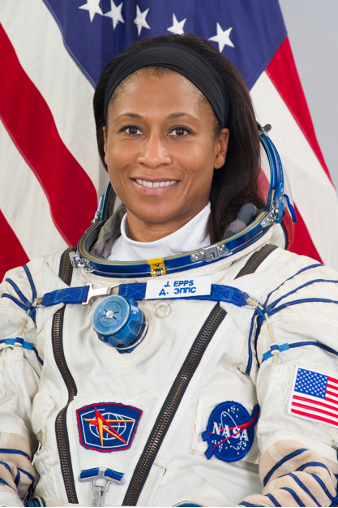
Jeanette Epps

The First Black Woman to Join an International Space Station Crew

ttps://www.nasa.gov/astronauts/biographies/jeanette-j-epps/biography

Astronaut Jeanette Epps is making history by joining NASA’s Boeing Starliner-1 mission, planned to take off in 2021.

This is pretty groundbreaking – she will be the first Black woman to be a part of an International Space Station crew as well as the first to spend a prolonged period of time, working and living in space!

Epp’s resume is definitely an impressive one. Originally from Syracuse, New York, she earned a doctorate in aerospace engineering at the University of Maryland in 2000. She went on to work at the CIA for 7 years before joining NASA’s astronaut corps in 2009!

This will be her first journey into space, where she’ll be living for 6 months aboard the International Space Station.

The ISS is a research laboratory in space. It orbits the Earth, and allows it’s partnering countries to run important experiments and tests.

In 2018, Epps was supposed to go on a different ISS mission and had already been trained when NASA took her off of the job without explanation. Normally, astronauts only get replaced for health or family related issues. Many speculated the reason for this, and some, including Epps’ brother, cited racism as the reasoning behind the decision. In a statement afterwards, a NASA spokesperson said “A number of factors are considered when making flight assignments; these decisions are personnel matters for which NASA doesn’t provide information.”

All in all, Jeanette Epps is making major moves at NASA, and has been her entire career. Her hard work and dedication can serve as inspiration to us all!

References

  • https://www.cnbc.com/2020/08/27/astronaut-jeanette-epps-to-become-first-black-woman-to-join-an-international-space-station-crew.html
  • https://www.nasa.gov/press-release/nasa-astronaut-jeanette-epps-joins-first-operational-boeing-crew-mission-to-space
  • https://www.cnn.com/2020/08/25/tech/nasa-jeanette-epps-starliner-scn/index.html
  • https://www.asc-csa.gc.ca/eng/iss/about.asp

Filed Under: #shareABLE, #surveySAYS, engHEROES, Engineering Disciplines, engSPIRATIONAL Tagged With: black, epps, first, jeanette, space, woman

3 Lessons that 2020 Taught STEM Fields

by wemadeit

3 Lessons that 2020 Taught STEM Fields
source: eSchool News

2020 has been an eye-opening year for many of us, teaching us how to work remotely, attend school virtually and communicate with our loved ones from a distance. STEM fields also learned lot this year as they adapted to the global pandemic. Here are a few of the biggest lessons that the world of STEM learned.

The Interdisciplinary Approach

The pandemic has shown us that when we have people of different perspectives and skills coming together, our work is stronger. Take the COVID-19 vaccine, for example. It wouldn’t have been possible without the work of biomedical engineers, chemical engineers, epidemiologists and researchers (to name few!).

We are Adaptable Beings

To think of ourselves in April, when the seriousness of the pandemic was intensifying, we wouldn’t have been able to imagine adapting to this new normal. Whether you took classes from your bedroom, worked from your living room, or attended meetings online, you adapted to a challenging situation in a very short amount of time. You should be proud of yourself!

Why Wait? Start Now.

If you have ever had an interest in STEM, why wait to explore it? The online resources are more abundant than ever (check out ONWie or VEX Code for inspiration), and the importance of science and technology has never been greater! There is an incredible STEM community waiting for you to join.

Filed Under: #shareABLE, Engineering Disciplines, engSPIRATIONAL Tagged With: engineering, Lessons, STEM

Saving Lives Through Warmth

by wemadeit

Saving Lives Through Warmth

Reference Article

For many of us, it’s hard to imagine going through the winter without your favourite sweater or coat – the things that keep us warm! Being exposed to really low temperatures for a period of time can result in a condition called hypothermia. Did you know that 1.5 million babies die from preventable and treatable causes every year according to the World Health Organization? And, that one of the preventable causes of death babies face around the world is hypothermia?

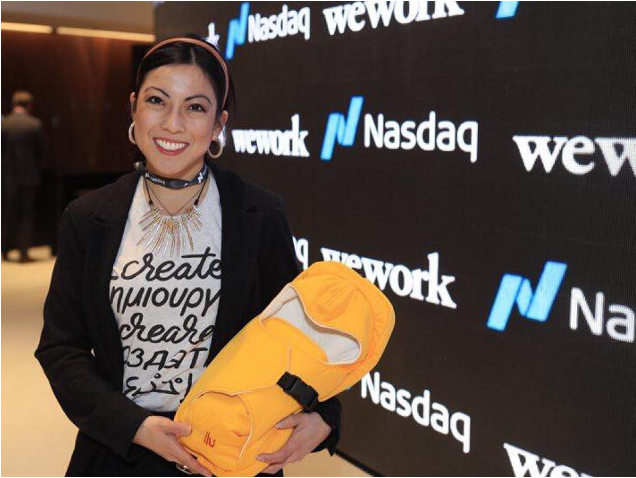
Grace Hsia, a materials science engineer, noticed this issue which led her to create Warmilu, a company dedicated to saving lives through spreading warmth!

The heating pack technology she worked on could produce heat by pushing on an activator disk, operating like a thermal battery and using stored heat. Unfortunately, it was prone to overheating. Grace and her team solved this problem by adding a thermal layer to act as a buffer. Once the heating pack is activated and placed within a pouch in a Warmilu blanket, it heats up, and can maintain a preterm baby’s body temperature for 5-8 hours!

This has the potential to save tons of lives.

Infant fatalities caused by preventable hypothermia across the globe are normally the result of a lack of access to resources like electric incubators. Incubators are small enclosed beds that warm up babies to the temperature they should be. Newborn babies, especially premature ones, have difficulty regulating their own temperature so these devices provide the warmth they need to stay alive. In areas with limited access to incubators, infants occasionally have to share the device, with multiple babies in one machine, which is far from ideal.

Grace and her team’s flagship product is thus a warming incubator blanket for infants, which is now distributed in 30 hospitals in 11 different countries.

Grace and Warmilu exemplify how you can use engineering to build a better world. Combining science and technology with social issues you care about is an incredibly powerful way to create change!

References

https://www.cake.co/conversations/9g8BY7f/grace-hsia-ceo-cofounder-of-warmilu-and-inventor-of-its-warming-technology-stops-by-for-a-cake-panel

https://warmilu.com:

https://warmilu.com/about-us/

Infant Warming
Tech
Why are incubators important for babies in the NICU?

Filed Under: #shareABLE, engSPIRATIONAL Tagged With: engineering, lives, saving, through, warmth

engHERO: Anna Mandra

by wemadeit

engHERO: Anna Mandra

What are you doing these days?

I am an Airworthiness Engineer at Bombardier Aviation (Canadian manufacturer of world-class business jet aircrafts). Currently, I am the Foreign Validation Focal. I support the certification of Bombardier aircraft designs with government authorities in each country that oversee the approval and regulation of civil aviation. In the past, I have been involved in aircraft design, certification and development, including working on the world’s largest and longest-range business jet, the Global 7500.

Also, now that I completed my PhD degree a year ago, I am working on publishing an article in an academic journal.

When did you know you wanted to be an engineer?

I always knew I was going to do something related to math and science – I did well in those subjects. At the same time, I knew I did not want to focus my higher education strictly on mathematical subjects. I liked the idea of the practical application of engineering. I had an appreciation for aircraft after participating in the air cadet programme throughout high school. This and my academic interests led me to pursue aerospace engineering.

What is your proudest accomplishment as an engineer?

My proudest academic accomplishment is completing my PhD, while working full time. Back in high school and undergrad, I never thought I would be capable of developing a complex math model which provided an innovative way of improving the efficiency of drilling. I never imagined I would be able to defend my research in front of experts. It took skills outside of engineering, and I had to push myself beyond my comfort zone. But I am really glad I did.

Work-wise, the best moments are when I am able to bring together a team of engineers with different expertise to complete a project. I was proud to overcome technical and non-technical obstacles within these projects and leverage everyone’s skill sets to come to a solution.

How does your work contribute to society?

As professionals, engineers commit to serve and protect the public in all their engineering endeavours.

In my current role, I guarantee that a design meets the certification standards wherever it is delivered around the world, ensuring the safety of the product. I am part of a team that makes sure Bombardier aircrafts are airworthy, meaning they continue to meet the standards required to fly safely.

My PhD contributes to society because scientific progress is one of the factors driving society. It shapes the next generation of engineers, designs or applications.

Bombardier’s Global 7500 Business Jet
Image Source

Why do we need more women in engineering?

Inventions made by engineers often shape our society, and our future. When women are equally represented in the profession, this will give them an equal opportunity to bring inventions to the market, and to benefit from rewarding careers. Having female representation in engineering brings different perspectives and shows it’s truly for everybody.

What advice would you give to young girls who are thinking of pursuing a career in the STEM field?

When I was in grade 9 and 10, I didn’t think that engineering was something that I would ever pursue. It seemed like this job, where you’re stuck at a desk all day, alone. But, engineering is so much more than that. If you really enjoy math and science, you should follow those passions, which can open many doors.

There are many different opportunities within engineering and in fields such as AI (artificial intelligence), programming (gaming, VR, robotics), and social media, that didn’t exist decades ago. It is never just sitting at a desk– engineering also involves working with large teams of smart, creative people.

Filed Under: #shareABLE, engHEROES, engSPIRATIONAL Tagged With: bombardier, engHERO, engineer, jet

« Previous Page
Next Page »

Footer

Menu

  • About WEMADEIT
    • Donor
    • Partners
      • Toronto Metropolitan University
      • Ontario Tech University
      • University of Waterloo
      • Western University
  • For Students
    • Blog
    • Getting There
      • Engineering Disciplines
      • Student Life
      • Where Can I Study?
      • What You Don’t Know About Engineering
      • ENG BLING
    • Black Students
    • Indigenous Students
    • 2SLGBTQIA+ Students
    • Women and Girls
  • For Parents
    • Where Can You Study Engineering?
    • What is Engineering?
  • For Undergrads
    • Gaining work experience
    • Peer Mentorship
    • One Awards
    • Next Generation in Power
    • New Grad Program
  • For Teachers
    • Teacher Resources
  • Getting Involved
  • Contact Us
    • Newsletter Signup

Search

Teacher Login

Register | Lost your password?

  • Facebook
  • Instagram
  • Twitter

© 2026 · WEMADEIT | Site Design by rtraction