• Skip to primary navigation
  • Skip to content
  • Skip to footer

We Made a Difference. We Made it Together. WEMADEIT.

  • About WEMADEIT
    • Donor
    • Partners
      • Toronto Metropolitan University
      • Ontario Tech University
      • University of Waterloo
      • Western University
  • For Students
    • Blog
    • Getting There
      • Engineering Disciplines
      • Student Life
      • Where Can I Study?
      • What You Don’t Know About Engineering
      • ENG BLING
    • Black Students
    • Indigenous Students
    • 2SLGBTQIA+ Students
    • Women and Girls
  • For Parents
    • Where Can You Study Engineering?
    • What is Engineering?
  • For Undergrads
    • Gaining work experience
    • Peer Mentorship
    • One Awards
    • Next Generation in Power
    • New Grad Program
  • For Teachers
    • Teacher Resources
  • Getting Involved
  • Contact Us
    • Newsletter Signup

health

Bio-lab on a Microchip

by admin

Bio-lab on a Microchip

Procrastinating? We’ve got just the thing! The YTT have pulled together a series of TED Talks that they LOVE. Grab some popcorn and get comfy, because you’re about to get seriously inspired by these amazing engineering projects.

Frederick Balagadde: Bio-lab on a Microchip 
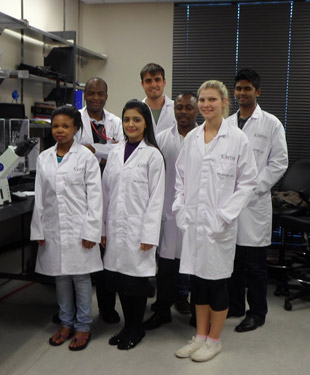
Frederick Balagadde-Lab-Team

What’s this TED talk about?

Frederick Balagadde grew up in sub- Saharan Africa and was effected by loses caused by HIV aids. He made it his mission to help eliminate this problem by creating small diagnostic chips to help identify the virus before it gets out of hand. This “hand held bio lab” can positively affect the lives of million who suffer in third world countries with this terrible disease.


What’s amazing about it?

Using this technology can push diagnostics and patient care to a new level. The device itself is the size of an iPhone and can be taken to remote or inaccessible locations where bio labs and facilities are unavailable. One chip can diagnose up to one hundred people and speeds up diagnosis by a whopping 50%. This small chip could save lives and help people get on track to get the medication and care they need to battle this disease.

How did it inspire you?

Seeing how many people this small device could save really inspired me. One of my engineers worked on a similar diagnostic device as well. These two things have really caused me to look into bio engineering and the development of devices that help save peopled lives. I think that there is nothing more gratifying than the feeling of helping someone or even saving them, and that is what these things do. Even today when we have so much technology and medical intelligence horrible diseases still run ramped in poorer countries and if in the future I could do something to stop that, then that would be a life changing moment for me.

What surprised you?

I think the most surprising thing to me was how just supplying the drugs wasn’t the best solution. In the video it talks about how giving people drugs without properly diagnosing them can lead to terrible mutant forms of the disease that are immune to treatment. They also talked about how these form of HIV could spread to other parts of the world and could become very costly and difficult to treat. It really surprised me how seemingly versatile these diseases can be and showed me how dangerous they really are. Seeing how many people this small device could save really inspired me. One of my engineers worked on a similar diagnostic device as well. These two things have really caused me to look into bio engineering and the development of devices that help save peopled lives. I think that there is nothing more gratifying than the feeling of helping someone or even saving them, and that is what these things do. Even today when we have so much technology and medical intelligence horrible diseases still run ramped in poorer countries and if in the future I could do something to stop that, then that would be a life changing moment for me.

Did you ever have an idea about developing something yourself that solves a problem in the world? Tell us all about it.

Technology isn’t really there yet but I have always wondered about prosthetics that can be used like normal parts of the body. Ones that are able to communicate to the brain using electrical impulses through the nervous system just like normal limbs do. Also I find stem cell research very interesting and graphing new organs that can be used for implantation on a regular basis is becoming a more real and plausible thing so I would love to get into that.
Filed Under: TED talk Tagged With: africa, better world, Diagnostics, Fredrick Balagadde, Hand held biolab, health, Helping People, HIV aids, micro, Saving lives, Testing

The Cheap All-Terrain Wheel Chair

by admin

The Cheap All-Terrain Wheel Chair

Procrastinating? We’ve got just the thing! The YTT have pulled together a series of TED Talks that they LOVE. Grab some popcorn and get comfy, because you’re about to get seriously inspired by these amazing engineering projects.

Amos Winter: The Cheap All-Terrain Wheelchair

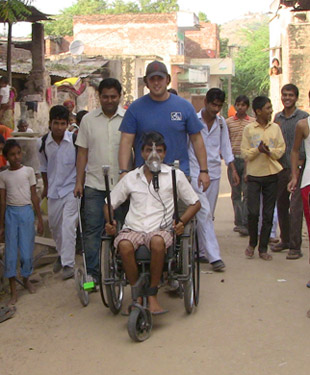
Amos Winter's Wheelchair

What’s this TED talk about?


Affordable accessibility for the disabled,  especially those in third world countries.  

What’s amazing about it?


That design is a process and that you have to work with the people who are actually using the product in order to have success.
Also, it’s amazing how a student/academic was able to create change despite having little experience.
And of course that they helped thousands of people in need because they as engineers saw a problem and fixed it.

How did it inspire you?


It’s cool to be able to see that problems can have simple solutions and all there really needs is for a person to put it all together. Also, the amount of collaboration/communication they used to make it work (their persistence).

What surprised you?

The number of people (40 million) who needed wheelchairs but don’t have one. (I’d known that wheelchairs were expensive and basic but it didn’t occur to me how they weren’t suitable for all places).
 
Also, it surprised me that they would make a high end version of the product as well (not only a social enterprise but also a business/commercial/capitalist product). It shows that socially/world- conscious people are increasingly moving towards helping people but also making a profit/business to go along with it (less purely altruistic action).

Did you ever have an idea about developing something yourself that solves a problem in the world? Tell us all about it.

I once met a lady named Ruth Kwakwa from Ghana. She had opened a liberal arts university in Ghana and had come to Canada to talk about her journey to developing and opening Ashesi University. Like Amos Winter, she saw a need and then worked to meet its needs. She had told the audience: “If something aggravates you, find a solution. You should work on it.” After that, I began to notice small things in my life that could be better: how can we design better umbrellas so they don’t flip inside out due to the wind? Why aren’t pens sold with ink refills to prevent the amount of waste generated by disposable pens (why couldn’t everything just be refillable or come with replaceable parts)? How can I promote fixing broken items instead of throwing them away for new ones? Can houses be made more accessible and safe for the growing number of elderly people (the baby boomers)?


I realize that some of the problems may seem trivial compared to the challenges the world faces (poverty, over population, lack of resources, diseases, hunger, climate change) but that is probably because I’ve yet to be truly exposed to those problems and don’t yet fully understand the perspectives of people who face some of those problems.
Over the years, I have campaigned for many organizations and causes: from getting green bins in school to supporting clean water in Kenya to helping run one of the only gay-straight alliance/accepting differences club in the Toronto Catholic District School Board.
I think as I get exposed (on a personal level) to more problems the world faces, I’ll be able to think of more/better solutions.

Filed Under: TED talk Tagged With: better world, disability, health, hope, MIT, poverty, world changing

Melissa Griffin

by admin

Melissa Griffin

Q&A WITH EngHERO: Melissa Griffin

Melissa Griffin is a Human Factors Analyst, whose work focuses on improving safety by improving the systems that people live and work in. Instead of trying to change how people should act, Melissa and her colleges advocate for changing the system so it’s more natural for people to interact normally.

Q: What did you wish you knew about engineering back when you were in high school?

That engineering is actually really fun! The very first day of frosh week I realized that there was a wonderful community of students who actually liked science and math, and that a lot of them were really fun. I also wish I knew that you can do a lot with an engineering degree, and it doesn’t have to mean you’ll end up behind a desk crunching numbers 24/7. In my current role, I have the chance to get out into the field and spend time with a range of other disciplines and specialists including other engineers, psychologists, doctors, nurses, pharmacists, policy makers, regulatory bodies, researchers and administrators.

Q: What’s your proudest accomplishment as an engineer?

At this point, probably getting my P.Eng. Another proud moment was when I got my first job.

Q: Tell me about a time in your career when your work has been about discovery or curiosity?

The role that I’m in now has a lot to do with curiosity and discovery. I am working in health care research as a Human Factors Engineer and as part of that we get to ask and answer research questions. I also have a lot of freedom in my work to explore areas that interest me. For example, right now I do quite a bit of work with different hospitals and cancer centres, helping them to make their technologies, processes and environments safer for patients and staff. I look at workflows, how people tend to interact with technologies, and how different polices and regulations affect the healthcare system. When we see something out in the field that is of interest, often, if we can find supporters and funding, we are able to further explore these areas to improve patient safety.

Q: What’s your job now (title, company, description)? How did you get there (education, internships, mentors, other experiences)? Where did you think you were going when you started out?

Human Factors Analyst/Engineer at University Health Network (UHN) as part of the research team HumanEra. I am part of a multi-disciplinary team that tries to improve patient safety by improving the systems that people work and live within. We know that people have certain strengths and weaknesses and instead of trying to change how people should act, we advocate for changing the system so it’s naturally easier for people to interact correctly. I had no idea I’d end up where I am now. I started in Mech Eng at Queen’s University, and ended up working in the automotive industry for 2 years, first as a Project Engineer and then as an Account Manager.

After a couple of years there I realized I wanted to do something that had more of a positive impact on other people. I came across the Masters of Clinical Engineering program at U of T, which appealed to me because it included several internships. Through this program I completed a thesis about applying human factors to home care environments, and did an internship at Massachusetts General Hospital (MGH) in the Clinical Engineering department, at the Toronto Rehab Institute in the Dysphagia Lab, and at the Centre for Global eHealth Innovation, where I currently work.

My thesis supervisor was a great influence on me and is now my boss. When I started out, I had no idea this kind of job even existed and didn’t know much about human factors. Having my undergrad Mechanical Engineering degree opened the door for me to get into the Master’s program that led to where I’m working today.

Q: Do you feel your work contributes to society? How so?

I definitely think the work I do contributes to society. Our teams’ mandate is to improve the safety of patients and health care workers by making the systems they work and live in safer. We get to be activists for patients and front line staff and highlight ways in which things could be improved. We also do a fair bit of education for front line staff to help them identify areas of risk, so they can make their own practices safer and more robust.

Q: Why do we need more female engineers?

I think women are able to provide a unique perspective for many engineering problems. In the work I do, I am often interacting with nurses, who predominantly tend to be women so I think it makes it a bit more comfortable and easier for them to open up about what they do and the challenges they face in their day to day jobs. Also, many of the female engineers I know are great mentors. We need more female engineers because we can be creative problem solvers, empathetic, and approach problems from a slightly different perspective than our male counterparts.

Q: Do you have any hobbies/passions that give you a unique perspective in engineering?

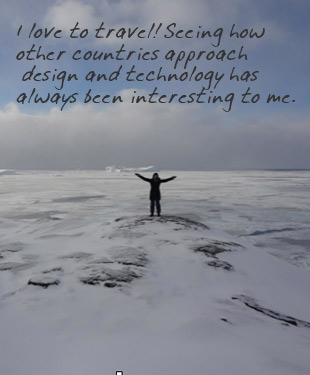
I love to travel and so seeing how other countries approach design and technology has always been interesting to me. There are often several possible solutions to a problem or challenge, especially when it comes to systems and design, and so seeing how different cultures take on these challenges can be inspiring and useful in helping you think about your own engineering challenges.

– – – – – – – – – – – – – – – – – – – – – – – – – – – – – – – – – – – – – – – – – – – – – –Check out where Melissa works! http://ehealthinnovation.org/

Filed Under: engHEROES Tagged With: awesome, education, engbeaut, fun, health, HumanEra, inspirational, risk, safety, travel

Jane Simmons

by admin

Jane Simmons

Q&A WITH EngHERO: Jane Simmons

Jane Simmons is an environmental engineer who has been involved with various awesome projects with Engineers Without Boarders.

Q: What’s one thing you wish you knew about engineering back when you were in high school?

I wish I knew how much of an opportunity there was to make a difference on lots of things I cared about… that engineering wasn’t just a boring math or science subject.

Q: What’s your proudest accomplishment as an engineer?

Before I did my masters I got to work with a small municipality having some trouble figuring out how to calculate their water usage, and I got to work really closely with some people in their homes. We put together an easier way for them to do these calculations. It was a bit of a long process but when we finally got the program up and running and they were able to use it, and really appreciated having it, I think that was one of the proudest moments I’ve had.

Q: Tell me about a time in your career when your work has been about discovery or curiosity?

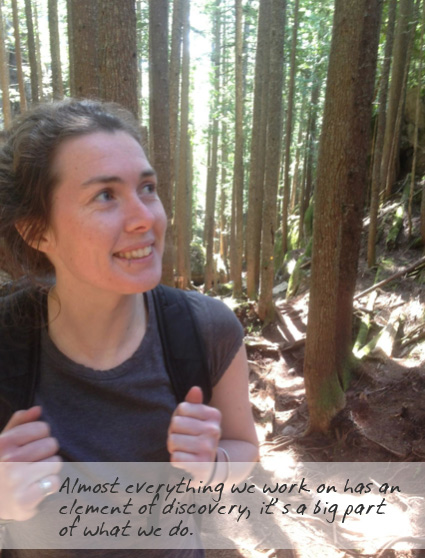
Almost everything we work on has an element of discovery, it’s a big part of what we do.

Q: What are you doing these days?

I’m an environmental engineer in training, about six months away from getting my full engineering designation. I work for an engineering consulting company in their water and waste water group, working on a lot of environmental projects related to water and waste water for municipal clients.

Q: Do you feel your work contributes to society? How so?

Water and waste water affects everyone every single day. A lot of people don’t think about how water gets to their tap, of where is goes when you flush the toilet. It’s sort of an “undercover” important thing that people are affected by.

Q: Why do we need more female engineers?

I think if we’re going to actually solve some of the really big problems, whether it’s climate change, health, related to transportation or anything else, we need to have people from a variety of backgrounds working on them and thinking about it.

Q: Do you have any hobbies/passions that give you a unique perspective in engineering?

I’ve been involved with Engineers Without Borders for about 8 or 10 years now. So much of what they do is about applying the engineering problem solving approach to really important problems that you wouldn’t really think of as being engineering problems. Things like poverty and economic development. So problems that come to me in my daily life and professional life I think, “So how can I approach this problem, and what sort of tools do I have to bring because I am an engineer and because I have that way of looking at things.

– – – – – – – – – – – – – – – – – – – – – – – – – – – – – – – – – – – – – – – – – – – – – –
Check out Engineers Without Borders!

Filed Under: engHEROES Tagged With: climate change, discovery, engbeaut, environment, EWB, fun, health, inspirational, transportation, travel, water

Footer

Menu

  • About WEMADEIT
    • Donor
    • Partners
      • Toronto Metropolitan University
      • Ontario Tech University
      • University of Waterloo
      • Western University
  • For Students
    • Blog
    • Getting There
      • Engineering Disciplines
      • Student Life
      • Where Can I Study?
      • What You Don’t Know About Engineering
      • ENG BLING
    • Black Students
    • Indigenous Students
    • 2SLGBTQIA+ Students
    • Women and Girls
  • For Parents
    • Where Can You Study Engineering?
    • What is Engineering?
  • For Undergrads
    • Gaining work experience
    • Peer Mentorship
    • One Awards
    • Next Generation in Power
    • New Grad Program
  • For Teachers
    • Teacher Resources
  • Getting Involved
  • Contact Us
    • Newsletter Signup

Search

Teacher Login

Register | Lost your password?

  • Facebook
  • Instagram
  • Twitter

© 2026 · WEMADEIT | Site Design by rtraction