• Skip to primary navigation
  • Skip to content
  • Skip to footer

We Made a Difference. We Made it Together. WEMADEIT.

  • About WEMADEIT
    • Donor
    • Partners
      • Toronto Metropolitan University
      • Ontario Tech University
      • University of Waterloo
      • Western University
  • For Students
    • Blog
    • Getting There
      • Engineering Disciplines
      • Student Life
      • Where Can I Study?
      • What You Don’t Know About Engineering
      • ENG BLING
    • Black Students
    • Indigenous Students
    • 2SLGBTQIA+ Students
    • Women and Girls
  • For Parents
    • Where Can You Study Engineering?
    • What is Engineering?
  • For Undergrads
    • Gaining work experience
    • Peer Mentorship
    • One Awards
    • Next Generation in Power
    • New Grad Program
  • For Teachers
    • Teacher Resources
  • Getting Involved
  • Contact Us
    • Newsletter Signup

admin

Where Can I Study Engineering?

by admin

The following schools offer engineering programs in Ontario:

Carleton, Guelph, Lakehead, Laurentian, McMaster, Ottawa, Queen’s, Toronto Metropolitan University, University of Toronto, Ontario Tech University, University of Waterloo, Western, Windsor, York

The Path to Engineering

“I think the best way to change a girl’s mind so that she can keep her doors open for a future in STEM, is to show her why. To be able to see the future is power, and if a girl can see what she might be able to become and how she can change, and make a difference for the better (contribute to society) It would really make all the difference. We hear that we should take math and science in the future and not close our doors for better options, but the question is why? Why should I be interested in a future in STEM. To be shown what might happen if I were to pursue something would make me so much more open to the concept of not closing my doors.”

In Canada, there are 40 institutions offering 239 engineering accredited programs. That’s a TON of choice! In university, you can earn your engineering Bachelor’s degree in 4 years.

“Tell her that even if she doesn’t see herself going into engineering or a science career, its always better to have taken all the prerequisites because you never know if you’ll change your mind.”

To get in an engineering program, you’ll need to take math and science all the way through high school:

  1. The following Grade 12 U/M courses. Averages needed to get in will vary by University and programs:
    • English (ENG4U)
    • Calculus and Vectors (MCV4U)
    • Chemistry (SCH4U)
    • Physics (SPH4U)
    • Advanced Functions (MHF4U)
  2. A competitive average (each school will have their own requirements)
  3. Ontario Secondary School Diploma (yep, you need to graduate high school!)

Filed Under: Getting There Tagged With: getting there, Universities

Student Life in Engineering

by admin

Student Life in Engineering

Ever wondered what being a university engineering student is like? We interviewed real eng students, getting them to answer all the questions we think you’re dying to know the answers to!

What’s the “can’t miss” Engineering event of the year?

Heather Aitkin, Toronto Metropolitan University: My favourite engineering event is the “Go Eng Girl” event, hosted by the Women in Engineering group. We organize different engineering-related building activities for attendees from grade 6-10… Those kids build the most amazing roller coasters and almost always beat the parent-built roller coasters!

Chandler Button, Western: The annual Western Engineering Competition! There are Participants complete a variety of tasks, including designing a car that goes through a course with hills, grass, mud, and water. It is a 5 hour challenge with a limited amount of supplies (Dollar store items like motors). It’s pretty cool to see what people come up with. Everyone is really creative so the results are unpredictable.

Engineers Without Borders Run

Sharon Flaherty, Western: For me, the “can’t miss” Engineering event of the year would have to be the Engineering Formal, which is held in March. It is the best event of the year where everyone sees everyone!

Dany Awad, Ontario Tech University: ENGSOC’s Annual Reverse Career Fair. It’s basically a career fair where students get to showcase their projects, achievements and professional portfolio to visiting employers. Normally it’s the other way around hence “Reverse”. It’s a great event where you get to speak with a variety of employers and show case your hard work.

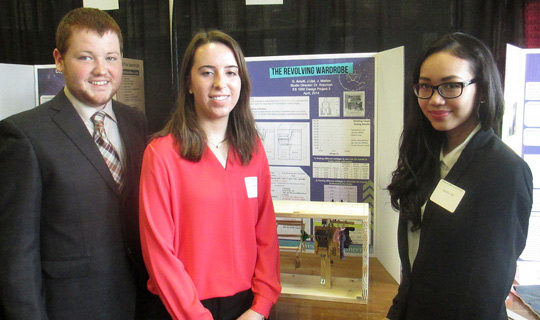
Engineering Student Fair Participants

Sabrina Gomez Vila, Toronto Metropolitan University: We celebrates the National Engineering month in March with numerous events. One of them is the Bug Push, a fundraising event for sick kids foundation that consists of pushing a Volkswagen bug around the Quad in our campus for 24 Hrs.

Jordan Hill, Toronto Metropolitan University: There are also a lot of pub nights – engineering students generally don’t need an excuse to have a good time.  If you like to get dressed up, we has an event in April called the “Billy Ball” where the dress code is semi-formal and there is dancing, a meal, and an open bar.

How was frosh week?

Engineering Frosh Week
Lucy Davidson, Toronto Metropolitan University: Frosh week is an amazing way to get to know your fellow classmates who you will work with for the next four years. We hold an exiting and jam-packed frosh week that makes you feel part of the community as soon as you step on campus the first day. Engineering has some cool traditions as well. Purpling happens during frosh week as well as lots of other fun actives all over the city. I made some really good friends during frosh week and I’m still very close with them now.

Elizabeth Morrow, Waterloo: Frosh week was the best! It really makes you feel like a part of something crazy and awesome. During frosh week I met some of my best friends, and also my boyfriend. My frosh leaders ended up being an amazing resource for me throughout the year and some of my closest friends, helping me with preparing for co-op and dealing with engineering life.

Eng Purple in Front of CN tower

Tell us about your extra-curricular activities… Why are you a part of it?

Lucy, Toronto Metropolitan University: I love being apart of the Women In Engineering society as I am really passionate about promoting engineering to younger women and showing them what it’s really like and how much fun it is.

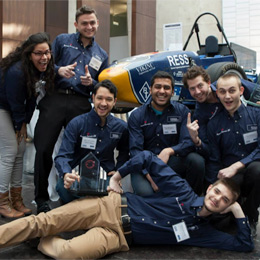
Engineering Formula 1 TeamElizabeth, Waterloo: During my first term, I joined Formula SAE. It was a lot of fun, for a few hours a week we learned 3D modeling and machining, real skills that I could use to get a coop job. I’m also in change of organizing fun events for all the engineers in my year through the Engineering Society.

Carmen Che, Waterloo: Dragon boating… it’s a fun, dynamic community that helps me meet people from across all grades. Finding my place in this community was truly an unforgettable experience.

Chandler, Western: I’m a part of BIG SISTER LITTLE SISTER; this is when first year women get paired with an upper student to make a connection. Your ‘big sister’ helps you with classes and the transition from high school to university… sometimes you even eat lunch with them. In my first year, I was in BIG SISTER LITTLE SISTER. My “big sister” was like my real sister and a good friend. She kept me in the loop and made first year better. Then I wanted to get more involved and become a “big sister” myself, so I decided to run for positions on executive.

Dany, Ontario Tech University: I’m the founder and president of the Ontario Society of Professional Engineers, UOIT Chapter. It all started when I realized that there is more to the actual profession than what we learn in class. Math, science and design are all necessary tools in order to become an engineer but team work, communication skills and time management are just as valuable and you get to learn many of those skills by being involved on campus.

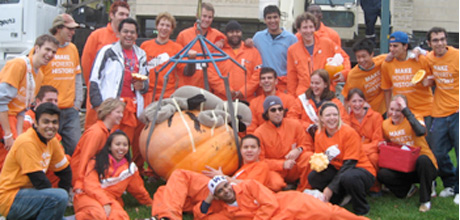
A gang of orange engineers
Natasha Phidd, Waterloo: I’m a big reader and often read mystery novels to relax and give myself a break from my studies. I’m also really into dance, so I like to that as well to relax. Also you can’t ignore some good retail therapy, my friends joke that I have a shopping addiction, but the truth is that I just really enjoy fashion. Everyone can always tell when I’m walking around in the engineering buildings because I’m one of very few that actually wears heels and makeup, but it’s just who I am and my major doesn’t have to change that.

What’s the best thing about being an engineering student?

Stephanie Irving, Ontario Tech University: The best thing about being in engineering is that you make friends for life. We go through so much together in 4 years that the bonds we make are almost unbreakable.

Lucy Davidson, Toronto Metropolitan University: To be a successful engineering student you have to be dedicated and that’s something that’s recognized by people. Studying engineering is extremely rewarding.

Taylor Stanbury, Western: Engineering covers a wide range of topics, so what you’re really learning is how to be a good problem solver, and you can apply that to anything throughout the rest of your life. It may seem intimidating – it is a lot of hard work – but if you put the effort in, it’s worth it.

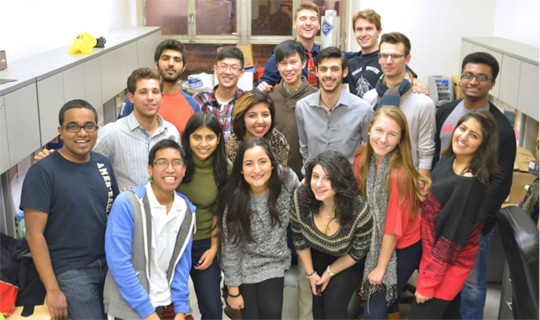
Gang of Engineering Friends
Jordan Hill, Toronto Metropolitan University: The best thing about being an engineering student is how much cool stuff you learn.  First year can be a bit of a drag because you’re really learning the basics that will allow you to learn all the cool stuff. But when you get into third and fourth year and realize that you can design something yourself, it makes you feel very proud of yourself.

What’s a typical day in your life look like?

Heather Aitkin, Toronto Metropolitan University: A typical day in the life involves attending class from 8AM to between noon and 6pm, depending on the day. After classes and labs have finished, I either work on group projects or go to the library to study for the evening. The majority of the semester has involved long working days, but I make sure to see to my friends and take some time for myself as well. I try to never work after classes finish on Friday. Taking Friday afternoon/evening off every week has been an excellent way to see friends from outside of school and relax a bit. It’s good to recharge mentally and do something other than homework.

Elizabeth Morrow, Waterloo: Last school term I would wake up around 8, get to class for 8:30 for 3 hours of lectures until lunch. The top floor of EIT has a little cafe with grilled cheese sandwiches that a few people from my class would get lunch and finish off our assignments due that afternoon. My afternoon consisted of labs and tutorials. After class I would get something to eat, do some work, and then head over to the student shop for a few hours. After that, I might go get ice cream with some friends and catch up with how their programs are going.

Stephanie Irving, Ontario Tech University: A typical day in my life usually involves waking up late, around 11 or 12, then going to class. If I have more than one class that day, I’ll typically stay at school to try and get some work done. After I come home, I’ll make dinner, finish any work I didn’t do and then watch TV. My day usually lasts until 2 to 4am. (Others prefer to get up earlier and go to bed earlier, I like to be a night owl)

What should all high school students know about engineering school? Looking back, what do you wish you knew?

Heather Aitkin, Toronto Metropolitan University: Thinking back to why I didn’t like any of my classes in High School, I think it was largely because I didn’t see how any of it was applicable to what I would end up doing. I now realize that I missed an opportunity to recognize my strengths in design and creative thinking, and I missed the opportunity to see how much I enjoy calculating out answers to problems that I understand. Engineering is SO APPLICABLE to everyday things, but I had never thought of it that way when I was in High School.

Engineering student on a unicycleTim Carroll, Toronto Metropolitan University: I wish I knew that engineering is basically a program devoted to leaning how to problem solve, independently use critical thinking and being able to communicate your ideas.



Elizabeth Morrow, Waterloo: High school students should know that engineering is hard but not impossible. Don’t be scared off. Also the rumors about having no social life aren’t true at all. I’ve met some of my best friends in engineering, and being stressed out sometimes during the week results in some pretty funny adventures on the weekends.

Sharon Flaherty, Western: All high school students should know that if you’re interested and passionate about engineering, it’s very doable. The community is very inviting.

Jordan Hill, Toronto Metropolitan University: Creativity is far more important than a high IQ. Yes, being very intelligent is useful when it comes to acing that calculus test – but after second year, a lot of your courses will have a design project component which requires a little more independent, thinking-outside-the-box and a lot less number crunching.

Maxine McCurdy, Toronto Metropolitan University: That it’s an option! There are so many engineering jobs out there that this degree can really lead you anywhere. Engineering didn’t even cross my mind in high school. It was not the direction I was headed when I finished school. Never was suggested, or thought of at all. I also wish I had known that taking grade 11/12 Science classes are important in keeping your options open!

How is being an engineering student different from any other student experience?

Sabrina Gomez Vila, Toronto Metropolitan University: As an engineer, I have the power to use my ingeniousness to create something radically new and revolutionize the world.

Chandler Button, Western: My fellow classmates are friendly and not very competitive. Even though the course load is heavy, having classes with the same people and working with teams makes me feel like I’m never alone

Ryerson Women in Engineering team

Elizabeth Morrow, Waterloo: Being an engineering student is very different from any other program because the community feels so small. Your profs know you by name and check up on how you’re doing, the upper years are your friends and mentors, and every single student’s experience is vastly different because of coop.

Emma Helmers, Western: My friends from other faculties were always super jealous about the closeness I had with my peers. Part of the reason that my classmates and I shared such a good relationship was because we received many projects that were time-consuming and challenging, therefore we had to spend time with each other. I think it breeds a good community, good friendships and good teamwork. Even at work now (I just graduated) there’s the same sense of teamwork, especially in field work as we get it done as a team.

Filed Under: Getting There Tagged With: englife, life, more2life, next level, school, student life, university

Mikhaela Meznaric

by admin

Mikhaela Meznaric

Q&A WITH engHERO: Mikhaela MeznaricMikhaela-Meznaric

Q: What’s one thing you wish you knew about engineering back when you were in high school?

That there are types of engineering like biomedical engineering and mechanical engineering. Not everything in engineering was about design and architecture. Also knowing which university specialized in the specialized engineering program. Taking co-op in high school would have really helped to know how a life is like for an engineer.

Q: What’s your proudest accomplishment as an engineer?

Successfully being both an engineer and a political science student because they are two different worlds and seeing the connection and discovering my passion in both really amused me. For example, water treatment project experience from both political science and engineering was involved and these two really impacted society.

Q: Tell me about a time in your career when your work has been about discovery or curiosity?

My second degree. Her curiosity in the engineering interest in tech designing by extending that skill on helping people and providing them with clean water.

Q: What are you doing these days?

Currently an administrative assistant at the University of British Columbia and looking for a job for her degree, water resources. She has done engineering degree and EIT after. She first started doing civil engineering. After she finished her degree she wanted to do something with green energy which brought her into water intersection which requires both tech and energy as her passion.

Q: Do you feel your work contributes to society? How so?

She hopes her job will contribute to society by providing clean water for Canadians. She believes that Canadians extract natural resources because we depend on it and we should clean our water without polluting it. She wants to be part of the process of cleaning the water.

Q: Why do we need more female engineers?

She believes that we more females because many females are as interested in technology as males are and they have another perspective that will develop the engineering world. Both male and female use thing made by engineers. So it is very important that female engineers being another perspective so they we provide good things to the society.

Q: When you were becoming an engineer, were you nervous and stressed out about all the math and science? What made you push through and become an engineer? Were you sure that you wanted to become an engineer when you were in gr12?

She wasn’t as nervous because both math and sciences were her strongest subjects in high school. She interest in technologies made her push through to become engineering. She wasn’t fully sure to become an engineer but with a help and encouragement of her two friends she made it through.

Filed Under: engHEROES Tagged With: change agent, civil, green, passion

On Confidence

by admin

The YTT asked girls how they develop confidence and here are the top 10 things they said:

  1. Encouragement from friends (inside and outside of school)
  2. Encouragement from parents
  3. Exposure to healthy gender norms (in activities, media and community)
  4. Feeling that you are accepted
  5. Figuring out how not to care what others think / say
  6. Make your own decisions
  7. Don’t be afraid of who you are, own it!
  8. Positive role models
  9. Finding the support to do what you want
  10. Always having a positive attitude

So then we asked, if you wanted to develop confidence and you knew these were the ingredients of the secret recipe, what changes could you make tomorrow to increase your feelings of self-confidence?

“The one specific thing i would do to develop confidence, and this may sound weird, I would go out and talk to people. I used to be REALLY shy and insecure. I always thought people thought I was a weirdo and a loser. I used to dread talking to new people for these reasons. l one day I realized that everybody is only human, we are all the same. If you want to talk to some one, you just go up and do it. ”

“Similar to being free from stereotypes, I would probably be more expressive about my opinions and my ideas. I would probably not feel as self-conscience of “over-participation” in a discussion (I tend to talk a lot :D) and not second-guess myself when I am sharing my ideas with a group of people that are possibly more intelligent or experienced that I am.”

“You need to change how you think, so that it doesn’t matter what other people think. If you accept what other people say, there’ll always be someone bringing you down. You need to listen to yourself, not someone else.”

“Healthy gender norms are still hard to find in most media, but are slowly increasing, you would probably have to cut a lot of media out of your life. You control how you feel about yourself, so making slow, healthy changes in lifestyle and attitude would obviously help. You would have to pick out the toxic relationships you have in your life and end them, only keep around those who make you feel good about yourself and comfortable.”

“I’d stop putting so much weight into what people (mostly guys) around me say.”

“I guess first I’d stop putting so much weight into what people (mostly guys) around me say. I think maybe I’d get rid of some of my friends, hard as it may be. I know that some of the things they say and do change me, and not for the better. I suppress things that some of them wouldn’t consider cool. I think before all that, I’d find a female teacher that I really look up to, that I can talk to.”

“To build up my confidence I would give myself pep talks and give other people compliments to build their confidence. I feel that if I build other people’s confidence, it will influence me to be confident as well.”

“Today I had an audition for dancing for a company that’s recruiting people. And yesterday, I looked myself in the mirror, and told myself I can do it. I became nicer to other’s which definitely became a habit and it made me gain more confidence within self confidence.”

“If I wanted to increase my self confidence I would pay more attention to what positive things my peers would tell me and I would embrace that and emphasize it to the best I can. I would trust in myself more and I would trust in the people around me… I would acknowledge my talents and improve on those and I would block all negativity from my life. I would surround myself with supportive, happy, positive, and extroverted people (because they tend to make me laugh and smile).”

Filed Under: weTHINK

FAQ’s

by admin

So you’ve been reading about engineering and it sounds waaaaay cooler than you originally thought, but you still have a bazillion questions buzzing around in your brain. We’ve asked real girls what THEIR questions about engineering are – read on to find out all the engineering deets you never knew you needed!

Q: What does an engineer’s normal day look like? Some jobs seem all great and dandy but I want to know more specifics about a career I’m considering!

There is no “normal” for engineers – each job is as different as you and I! Your typical day will depend on the type of engineering you major in (i.e. Mechanical, Aerospace, Civil), as well as the company you apply to work for.

Some engineers work in office buildings, while others work in labs or industrial plants. Others go into sales or management jobs. Some work outdoors or in production and construction sites. Certain jobs also allow engineers to travel all over the world.

This being said, there are some common themes to engineering jobs:

  • They usually run on a 40-hour workweek (workin’ 9 to 5)
  • They often involve lots of teamwork and problem solving
  • Engineers are always working to improve current systems
  • Beginner engineers usually work under the supervision of more experienced engineers – so don’t worry, you’re not immediately expected to know everything!
  • Once you gain more experience and knowledge, you’ll be assigned to more complicated, interesting projects where you’ll work to design, solve problems and make decisions.

Luckily, a degree in engineering leads to a TON of different pathways, meaning that you have lots of opportunities to choose a “day in the life” that fits you.
For more info, check out our interviews with University Students and Professional Engineers

Q: How long does it take to become an engineer?

It takes only four years to graduate from a Bachelor of Applied Science or Engineering degree, which allows you to start doing engineering work right away as an “Engineering Graduate”! After you complete your degree, you apply to work under a licensed professional engineer, usually between 2 – 4 years – this helps you to continue improving your skills while still making a salary. After that, you take a test that allows you to officially call yourself a Professional Engineer for life!

Q: Can I quickly and easily get a job in engineering immediately after graduating university?

You’ve probably heard people talking about the recession and how it’s harder for young people to get jobs nowadays. Luckily, job prospects in engineering are MUCH better than most, particularly if you’re open to moving within Canada!

Q: What is an engineer’s favourite thing is about their job?

To find out what engineers love about their jobs, check out our interviews with Professional Engineers!

Q: How does Co-op work? What companies can I work for and what kind of job I can get after university using the co-op experience?”

A few schools have Co-ops (cooperative education) and Internship programs, including Ryerson, Waterloo, UOIT and Western. During Co-op, your school matches you up with a company that lets you use what you’re learning in school in a real-world situation.

Students often credit co-op with giving them hands-on work experience and allowing them to network with professionals, which can sometimes allow them to find a job more easily after they finish their degree. Remember – even if your school doesn’t offer co-op, you can still apply to be a Summer Intern at many different companies!

Q: Is the engineering business very straight edged or is there room to get creative and innovative when on the job?

Depends on which company you’re working for! The beautiful thing about an engineering degree is that it can lead you down many different paths. If creativity is your strong suit, you can specifically search for a company that is known for its innovation, or you could even become your own boss! While some companies offer jobs that are more “straight-edged,” engineering always involves thinking outside the box and solving problems, which always keep the job interesting.

Q: Is most of your time spent answering and solving formulas and equations or actually building things?”

While there are some technical fields of engineering that involve hands-on building, it’s actually a common misconception that engineers build things. The majority of engineers are thinkers – they use their understanding of math and science to design things before they get built.

Q: What kind of things will I be studying in generally in engineering?

While each stream of engineering focuses on different areas, there are a few skills that you learn in engineering school in any major:

  • Problem solving
  • Sciences (areas of focus depend on your major!)
  • Basic business skills
  • Communication skills (public speaking, resume building, presentation skills etc.)
  • Maths
  • Computer skills
Q: I would like to know what specific duties an engineer has, because I actually don’t really know what an engineer is.

Every engineering job is different, but many have common themes:

  • Researching current systems to figuring out how to make them better
  • Applying science skills to design new solutions
  • Communicating ideas and solutions to others
  • Using computers and technology to help execute your ideas

Job descriptions usually sound SUUUPER overwhelming, but remember: you’ll learn all of these skills (and more!) when you’re in university. If you like problem solving, are creative and are good at math/science, you’ll be a great fit!

For more detailed descriptions of a engineer’s job, check out our interviews with Professional Engineers

Q: How much does the average engineer get paid per month compared to the cost of the schooling to get there?”

Seven out of ten of the top-paid 2013 Bachelor’s degree majors were in engineering (i.e. get money, get paid). In fact, the average starting salary for an engineering graduate is over $60,000! In some areas of engineering, recent graduates make more than $90,000… wild!

Yearly university tuition for an undergraduate engineering student is around $12,000, making your full degree $48,000 – less than one year’s pay as an engineer!

Q: Is engineering a career where you can have fun while working or is it just hard work all the time?

Like most jobs, engineering can be hard work, but most engineers will tell you that they love their job because it’s super interesting! If you want a job that exercises your brain and lets you keep learning, engineering is an amazing option. If you want to know more about how fun jobs in engineering can be, check out our interviews with Professional Engineers.

Filed Under: Getting There Tagged With: engineering, englife, getting there, Universities, university life

The Coolest Eng Projects!

by admin

The Coolest Eng Projects!

As members of the WEMADEIT Youth Think Tank we asked and were asked, A LOT of questions. After some reflection, we thought you could stand to hear what we think. Here it is:

“The coolest example of engineering is the International Space Station. It took some serious engineering to be able to construct this ‘out-of-the-world’ product. It has very important purposes that couldn’t have happened without engineers!”

“The coolest example of engineering is the project that Solar Roadways is working on right now! Their plan is to use solar panels to pave the streets of the US and create renewable energy. If all of the pavable surfaces in the US were covered in solar panels it would generate enough power to run the whole country three times over! Check out more here”

“The coolest example/idea of engineering is vertical farming. A project that is still under progress, it is something that is meant to help with the ongoing increase in population (and hence the need for more food and agriculture). At the same time, it takes conservation of natural forests and environment into consideration, going high up instead of growing wide ”

“I think the Pyramids of Giza are the coolest example of engineering because they were made with no modern technology”

“The Rio-Antirrio Bridge in Greece, because no one thought that they’d be able to build a bridge there (because of the depth of the sea, the make-up of the sea bed, the winds and earthquakes, etc.) but through incredible engineering, they managed to make a really strong, successful bridge!”

“The coolest example of engineering are the blueprints they use to plan things with.”

“I think the coolest example of engineering is the Donghai bridge (also known as the Big East Sea Bridge). It is 32.5 km in length and crosses a sea from mainland Shanghai and the offshore Yangshang deep water port in China. There are sections allowing large ships to pass through and it does not allow vehicles on the bridge that do not meet weight requirements. It is one of the longest sea crossing bridges in the world and has previously been titles the longest.”

“The coolest example of engineering is the engineers who invented a charger powered by the sun. It helps with conserving energy, decreasing our green house gas submission and many other everyday problems.”

“The best example of engineering in my opinion is the Falkirk Wheel located in Scotland, which is a boat lift that connects the Union Canal with the Forth and Clyde Canal. It’s one of the coolest civil engineering projects that I’ve seen.”

Filed Under: weTHINK Tagged With: engineering, wethink, youth think tank

Next Page »

Footer

Menu

  • About WEMADEIT
    • Donor
    • Partners
      • Toronto Metropolitan University
      • Ontario Tech University
      • University of Waterloo
      • Western University
  • For Students
    • Blog
    • Getting There
      • Engineering Disciplines
      • Student Life
      • Where Can I Study?
      • What You Don’t Know About Engineering
      • ENG BLING
    • Black Students
    • Indigenous Students
    • 2SLGBTQIA+ Students
    • Women and Girls
  • For Parents
    • Where Can You Study Engineering?
    • What is Engineering?
  • For Undergrads
    • Gaining work experience
    • Peer Mentorship
    • One Awards
    • Next Generation in Power
    • New Grad Program
  • For Teachers
    • Teacher Resources
  • Getting Involved
  • Contact Us
    • Newsletter Signup

Search

Teacher Login

Register | Lost your password?

  • Facebook
  • Instagram
  • Twitter

© 2026 · WEMADEIT | Site Design by rtraction