• Skip to primary navigation
  • Skip to content
  • Skip to footer

We Made a Difference. We Made it Together. WEMADEIT.

  • About WEMADEIT
    • Donor
    • Partners
      • Toronto Metropolitan University
      • Ontario Tech University
      • University of Waterloo
      • Western University
  • For Students
    • Blog
    • Getting There
      • Engineering Disciplines
      • Student Life
      • Where Can I Study?
      • What You Don’t Know About Engineering
      • ENG BLING
    • Black Students
    • Indigenous Students
    • 2SLGBTQIA+ Students
    • Women and Girls
  • For Parents
    • Where Can You Study Engineering?
    • What is Engineering?
  • For Undergrads
    • Gaining work experience
    • Peer Mentorship
    • One Awards
    • Next Generation in Power
    • New Grad Program
  • For Teachers
    • Teacher Resources
  • Getting Involved
  • Contact Us
    • Newsletter Signup

inspirational

Tina Traini

by admin

Tina Traini

Q&A WITH EngHERO: Tina Traini

Tina Traini is the Director, IT Systems and Solutions at Right To Play. Right To Play is a global organization that uses the transformative power of play – playing sports, playing games – to educate and empower children facing adversity.Tina Traini

Q: What’s one thing you wish you knew about engineering back when you were in high school?

I knew that an engineering education would be hard and rewarding but I didn’t realize that it would teach me how to learn and solve problems in a way that would be applicable to any field/challenge in life.

Q: What’s your proudest accomplishment as an engineer?

Outside of school, it would be hard to pick. I’ve done some pretty cool things with different clients all over the world. These were always a team effort so it’s easy to be proud of what you and your team have accomplished when the task seems complex and daunting and in the end, you have a satisfied client. During school, I worked with a few classmates to start a musical show entirely created and executed by engineering students. To work together with my peers to pull of something so creative was absolutely fantastic. The McMaster Engineers still put on the show every year. It makes me pretty proud.

Q: Tell me about a time in your career when your work has been about discovery or curiosity?

In 2007 I decided to participate in a program my company had to offer consulting services to charity groups and spent time working for Plan International. I was fascinated to see how the skills and experience I had in IT could be useful in the not for profit world. It was a very rewarding experience that ultimately led me to where I am now.

Q: What are you doing these days?

Right now I am working as the Director, IT Systems and Solutions at Right To Play. Right To Play is a global organization that uses the transformative power of play – playing sports, playing games – to educate and empower children facing adversity. My team and I manage IT operations for 7 donor and 20 field offices around the world and coordinate all new solution development to support our work.

During school, I worked the summers at a microelectronics company doing R&D and new business development. When I finished school I had no idea what was next but met an alumnus at a career fair who convinced me to look at consulting as a career. I was hooked and I went straight into technology consulting with a global firm weeks after graduation. I spent nearly 14 years there working in all kinds of industries solving client challenges. I don’t think I had any idea where I was headed when I started this journey but have been very fortunate with the opportunities I have made/found along the way.

Q: Do you feel your work contributes to society? How so?

Absolutely! At Right To Play, my work enables our program delivery that impacts the lives of over one million children around the world (and even in Canada and the US). My team is responsible for making sure that Right To Play employees can collaborate and connect and that the systems, processes and policies they need are in place and well supported.

Q: Why do we need more female engineers?

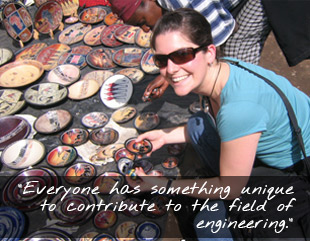
Everyone has something unique to contribute to the field of engineering. The more diverse and inclusive the field can be the more creative and visionary. This includes making sure that women occupy many seats at the table.

– – – – – – – – – – – – – – – – – – – – – – – – – – – – – – – – – – – – – – – – – – – – – –Check out Right to Play
Filed Under: engHEROES Tagged With: adversity, busy, director, empowering, innovation, inspirational, play, unique

Kim Farwell

by admin

Kim Farwell

Q&A WITH ENGHERO: Kim Farwell

Kim is a senior technical advisor for extraction and she is the first female to reach this position in her company, Syncrude Canada Ltd. She got there by getting a chemical engineering degree, an MBA and a certificate in oil sands technology.

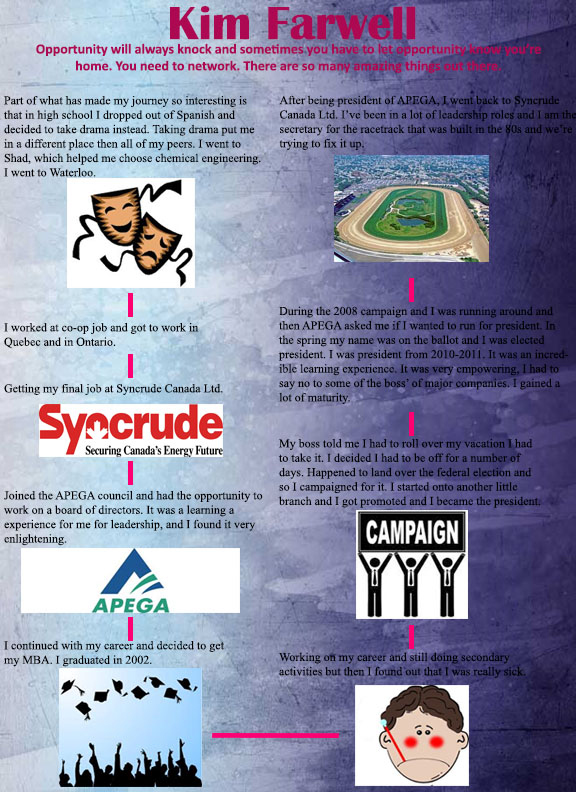
Kim Farwell Journey Map

Q: What’s one thing you wish you knew about engineering back when you were in high school?

I wish I knew that I was going to enjoy it as much as I do.

Q: What’s your proudest accomplishment as an engineer?

I’m proud of that I received the Early Accomplishment Award and was president of APEGA in 2010. I’m also proud of the time I figured out a very interesting technical problem at the plant.

Q: Tell me about a time in your career when your work has been about discovery or curiosity?

My work was about discovery and curiosity when I solved a problem at the plant. A geologist and I figured out why oils weren’t coming off the separator by applying the fundamentals we had learned to real life.

Q: What are you doing these days?

My job now is a senior technical advisor for extraction and I’m the first female to reach this position in my company, Syncrude Canada Ltd. I got there by getting a chemical engineering degree, an MBA and a certificate in oil sands technology. I also have a co-op degree with six work terms, all with different companies. When I started out in high school, I was planning to be a political journalist but my friend convinced me to enter a Popsicle stick bridge contest. We drilled holes in the Popsicle sticks, put ribbons through them and won.

This is when I really started to consider engineering as a career path. Also, I went to Shad Valley and I worked with Xerox to study a pigment used for photocopiers. This helped me realize that I wanted to work in the field of chemistry.

Q: Do you feel your work contributes to society? How so?

I do. I secure Canada’s energy future with every drop of oil. My work provides jobs and energy to the world-without any ethical issues like in Nigeria or environmental issues.

Q: Why do we need more female engineers?

We need more female engineers because engineering is very much a team effort. You need a team of diverse group of people so they can solve problems and female engineers bring a different skill set.

Q: If you could recommend something for girls in high school what would it be?

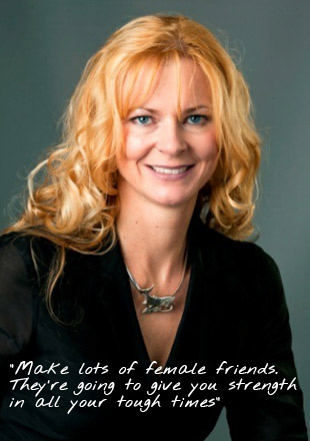
I would recommend that you make lots of female friends. They are going to give you strength in all your tough times, ground you when you’re being mistreated and encourage you to never give up.

Filed Under: Journeys Tagged With: AMAZING, engbeaut, inspirational, intelligent, Interesting, Kind, Nice, Outgoing, Smart

The Technology of Touch

by admin

The Technology of Touch

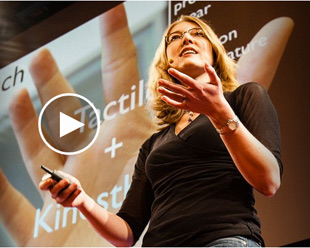
Procrastinating? We’ve got just the thing! The YTT have pulled together a series of TED Talks that they LOVE. Grab some popcorn and get comfy, because you’re about to get seriously inspired by these amazing engineering projects.

What is this TED talk about?

It’s about haptography, which is combining haptics (touch technology) with photography. The basis of this is that they can recreate the feeling of touching something using computers.

What’s amazing about it?

It’s really cool altogether! An example that the speaker gave was with dental students. They attached an accelerometer to a dental tool, and the main dental professor touches extracted teeth with it. The movements are recorded and recreated for the students. They watch a video and follow along by holding a repeating tool (which moves the same way the dental tool did).

How did it inspire you?

This is an incredible technology which has endless applications, anywhere from training dental and medical students to online shopping! It’s definitely going to become more popular and more developed as time goes on, but the implications of this technology are what inspires me. The possibilities are endless! People could do almost anything with this technology, which I find really interesting and inspiring.

What surprised you?

The main idea of it all, as weird as that sounds! I’d never heard of haptography before, and now, after hearing about it for a very brief time, I can only imagine the ways that it could be used. It’s so cool that there’s a technology that could allow you to feel like you’re touching something through a computer! I never knew that was even something that could be done!

Did you ever have an idea about developing something yourself that solves a problem in the world? Tell us all about it

I’ve thought about the idea for a technology where you could feel and smell things in a movie, TV show, or video game, but never really thought about the potential that it could be done. I never really thought about it that deeply, more as just an idea. If it could be done, however, it would be an incredible development for these forms of media. This wouldn’t solve a problem as much as it would just enrich movies, TV shows, and video games to make them better.

Filed Under: TED talk Tagged With: amazingENGprojects, crazycoolENG, haptography, inspirational, KatherineKuchenbecker, limitless potential, recreatingtouch, TheTechnologyOfTouch

Erica Lee Garcia

by admin

Erica Lee Garcia

Q&A WITH EngHERO: Erica Lee Garcia

Engbeaut Erica Lee Garcia

Erica Lee is a professional engineer who not only provides professional consultation to engineering companies, but also uses her experience and abilities to help young engineering students/graduate get started in their career and also raises awareness about engineering alongside Engineers Without Borders.

Q: What’s one thing you wish you knew about engineering back when you were in high school?

I think that one thing would be that engineering is really different from math or science. Of course they are related and needed, but engineering itself is nothing like the educational experience. Engineering is fun! It’s about problem-solving, improvising, and teamwork. Also engineering helps people’s lives, make it safe, cost-effective.

Q: What’s your proudest accomplishment as an engineer?

I used to work in a mining company. I travelled to Africa and South America where there were a lot of mines and I was a speaker for workers of the company. I talked about a method similar to 6-sigma (later explained) and problem solving. Even though there were a lot of mines in some places, after all that can be drained is taken from the mine, there is no more work available and many lose their jobs. For me, it’s a proud accomplishment, because I got to visit them and train some people, and give them some skills that not only helped them save money at the present time, but also could be used for the rest of their lives, allowing them to solve problems.

Q: Tell me about a time in your career when your work has been about discovery or curiosity?

I used to work for a company called Magna which produces all sorts of car parts. When working in the factory, we had a problem where some of the parts did not fit together properly. Now each part was worth about $17, so if they were thrown out, that would be thousands of dollars per day. So I was put in charge of a group to try and solve this problem. In this group we used a 6-sigma method, where there are specific steps to follow; mainly we need to identify what the problem is, why does it matter, what are its causes, and finally find a solution. When we came up with a possible solution, we had to test them and collect data, like “how many bad ones now?” Finally, we realized that the problem came from the supplier of a specific part, where all of the parts were not identical, so we solved the problem by allowing a tighter window to our supplier. It was one of my first projects, and the problem we were working on was very subtle, so it felt good when we were able to solve it; and then I got started on a next project.

Engbeaut Erica Lee Garcia
Q: What are you doing these days?

My work is a combination of entrepreneurship and engineering. I am the president of my own company, Erica Lee Consulting, where we give our client companies advise on how to get better results while wasting less. I am also a coach/mentor for young engineering students or young engineers who have just graduated; it is really difficult when you have just graduated to know what the next step is, so we try and help them become more clear and confident with what they are going to do. And finally, I also work with Engineers Without Borders, where I talk to younger kids to help them understand their capabilities to make a difference in the world and make it better. I also help organizers of events for children to come up with different activities, where we’re talking to children in their own language, not ours.

Q: Do you feel your work contributes to society? How so?

For sure, in terms of my mentoring, I help young engineers gain clarity and confident and be happy with what they have chosen to do; it’s very important to enjoy what you do and be happy with your work. With the work I do in Engineers Without Borders, we can see the next generation as growing up with much greater understanding, empathy, and tolerance for complexity. They will care about sustainability when thinking of solutions and those kids are going to be 21st century problem solvers. Talking to children is something that other engineers can also volunteer to do, and it is coming that will have a great impact in the long run.

Q: Why do we need more female engineers?

I believe that engineering field needs to be as diverse as the population it serves. Because engineering and what it develops has a ripple effect, influence many other things around the world. Whenever you make something new, you need to consider the opinion of the stockholders and its sustainablitity, because it you don’t it won’t last long. Traditionally, we have had a lot of men in the field, and we have to fix a lot of problems; this doesn’t mean that men are to blame for these problems that we yet have to solve, but our resources are much better now and men have a specific type of intelligence. To have a balanced viewpoint, we need to have women who are commonly good at characteristics like empathy, creativity and caring. It’s easy to reach a decision when all people share the same opinions and are on the same page, but having one person who questions that decision is a must even though it can be tricky.
Also, it’s not just that we need a balance between men and women in engineering; engineering needs to have all different types of diversity, from background ethics to physical characteristics.

Q: Why did you choose to go into engineering?

I don’t really know how I chose engineering; there isn’t anyone in my family in engineering either. I know that I wanted to impact the physical world. Even as a kid, I was always looking for ways to optimize and do things better (for example, when it rained, I would go in the driveway and dig channels into the dirt to make the water flow better out of the driveway). For me, it was between going into engineering or music. I did not want to be a scientist, because I did not want to work with theories. But because I was good at math and science, school counsellors suggested and I chose to go into engineering. I believe that I made the right decision, because now I know that through engineering I am making a tangible impact, and from the beginning that was very important to me.

– – – – – – – – – – – – – – – – – – – – – – – – – – – – – – – – – – – – – – – – – – – – – –

View Erica’s Profile at EWB

Filed Under: engHEROES Tagged With: awareness, borders, children, consultant, engbeaut, engineering, future, graduate, inspirational, mentor, without, young minds

Ayah Bdeir

by admin

Ayah Bdeir

Q&A WITH EngHERO: Ayah Bdeir

Ayah Bdeir is an artist, engineer, and entrepreneur who founded littleBits, a library of tiny interactive circuit-boards which can be easily snapped together to perform specific functions.

Q: What’s one thing you wish you knew about engineering back when you were in high school?

That when you combine engineering with creativity and design you can create the most magical experiences.

Q: What’s your proudest accomplishment as an engineer?

Creating my company, littleBits! littleBits put the power of electronics in the hands of everyone and are changing the way people interact with and understand technology.

Q: Tell me about a time in your career when your work has been about discovery or curiosity?

I started littleBits as a prototype when I was a fellow at the Art and Technology Lab in New York, called Eyebeam, and made some prototypes and put them on my desk and put them on my website. There was only me at the time, so I continued, and I obsessed about the problem. I obsessed about this idea of how to make electronics accessible and how to make them modular. Three and a half years later, I had a product, and that’s when I decided to start a company.

Q: What are you doing these days?

I am the Founder & CEO of littleBits. littleBits are electronic modules that snap together with magnets for prototyping, learning and play.

I have a background in engineering. I did my undergrad as a computer engineer. In my 3rd year of undergrad we were required to do an internship and I got one at MIT as part of LIDS (Lab for Information and Decision Systems). It was a very dry and technical internship so I frequently went looking for something artistic. One day I stumbled upon a talk by the founder of IDEO at the MIT Media Lab and decided that was where I wanted to do my masters.

When I started engineering, I kept trying to find ways to bring more creative practices into engineering. When I went to the Media Lab it started my mission that I’ve been on for the past many years on how to make electronics accessible, and how to make electronics a creative medium.

Q: Do you feel your work contributes to society? How so?

Electronics are everywhere. We now produce, consume and throw out more electronic gadgets and technology enhanced products than ever before.

Over the past years, technology has moved from being an integral part of our lives, to helping define who we are. Yet, engineering is mystified, electronic objects are black-boxed and creativity is limited by the tools and materials available to each discipline.

I believe creativity with electronics (light, sound, sensors, etc.) will explode when they can be used as, and combined with other traditional materials such as paper, cardboard and screws. Materials are intuitive, accessible, self-contained, expressive, and most of all, can be integrated early in the creative process. Why not be able to combine felt with wood and light? Or Popsicle sticks with sound and motion sensitivity? Electronics are too pervasive and the technology too widespread for it to remain sequestered in its own space.

Q: Why do we need more female engineers?

I was lucky to be raised in a household where we were never led to believe that women were different than men, or ever thought that there was anything we couldn’t do. That upbringing has informed my view in how to contribute to the betterment of women in the workplace. I just try to do the best possible work I can every single day and be proud of it, and hopefully make others proud and inspired too. But what I do actually take a lot of care in, is making a gender-neutral product. This helps us achieve part of our mission to get more girls interested in science and engineering, and has been working very well. It is important to me that men and women are evenly represented at my own company and in the larger field of engineering.

Q: Is there a person who influenced your decision to become an engineer?

Yes, see above. I actually tried to quit multiple times during my undergrad but my parents encouraged me to at least complete my degree and then I could try something else. By the time I graduated, I was convinced of all the creative and powerful things I could do as an engineer.

– – – – – – – – – – – – – – – – – – – – – – – – – – – – – – – – – – – – – – – – – – – – – –
Check out: Little Bits

Filed Under: engHEROES Tagged With: AMAZING, awesome ENG, Ayah Bdeir, electronics, engbeaut, engspirational, inspirational, littleBits, simplified engineering

Melissa Griffin

by admin

Melissa Griffin

Q&A WITH EngHERO: Melissa Griffin

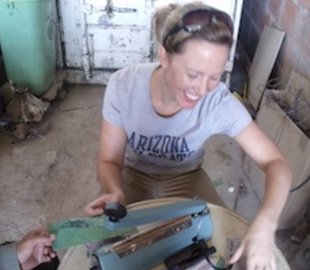
Melissa Griffin is a Human Factors Analyst, whose work focuses on improving safety by improving the systems that people live and work in. Instead of trying to change how people should act, Melissa and her colleges advocate for changing the system so it’s more natural for people to interact normally.

Q: What did you wish you knew about engineering back when you were in high school?

That engineering is actually really fun! The very first day of frosh week I realized that there was a wonderful community of students who actually liked science and math, and that a lot of them were really fun. I also wish I knew that you can do a lot with an engineering degree, and it doesn’t have to mean you’ll end up behind a desk crunching numbers 24/7. In my current role, I have the chance to get out into the field and spend time with a range of other disciplines and specialists including other engineers, psychologists, doctors, nurses, pharmacists, policy makers, regulatory bodies, researchers and administrators.

Q: What’s your proudest accomplishment as an engineer?

At this point, probably getting my P.Eng. Another proud moment was when I got my first job.

Q: Tell me about a time in your career when your work has been about discovery or curiosity?

The role that I’m in now has a lot to do with curiosity and discovery. I am working in health care research as a Human Factors Engineer and as part of that we get to ask and answer research questions. I also have a lot of freedom in my work to explore areas that interest me. For example, right now I do quite a bit of work with different hospitals and cancer centres, helping them to make their technologies, processes and environments safer for patients and staff. I look at workflows, how people tend to interact with technologies, and how different polices and regulations affect the healthcare system. When we see something out in the field that is of interest, often, if we can find supporters and funding, we are able to further explore these areas to improve patient safety.

Q: What’s your job now (title, company, description)? How did you get there (education, internships, mentors, other experiences)? Where did you think you were going when you started out?

Human Factors Analyst/Engineer at University Health Network (UHN) as part of the research team HumanEra. I am part of a multi-disciplinary team that tries to improve patient safety by improving the systems that people work and live within. We know that people have certain strengths and weaknesses and instead of trying to change how people should act, we advocate for changing the system so it’s naturally easier for people to interact correctly. I had no idea I’d end up where I am now. I started in Mech Eng at Queen’s University, and ended up working in the automotive industry for 2 years, first as a Project Engineer and then as an Account Manager.

After a couple of years there I realized I wanted to do something that had more of a positive impact on other people. I came across the Masters of Clinical Engineering program at U of T, which appealed to me because it included several internships. Through this program I completed a thesis about applying human factors to home care environments, and did an internship at Massachusetts General Hospital (MGH) in the Clinical Engineering department, at the Toronto Rehab Institute in the Dysphagia Lab, and at the Centre for Global eHealth Innovation, where I currently work.

My thesis supervisor was a great influence on me and is now my boss. When I started out, I had no idea this kind of job even existed and didn’t know much about human factors. Having my undergrad Mechanical Engineering degree opened the door for me to get into the Master’s program that led to where I’m working today.

Q: Do you feel your work contributes to society? How so?

I definitely think the work I do contributes to society. Our teams’ mandate is to improve the safety of patients and health care workers by making the systems they work and live in safer. We get to be activists for patients and front line staff and highlight ways in which things could be improved. We also do a fair bit of education for front line staff to help them identify areas of risk, so they can make their own practices safer and more robust.

Q: Why do we need more female engineers?

I think women are able to provide a unique perspective for many engineering problems. In the work I do, I am often interacting with nurses, who predominantly tend to be women so I think it makes it a bit more comfortable and easier for them to open up about what they do and the challenges they face in their day to day jobs. Also, many of the female engineers I know are great mentors. We need more female engineers because we can be creative problem solvers, empathetic, and approach problems from a slightly different perspective than our male counterparts.

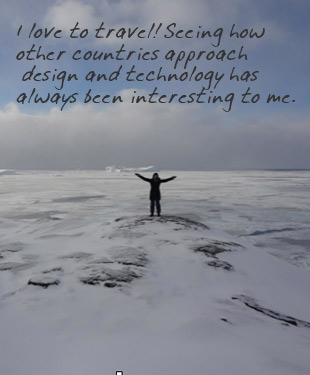
Q: Do you have any hobbies/passions that give you a unique perspective in engineering?

I love to travel and so seeing how other countries approach design and technology has always been interesting to me. There are often several possible solutions to a problem or challenge, especially when it comes to systems and design, and so seeing how different cultures take on these challenges can be inspiring and useful in helping you think about your own engineering challenges.

– – – – – – – – – – – – – – – – – – – – – – – – – – – – – – – – – – – – – – – – – – – – – –Check out where Melissa works! http://ehealthinnovation.org/

Filed Under: engHEROES Tagged With: awesome, education, engbeaut, fun, health, HumanEra, inspirational, risk, safety, travel

Next Page »

Footer

Menu

  • About WEMADEIT
    • Donor
    • Partners
      • Toronto Metropolitan University
      • Ontario Tech University
      • University of Waterloo
      • Western University
  • For Students
    • Blog
    • Getting There
      • Engineering Disciplines
      • Student Life
      • Where Can I Study?
      • What You Don’t Know About Engineering
      • ENG BLING
    • Black Students
    • Indigenous Students
    • 2SLGBTQIA+ Students
    • Women and Girls
  • For Parents
    • Where Can You Study Engineering?
    • What is Engineering?
  • For Undergrads
    • Gaining work experience
    • Peer Mentorship
    • One Awards
    • Next Generation in Power
    • New Grad Program
  • For Teachers
    • Teacher Resources
  • Getting Involved
  • Contact Us
    • Newsletter Signup

Search

Teacher Login

Register | Lost your password?

  • Facebook
  • Instagram
  • Twitter

© 2026 · WEMADEIT | Site Design by rtraction