• Skip to primary navigation
  • Skip to content
  • Skip to primary sidebar
  • Skip to footer

We Made a Difference. We Made it Together. WEMADEIT.

  • About WEMADEIT
    • Donor
    • Partners
      • Toronto Metropolitan University
      • Ontario Tech University
      • University of Waterloo
      • Western University
  • For Students
    • Blog
    • Getting There
      • Engineering Disciplines
      • Student Life
      • Where Can I Study?
      • What You Don’t Know About Engineering
      • ENG BLING
    • Black Students
    • Indigenous Students
    • 2SLGBTQIA+ Students
    • Women and Girls
  • For Parents
    • Where Can You Study Engineering?
    • What is Engineering?
  • For Undergrads
    • Gaining work experience
    • Peer Mentorship
    • One Awards
    • Next Generation in Power
    • New Grad Program
  • For Teachers
    • Teacher Resources
  • Getting Involved
  • Contact Us
    • Newsletter Signup

Journeys

This ain’t no typical all-inclusive week in the Dominican kind of journey. These women have been through a ton of fulfilling and challenging events that have formed their lives and careers. Seriously awesome, check it out.

Advice from a NASA Astronaut

by wemadeit

Advice from a NASA Astronaut
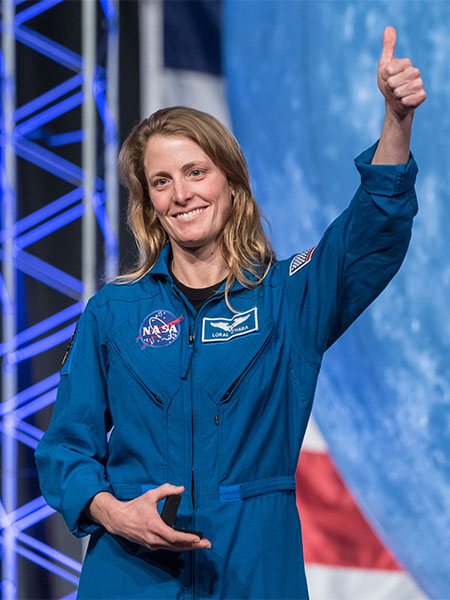
Photographer: James Blair

Before Loral O’Hara became a NASA Astronaut, she was an Aerospace Engineering graduate from the University of Kansas. In a Zoom meeting with STEM-field students, Loral gave these three pieces of advice for finding their success.

Lean on your community.

When she was asked for advice on overcoming challenging coursework, Loral recommended to ‘lean on your community’ and the support systems around you. These are the people who know you and your potential, and will help to build your confidence when you face obstacles.

She also suggested to visualize instances in the past when you faced a challenge, and overcame it.  “When I get to a really hard task, I think back to when I struggled and succeeded.”

Be aware of what your own personality is telling you.

Loral is aware that many students struggle to find the right program for them. Her advice is to pay attention to the things that interest you and what you find exciting.  She says that it is all about “being aware of what your own personality is telling you, what skill sets you’re developing, what things you’re drawn to — and how you might be able to best serve the world, the community, your school, whatever, just by being you.”

There is no one path to success.

Being a part of NASA, Loral sees firsthand how a team of diverse backgrounds is necessary to producing the best work. The path to achieving your goals is not ‘one size fits all’, and will look completely different for everyone. “This is one of my favorite things about the astronaut office,” Loral says, “It shows that there’s no one path to success.” She also shares that “the best science and math is done by diverse teams.”


Adapted from: Source

Filed Under: #shareABLE, engHEROES, engSPIRATIONAL, Journeys

Top 7 Interesting Research Topics In Engineering

by wemadeit

Top 7 Interesting Research Topics In Engineering

Research is very important to an engineer! If you’re ever bored and looking to improve your innovation and problem-solving skills, or even just want to learn something new, here are some super cool research topics in engineering for you to look into!

7 – Aerodynamics

In recent decades, the research in aerodynamics has progressed into a new era. Aerodynamics is the study of the flow field around objects of various shapes. Some technologies that depend on aerodynamics are cars, bicycle racing helmets, wind turbines, golf balls, and many more. Did you know that about 1/3 of your taste buds are numbed while flying. Maybe that meal was not that bland after all?

6 – Nuclear Power

Nuclear power is the use of nuclear reactions that release energy to generate heat, which is then used to produce electricity in a nuclear power plant. Nuclear is the world’s second-largest source of low-carbon power (29% of the total in 2018). In addition to research, nuclear reactors are being used for the production of medical and industrial isotopes, as well as for training. Fun fact; because nuclear fuel is so dense, all of the used nuclear fuel produced by the U.S. nuclear energy industry over the last 60 years could fit on a football field at a depth of less than 10 yards.

5 – Hybrid Vehicles and Electric Vehicles

Hybrid vehicles and electric vehicles are generally greener because they consume less fuel and emit less CO2 than petrol or diesel-engine vehicles. A hybrid vehicle is one that uses two or more types of power, such as diesel, batteries, gasoline, etc. Electric vehicles (EVs) will hit 10% of global passenger vehicle sales in 2025. Much of the world is planning to phase out gasoline-powered cars in the coming years, with Norway planning to do so by 2025, India by 2030, and France and the UK by 2040!

4 – Nanotechnology

Nanotechnology is the science of building things on the scale of atoms. To put it into perspective, a nanometer is one-billionth of a metre. The diameter of a single human hair is over 80,000 nanometres! Researchers today are using nanotechnology to investigate and monitor cellular and molecular function and to alter systems that are deregulated in disease. It is also being used in developing countries to help treat disease and prevent health issues. Did you know we have actually been using nanotech for centuries? The colours in medieval stained glass windows result from nanocrystals created in the heating and cooling of glass!

3 – Liquid Crystals

Liquid crystals or LCs are a state of matter that has properties of both conventional liquids and solid crystals. For example, a liquid crystal may flow like a liquid, but its molecules may be oriented in a crystal-like way. Research in LCs today is best known for application in flat panel displays, but LCs have plenty of unique properties with lots of potential for fundamental science and innovative applications. Liquid crystals are all around us; in computers, clocks, even soapy water!

2 – 3D Printing

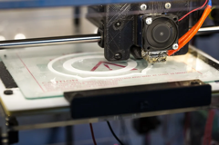
In the coming decade, 3D printing will become a leading production tool. One of the most popular uses of 3D printing in 2021 is rapid prototyping, which is using a 3D printer to create a scale model of a product or piece. Some of the coolest things people have 3D printed include organs, boats, houses, and even food! The only limit is your creativity! Fun fact: a lot of the props used in movies such as IronMan, Jurassic Park, and the Avengers are 3D-printed!

1 – Artificial Intelligence (AI)

As you may know, artificial intelligence (intelligence demonstrated by machines) is getting more advanced every day. Machines in 2021 have become proficient at features such as natural language generation, speech recognition, decision management, and much more. Research says that as AI learns things faster and faster, it may one day become smarter than humans! Did you know that in some parts of the world, robots can have citizenship? Saudi Arabia has given citizenship to the social humanoid robot named Sophia!


Sources:

https://www.world-nuclear.org/information-library/current-and-future-generation/nuclear-power-in-the-world-today.aspx

https://www.nature.com/articles/d41586-020-00271-6

https://www.google.ca/amp/s/www.pocket-lint.com/gadgets/news/131685-best-3d-prints-the-crazy-and-coolest-things-people-have-printed.amphtml

https://www.sciencedirect.com/science/article/abs/pii/S1567173912001113

https://www.azonano.com/amp/article.aspx?ArticleID=1134

https://www.ncbi.nlm.nih.gov/pmc/articles/PMC2793126/

https://www.science.gov/topicpages/h/hybrid+vehicle+research.html

The future of cars is electric – but how soon is this future?
Introducing Advances in Aerodynamics
What is artificial intelligence engineering?

Filed Under: #shareABLE, Journeys, Our Favourite Articles

engHero: Dr. Kizzmekia S. Corbett

by wemadeit

engHero: Dr. Kizzmekia S. Corbett
photo: https://www.humanvaccinesproject.org/event/november-5th-speaker-kizzmekia-corbett/

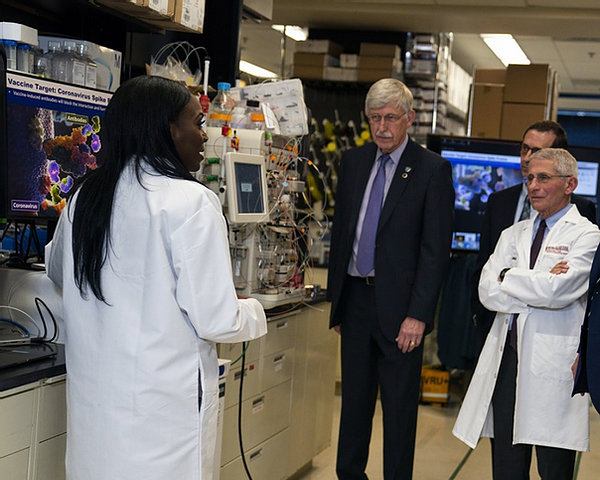
We’d like to shed light on a key contributor to the race to find an effective vaccine for the infamous Coronavirus. Dr. Kizzmekia S. Corbett isn’t just someone that should be recognized in February, but every time a vaccine is mentioned.

“ The vaccine you are going to be taking was developed by an African American woman, and that is just a fact,” Dr. Anthony Fauci, head of the National Institute of Allergy and Infectious Diseases at the National Institutes of Health, stated.

She sparked an interest in science at a young age, but couldn’t possibly foresee the difference her contribution would make. She attended the University of Maryland- Baltimore County as a Meyerhoff scholar, a mentorship program for STEM students. She received a Bachelor of Science in Biological Sciences, while also majoring in Sociology.

Dr. Freeman Hrabowski, the president of the University of Maryland, caught a glimpse of her raw talent early on and stated that he knew she going to make it upon meeting her.

Later she obtained her Ph.D. in Microbiology and Immunology at the University of North Carolina at Chapel Hill in 2014.

photo: https://our-vaccine.org/dr-kizzmekia-corbett/

Corbett currently works as a research fellow and serves as the scientific lead for the Coronavirus Vaccines & Immunopathogenesis Team at the NIH (National Institute of Health). Her team worked to develop the Coronavirus vaccine utilized by Moderna. More specifically, her work is credited for developing the mRNA-1273 vaccine, the most used vaccine against the virus.

Dr. Kizzmekia S. Corbett always had a strong background in science, but it was her ability to communicate with others that set her apart from her peers. Aside from her research, Dr. Corbett is a dedicated advocator of STEM education and vaccine awareness in her community.

The COVID-19 pandemic has brought much sadness to us all, but we have Dr. Kizzmekia S. Corbett to thank for bringing us one step closer to the end of this pandemic.


Filed Under: #shareABLE, engHEROES, Engineering Disciplines, engSPIRATIONAL, Journeys

5 Resources to Help You Pick a University

by wemadeit

5 Resources to Help You Pick a University

Picking a university is tough, especially if you will be calling it home for the next few years. Here are some resources that might help when making your decision:

University Tours

This may seem like an obvious one, but you don’t have to wait until grade 12 to book yourself a university tour! They are a great way to get a feel for the campus, put into perspective the actual sizes of dorm rooms, and get some insider information from your tour guide (especially if they are a current student at the school!).

University Fairs

University Fairs can be a great way to get your questions about a school answered by knowledgeable recruiters. Check with your guidance counsellors to see if your high school hosts any university fairs throughout the year, otherwise check out public university fairs like the annual Ontario University Fair (or any province you may be in!).

University Open Houses

So maybe you missed your chance for a university tour, or maybe you would rather explore a school with more of your friends and family than can fit in a tour group. Universities usually offer multiple Open Houses throughout the school year, where you can explore the campus, hear from different clubs and meet tons of current students. Keep an eye out on school websites for any university you are considering.

Current University Students

Chatting with current university students can be a huge help when debating what school to apply to, or which offer to accept. They can help give you the insider scoop about the school that may not be on the school’s website, and can become a friend should you choose to go there. Talk to your guidance counsellors to see if they can set you up with any of your school’s alumni, or reach out to the university itself.

When in doubt, email them!

All school’s have a Contact section on their website where you can write them an email or get their phone number. If you have a specific question, or just don’t know where to start, they will be happy to help you. Don’t be shy!

Filed Under: #shareABLE, #surveySAYS, Engineering Disciplines, Getting There, Grade 11, Journeys Tagged With: #gettingthere, email, engineering, fairs, OUF, tours

Who is Julie Payette?

by wemadeit

Who is Julie Payette?

Quick facts!

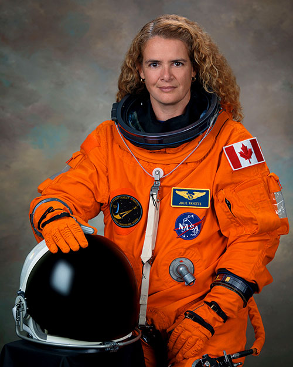
Who: Governor General Julie Payette is an engineer, former NASA astronaut, scientific broadcaster and corporate director.

What: In 1992, Julie was selected for the Canadian Space Agency (CSA) astronaut corps. She was a part of two spaceflights and served as the CAPCOM (Capsule Communicator) for many more. She went on to serve as the CSA’s chief astronaut for seven years.

Where: Julie graduated from McGill University with a degree in Electrical Engineering and from the University of Toronto with a Master’s in Computer Engineering. During Julie’s time in space, she worked on the International Space Station (ISS) and its Mobile Servicing System, now known as the Canadarm2.

When: Julie first visited space in 1999, and was the second ever spaceflight to the ISS. Her second spaceflight was in 2009 on the space shuttle Endeavor. In 2013, Julie retired from the CSA and in 2017, Julie was named the Governor General of Canada where she still serves today.

Julie was first invested into the Order of Canada in 2010, and is a Knight of the Ordre national du Québec. She stands as an inspiration to young girls that their dreams in STEM are within reach and is a role model to aspiring engineers and astronauts everywhere.

Filed Under: #shareABLE, engHEROES, Engineering Disciplines, engSPIRATIONAL, Getting There, Journeys Tagged With: engineering, general, governor, julie, payette

3 Ways Universities Support Female Engineering Students

by wemadeit

3 Ways Universities Support Female Engineering Students
Source: Medium

As a girl, it can be intimidating to study a profession that is very male-dominated. Thankfully, universities are making an effort to ensure that any of their female engineering students feel supported and empowered throughout their university career. Here are 3 ways that universities are making this possible:

Women in Engineering Societies

Societies (similar to clubs) are a great way to meet like-minded students and build a community at your school. Joining a Women in Engineering society will connect you with students in different years, invite you to exciting social events and even allow for leadership opportunities on campus.

Scholarships

Schools are offering scholarships specifically for females entering or currently in their engineering programs (like this Women for STEM fund at Ontario Tech University). These scholarships are usually promoted on the university’s website, but you can also learn more about them through high school guidance counsellors or a quick call to the university’s Student Awards department.

Conferences

Conferences can be a great way to build your network of female engineering students beyond your own university. They can also be an amazing opportunity to hear from industry professionals and introduce you to companies that you may work for one day!

There is no better time to be a woman in engineering and hopefully, these resources reignite your motivation to join the field.

Filed Under: #shareABLE, #surveySAYS, Engineering Disciplines, Journeys Tagged With: engineering, in, Support, three, ways, Women

Next Page »

Primary Sidebar

Categories

  • #shareABLE (70)
  • #surveySAYS (8)
  • engHEROES (50)
  • Engineering Disciplines (35)
  • engSPIRATIONAL (59)
  • Getting There (17)
  • Grade 11 (4)
  • Health (3)
  • Journeys (20)
  • Listen Up (5)
  • listenUp! (2)
  • More2Life (7)
  • Our Favourite Articles (2)
  • Press (3)
  • Recipes (2)
  • Reviews (5)
  • TED talk (17)
  • TheFieldTrip (5)
  • Uncategorized (4)
  • weTHINK (15)

Teacher Login

Register | Lost your password?

Sign Up To Our Newsletter

Footer

Menu

  • About WEMADEIT
    • Donor
    • Partners
      • Toronto Metropolitan University
      • Ontario Tech University
      • University of Waterloo
      • Western University
  • For Students
    • Blog
    • Getting There
      • Engineering Disciplines
      • Student Life
      • Where Can I Study?
      • What You Don’t Know About Engineering
      • ENG BLING
    • Black Students
    • Indigenous Students
    • 2SLGBTQIA+ Students
    • Women and Girls
  • For Parents
    • Where Can You Study Engineering?
    • What is Engineering?
  • For Undergrads
    • Gaining work experience
    • Peer Mentorship
    • One Awards
    • Next Generation in Power
    • New Grad Program
  • For Teachers
    • Teacher Resources
  • Getting Involved
  • Contact Us
    • Newsletter Signup

Search

Teacher Login

Register | Lost your password?

  • Facebook
  • Instagram
  • Twitter

© 2026 · WEMADEIT | Site Design by rtraction