
• Skip to primary navigation
  • Skip to content
  • Skip to footer

We Made a Difference. We Made it Together. WEMADEIT.

  • About WEMADEIT
    • Donor
    • Partners
      • Toronto Metropolitan University
      • Ontario Tech University
      • University of Waterloo
      • Western University
  • For Students
    • Blog
    • Getting There
      • Engineering Disciplines
      • Student Life
      • Where Can I Study?
      • What You Don’t Know About Engineering
      • ENG BLING
    • Black Students
    • Indigenous Students
    • 2SLGBTQIA+ Students
    • Women and Girls
  • For Parents
    • Where Can You Study Engineering?
    • What is Engineering?
  • For Undergrads
    • Gaining work experience
    • Peer Mentorship
    • One Awards
    • Next Generation in Power
    • New Grad Program
  • For Teachers
    • Teacher Resources
  • Getting Involved
  • Contact Us
    • Newsletter Signup

wemadeit

4 Resources for Learning at Home

by wemadeit

4 Resources for Learning at Home

Normally we have spaces in which we do our best work. Whether those four walls are confined to your classroom at school, or maybe even your local library. Either way, certain environments have the right combination of factors, to make us work our absolute best. So what happens when we get home? It can be very hard to get any productive work done when we are surrounded by the distractions that come with our bedroom. But, it doesn’t have to be that way. There are tons of opportunities to satisfy your eager mind at home, and exercise your brain for free! So, next time you are tired of the ordinary check out these extraordinary learning resources we have listed!

Coursera
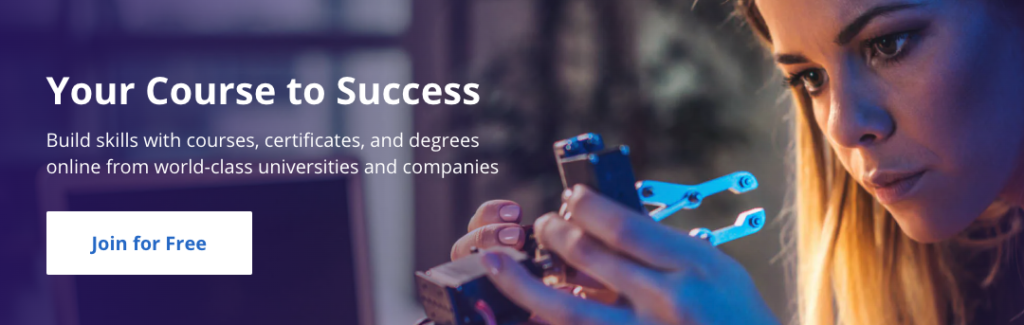
Post-secondary education is very expensive, that’s why it is very important to know you are picking the right school/course. The best part is, you do so much research for this without leaving your home! Well, Coursera is an online platform that makes all of this possible! This website allows users to sign up for free, and access a variety of courses from several Ivy League schools.

You can even specialize and take certain courses, to enhance your learning on a particular subject. This platform offers courses in all areas of STEM (science, technology, engineering, and math). An example is a course offered by Georgia Institute of Technology on this site called “Introduction to Engineering Mechanics”. Another great asset is that by completing courses you can earn certifications. Since anyone can do this, you can be putting yourself ahead of your classmates by having these under your belt! Coursera also combats procrastination and distraction by giving users a certain time limit to complete tasks and courses. This ultimately increases productivity and focus amongst their students.

Lynda

Lynda is an online library of sorts containing educational and tutorial based videos, meant to teach you various skills. The best part about Lynda is that each video is created by experts. That way you know you are getting the best information, and can learn from a great teacher! Lynda offers many of its services for free, so you don’t have to break the bank learning a new skill! Either your high school or even local library card will get your free access to this resource. Lynda has a lot of great STEM courses like “Engineering Management”. Lynda can also be accessible through mobile platforms which is great news for anyone on the go, or simply wanting to lounge while learning. That way you can be from the comfort of your own home when you explore and learn from these videos, at no cost!

Open Culture

Sometimes online learning can seem daunting or nearly impossible because we all have different learning needs. However, Open Culture tries to combat that issue by providing a multi-media solution to online courses! This website provides several ways to learn course material from home including, online streamable lessons, audiobooks, videos, and writing material. The reason behind this is to make sure that everyone has the very best chance of achieving and gaining skills online. Open Culture offers courses in almost every subject as well, making sure to include everyone in their online learning mission. They also have a variety of STEM classes including “Aircraft Systems Engineering”.

YouTube

That’s right an application you probably open for entertainment or for laughs, can also be very educational. YouTube has millions of videos created daily, and there are definitely a lot of educational options. For example, if you only have a small amount of time daily to dedicate to online learning, you can visit the Crash Course channel. This channel is designed to quickly teach and explain different topics to its audiences. It is perfect because these videos are bitesize keeping audiences watching the entirety of the video. You can also watch creators try various experiments and follow their steps, to recreate them from home. This can turn your kitchen into a science lab! The possibilities are truly endless with this platform, how you use it is ultimately up to you!

Overall, your education doesn’t have to stop when you leave school. Your bedroom or kitchen table can be just as productive of space as your desk! There are tons of very useful tools online that can assist you in exercising your brain no matter where you are. The question isn’t “can I learn from home?”, it’s “when do I want to start?”

Filed Under: #shareABLE, Getting There Tagged With: free, home, learning, resources

ENGHERO: Elizabeth Norman

by wemadeit

ENGHERO: Elizabeth Norman

Elizabeth Norman has an undergraduate degree in Biomedical Engineering and is currently pursuing her Master’s in Biomedical Engineering.

What is one thing you wish you knew about engineering when you were in high school?

One thing I found surprising in first year was the diversity of courses that I was required to take. Courses I would have never imagined that I would need to take such as the history of science and technology. In retrospect, I found these courses enlightening and helped to provide a solid foundation for the rest of my education.

What made you want to pursue engineering?

I have always had an aptitude for math and science and an analytical approach to life. I was fortunate enough to have engineers in my family which exposed me to this field. In addition, I have always wanted to help people and there are endless ways in which engineers can not only help individuals but also society as a whole. I always admired how engineers find solutions to the root of problems not just fixing the current issue at hand.

What branch of engineering is your major and how did you decide on it?

From a young age I wanted to help people.  My grandparents needed physical assistance at times due to arthritis hand implants and other ailments.  In looking through the various fields of engineering it was made clear to me that I could combine my passions, helping people, along with math and science.  Therefore, I chose to major in Biomedical Engineering.

What do you plan on doing with your engineering degree?

I am currently pursuing a Masters in Biomedical Engineering and aspire to design the next generation of medical devices that will enable and empower people to live a healthy and fulfilling life.

What advice would you give to a young female who is considering the field of engineering, but isn’t sure if it’s right for them?

Do your research and talk to professionals that are currently in the field that interests you. Have the confidence to pursue your passions and remember the world needs more female engineers!

Filed Under: #shareABLE, engHEROES, engSPIRATIONAL Tagged With: biodmeical, engineering, undergraduate, western university

Why I Stayed

by wemadeit

Why I Stayed

An exploration into why women choose to stay in STEM professions and pursue their professional goals.

Positivity is infectious and really affects your everyday. Women in engineering are something that is often looked at through the lens of “Why aren’t more women becoming engineers?”, but today we are going to explore why women choose to stay in these professions and pursue their professional goals in STEM. Looking at both sides of the spectrum is valuable in understanding the entire scope of the situation. However,  the impact of hearing success stories can not be underestimated. 

The goal of DiscoverE’s and Concord Evaluation Group’s collaborative study “Despite the Odds” was to uncover why women are choosing to become engineers after post-secondary. The idea sparked from the discovery of current studies available that focus on why women left engineering. Through this research, they found a  lack of studies analyzing why women are becoming engineers.

After interviewing several practicing female engineers across North America, they traced their passion back to these key points: 

  • Interest in and positive attitudes towards engineering.
  • Self-confidence in their skills and knowledge to do the work.
  • Having a strong support network.
  • Feeling a sense of belonging.

Let’s break down the reasoning and significance of each point.  

Interest in and Positive Attitude Toward Engineering.

Many participants in the study reported their interest in science and math and traced those passions back to their early school years. Being interested in science and math is a great asset when it comes to studying engineering, however, these students can always choose to study a more specialized subject such as; getting their bachelor’s in physics or chemistry. 

When discussing pursuing a bachelor’s degree in subjects as specialized as chemistry or physics, students complained about how constricting they felt these majors are. What made engineering stand out for these participants was the problem solving and freedom that it provides. 

One participant illustrated why she chose engineering instead of physics, “Physics curriculum does not allow me to think for myself. They tell me what to think. In engineering, I use physics and learn to think for myself.” This means that engineering is providing these women with the ability to practice their interests in a meaningful way, that extends past “rote memorization”.

Self-Confidence in Their Skills and Knowledge To Do the Work.

This study connected this reason back to Bandura’s (1977) self-efficacy theory. This is a behavioral theory that explains why people are motivated to complete certain tasks. 

Simply put Bandura suggests that a person’s belief about his/her ability to complete a certain task has a huge impact on their actions and choices they make. This makes sense, if you were confident that you would make a team, you would be more likely to try out. Many people have the knowledge and skillsets to succeed but don’t act on these talents because of a lack of confidence. This connects fear of failing to our actions. 

In the past years, there has been an increasing amount of support systems and encouragement for more women to join STEM programs. This can be seen in organizations and charitable funds organizing events, workshops and even offering scholarships to incoming students. This can also be seen when walking around a university campus and seeing offices dedicated to supporting minorities in programs. 

All of these resources have created infectious confidence among young women. This confidence is allowing women to take a leap of faith, which may look like enrolling in an engineering program or staying in their engineering field after graduation. 

Having a Strong Support Network and Feeling a Sense of Belonging

These two points have a sense of community in common, which is key to success in any field of study. This need is something that is chemical in humans and can be traced back to survival instincts, so it is no wonder we are seeing it amongst students. 

There is so much to learn during your bachelor’s of engineering, and the amount of information and challenges can be overwhelming. That makes this nearly impossible to learn alone, and this program is designed that way because engineers work together in their professional careers. 

There is an old African proverb: “It takes a village to raise a child”, and it really does take a village to make an engineer. The study of engineering’s design encourages collaboration, and this makes it easier to succeed and makes the student’s time in the program more valuable. Not only is collaboration helpful to complete a task, but it makes everyone in the group more effective because they feel supported and know that they are not in it alone. Participants in this study have even spoken about experiences with professors taking extra time to support students and help them solve problems. 

One participant describes her view on the engineering department “[W]ithin the engineering department I find that we’re very much a community…willing to help each other out and it’s not cutthroat and if we need help on something I’m not afraid to go up a flight of stairs to a girl who lives above me and ask her for help—I don’t think that she’s going to look down on me.”

This bond between colleagues, classmates, and professors creates an unstoppable force supporting women in their journey to becoming an engineer. In conclusion, I hope this study acts as more motivation to pursue engineering, and join the thriving women in this field. DiscoverE and Concord Evaluation Group conclude their study by saying: “We hope the success stories uncovered through this study can serve as a template so that young women looking at potential engineering careers can more easily make their way forward.”

Filed Under: #shareABLE, #surveySAYS, engSPIRATIONAL

Why Not Get Creative?

by wemadeit

Why Not Get Creative?

Identifying as a “creative” means you can innovate, visualize ideas, make new things and overall seen the world differently. Engineering in particular needs more people who can innovate and create designs that help populations grow and thrive. This field is often associated with solely logic-based thinking, but an “outside of the box” perspective is just as important in the mindset of an engineer. Don’t let your creativity steer you away from a career in engineering, because this field depends on different perspectives and innovation. Behind every life-changing invention is a big imagination, and a great deal of creativity. The concept of innovation and creating new technology itself requires creativity. This outside of the box thinking has lead to the creation of medicine, cars, and electricity. Here are just a few examples of inventions that were a product of creative minds in engineering. 

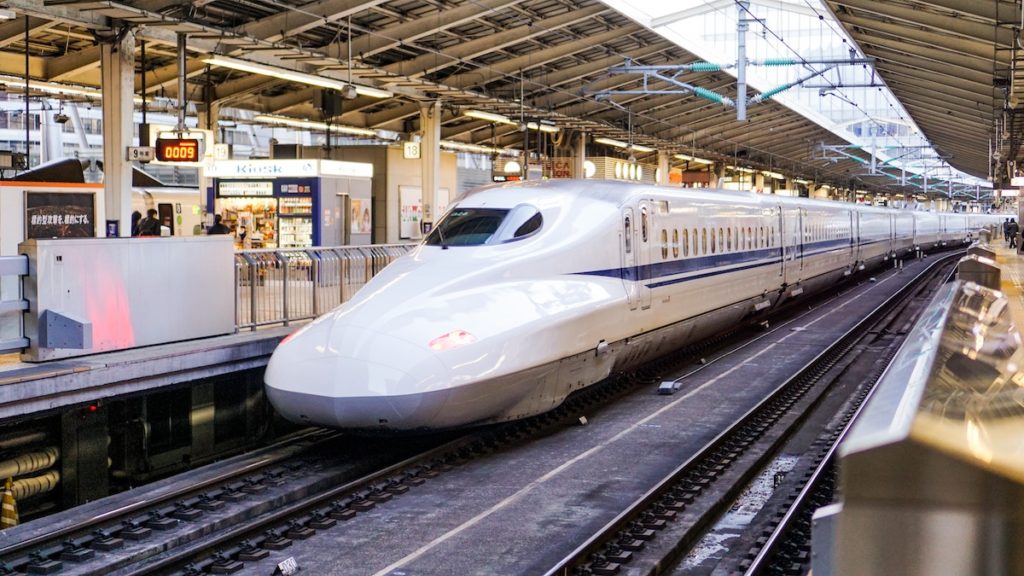
Bullet trains are Japan’s high-speed trains that run at 200 miles per hour and are earthquake-proof. The idea of such a vehicle is ambitious and required the inventors to draw inspiration from the kingfisher bird to reduce the amount of noise it produced. The invention of this vehicle defied the rules and design of all previous trains. This example of outstanding problem solving and innovation never would have been possible without thinking outside of what was possible at the time. Looking to better the world, in ways that aren’t even possible yet, is essential in engineering.

An example we see in our homes is the bagless vacuum invented by James Dyson. James deconstructed the vacuum to research ways to prevent clogging and loss of suction. Creating a bagless vacuum was the solution, which changed the device forever. The bagless design prevented waste buildup in one central location. 

Since creativity is such a huge part of the job title, engineers often practice this skill inside and outside of their work. Engineers have admitted to playing games outside of work to specifically exercise this part of their brain. Problem-solving games help engineers see their work from a different perspective and implement their ideas more effectively. 

Engineers also practice the art of rapid prototyping, which is making many different versions of a device during the design process. This forces the engineer to imagine their original design differently with each version. Rapid prototyping is especially effective because in the end, there are several devices to compare/contrast and test. In fact, Dyson is known to have built 5127 prototypes before he came upon a successful one. 

Reverse engineering is also an excellent way to understand how something works and reimagine it. Reverse engineering is taking something apart and reassembling it. During this process engineers and everyday people alike, can learn more about each part of the device and how they all work together. Discovering how to change this device can also come across during this process. 

Being an engineer is all about the perfect balance of logical, and outside of the box thinking. Without both mindsets, designs will be lackluster or never exist. Therefore, we need more people to join this industry that see the world differently and can apply that talent to technology. This makes the stereotype of engineers not being creative, officially debunked! If you identify as a “creative” I encourage you to pursue a career in engineering, the world needs more fascinating minds like yours. 

Filed Under: #shareABLE, engSPIRATIONAL, Getting There Tagged With: creative, engineering, protoyping, wemadeit

There is No Such Thing as One Size Fits All in Space

by wemadeit

There is No Such Thing as One Size Fits All in Space

Getting the opportunity to blast off into space, and explore our galaxy is one that many dream of from a young age. Ever since man got to the moon, many others have aspired to take that exact same step. This great milestone has inspired dances, along with references in film and television. Of course, astronauts historically started with men and have been predominantly dominated by men. However, October 18, 2019, marked a long-awaited milestone in aerospace history. Two women walked on the moon, side by side without being accompanied by a man. This is amazing, however, this accomplishment begs the question “why has this taken so long?”. Why haven’t there been more women astronauts? The answer to this question differs depending on who you ask.

When asked, Ken Bowersox the acting Associate Administrator for Human Exploration at NASA and a former astronaut, connected the lack of female astronauts to their differing physical characteristics. He compared spacewalking to playing football, in that having a broader body type makes it easier to excel. “Spacewalks are one of those areas where just how your body is built in shape, it makes a difference in how well you can work a suit.”

Other NASA officials, researchers and astronauts disagree, arguing that maneuvering in zero gravity has nothing to do with your physical characteristics. Claiming that moving in this environment, is all about technique, small movements and being able to twist your body in the correct direction. All of which is taught during the training astronauts must successfully complete before going to space. 

Some even argue that height specifically is holding women back from space exploration. But many have argued that the average height difference between men and women is too small to make a difference, and has nothing to do with spacewalking. In fact, being shorter is even better in some situations astronauts encounter. Dava Newman, the former NASA Deputy Administrator who is working on a new spacesuit design at MIT claims “there are a lot of tight places in a Hubble repair, so actually a smaller person has some advantages in terms of getting into some tight spaces and some tight repairs”.

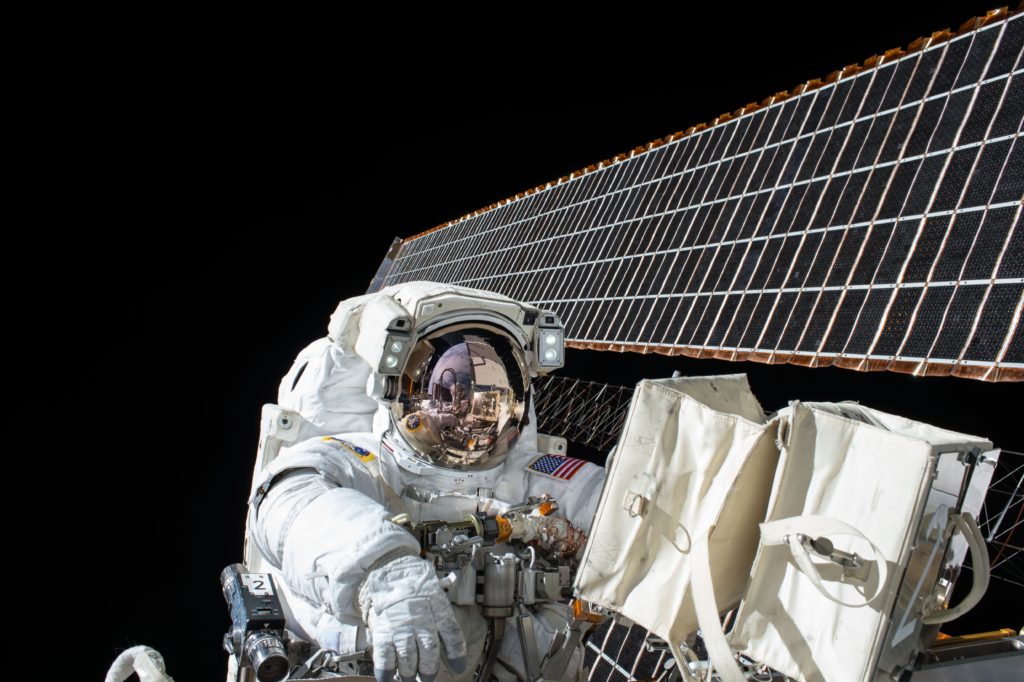
If it isn’t physical characteristics holding women astronauts back, what is? Astronauts, researchers and NASA officials alike have traced this problem back to the original design of the spacesuit itself. The spacesuit is an extraordinary example of engineering that acts as a safeguard between the human body and new dangerous environments. Traditionally, only applied to men, because the design of this suit was better suited to fit and accommodate their bodies. 

“When NASA was deciding which size torsos to make, the agency opted against creating smalls and even extra-smalls.” This meant that the exclusion of smaller sizes prevented women from being able to properly fit within the suit. Being 100 percent comfortable, and functional in the suit is crucial for a safe trip to outer space, which directly excluded women for a very long time. Astronauts must be able to move around in the spacesuit, without too much extra space (in order to keep the proper air compression). This perfect balance was something that for a long time wasn’t possible for women, preventing them from becoming astronauts. 

This is another great example of why more women are needed in engineering. If more minorities are represented in the design process, more minorities will be accommodated for in technology. Imagine all that could have been done, if women were able to fit into space suits sooner? This problem is not unique to astronauts, design discrimination is real in all industries and is something we can stop. There is no better way to change the world than to have a say in the design of it. 

Filed Under: #shareABLE, Engineering Disciplines, weTHINK

Advice For The Next Generation Of Women In STEM

by wemadeit

Advice For The Next Generation Of Women In STEM

As women remain dramatically underrepresented across all STEM studies and careers, how do we make strides to close the gender gap and fuel the next generation of female innovators? At a time when technology continues to transform the way we live, work and learn, the need to close the STEM gender gap is more critical than ever.

With that mission in mind, Forbes partnered with Audi of America in March to host the second annual “Idea Incubator,” a program dedicated to inspiring future STEM leaders by bringing together emerging talent to solve real-world challenges through a STEM lens. Students from the New York University Tandon School of Engineering were tasked with developing innovative solutions around the impact electric vehicles will have on urban mobility. The top two winning teams of students walked away with awards from the “Audi Drive Progress Grant,” a combined $50,000 scholarship toward their studies.

I asked the young women of the first place team to share for their best advice on unlocking opportunities for the next generation of women in STEM. From pushing past fear of the unknown to denying false stereotypes, their insights and lessons learned highlight what to expect for those who want to follow in their footsteps.

Get Comfortable Feeling Uncomfortable

“My advice for women wanting to enter the STEM field would be to not be afraid to get uncomfortable. Often times, you may find opportunities that you think you can’t do, but the truth is that you really can. It’s okay to feel uncomfortable and try things you’ve never done before because you never know, it might turn out that you actually like it. For example, I was never a fan of coding or computer science. I took a coding class in high school and I was completely lost, I didn’t believe that I could really do this as a career. It wasn’t until I got to be a part of programs like Women in Technology, where I got to actually shadow women in the tech industry, and Kode with Klossy, where I got to learn coding and collaborate with other young women interested in coding, that I actually realized that coding isn’t really that bad, and now I am pursuing a computer science! Be comfortable with trying new things, and don’t be afraid to reach out to others!”

Vidya Gopalakrishna, Freshman, Computer Science Major

Push Past Gender Stereotypes

“Choosing to follow a path less traveled by those of your demographic will always be a difficult decision. Even more challenging, however, is sticking to that path as you’re continually faced with the actions and opinions of those who are implicitly biased towards maintaining a particular status quo. My best advice to women aiming to pursue careers in STEM fields is to succeed in the face of this opposition with as much grandeur as possible. Recognize that there exists in some this internal bias but refuse to let it corrode your sense of self-worth and limit what you think yourself capable of. Bring to the table your unique perspective and hard-earned talents and no one can reasonably refuse you a seat.”

Nicole Lyons, Freshman, Chemical and Biomolecular Engineering Major

Network Your Way To Success

“When answering this question last year, I emphasized the importance of busting the math myth; a myth in which excelling in math was a prerequisite to pursuing a career in STEM. While this sentiment still rings true, I want to emphasize the importance of networking. Fostering meaningful relationships for your professional career is necessary to enter and succeed in a STEM field. Networking can be as simple as participating in school clubs, signing up for tech newsletters, or even going to your professor’s office hours.

I was first introduced to STEM when a high school friend asked me if I wanted to join the robotics team he created for our school. Had I not had him in my personal network, I would never have taken STEM seriously as a profession. Amazingly, these small interactions have had a domino effect. I’ve managed to build my network by expressing my passions with professors who have then later recommended me for research positions and even been my reference contacts in my job search. Staying in touch with school administrators has been greatly beneficial.”

Aida Mehović, Senior, Computer and Electrical Engineering Major

Filed Under: #shareABLE, #surveySAYS, engSPIRATIONAL, Getting There

« Previous Page
Next Page »

Footer

Menu

  • About WEMADEIT
    • Donor
    • Partners
      • Toronto Metropolitan University
      • Ontario Tech University
      • University of Waterloo
      • Western University
  • For Students
    • Blog
    • Getting There
      • Engineering Disciplines
      • Student Life
      • Where Can I Study?
      • What You Don’t Know About Engineering
      • ENG BLING
    • Black Students
    • Indigenous Students
    • 2SLGBTQIA+ Students
    • Women and Girls
  • For Parents
    • Where Can You Study Engineering?
    • What is Engineering?
  • For Undergrads
    • Gaining work experience
    • Peer Mentorship
    • One Awards
    • Next Generation in Power
    • New Grad Program
  • For Teachers
    • Teacher Resources
  • Getting Involved
  • Contact Us
    • Newsletter Signup

Search

Teacher Login

Register | Lost your password?

  • Facebook
  • Instagram
  • Twitter

© 2026 · WEMADEIT | Site Design by rtraction