• Skip to primary navigation
  • Skip to content
  • Skip to footer

We Made a Difference. We Made it Together. WEMADEIT.

  • About WEMADEIT
    • Donor
    • Partners
      • Toronto Metropolitan University
      • Ontario Tech University
      • University of Waterloo
      • Western University
  • For Students
    • Blog
    • Getting There
      • Engineering Disciplines
      • Student Life
      • Where Can I Study?
      • What You Don’t Know About Engineering
      • ENG BLING
    • Black Students
    • Indigenous Students
    • 2SLGBTQIA+ Students
    • Women and Girls
  • For Parents
    • Where Can You Study Engineering?
    • What is Engineering?
  • For Undergrads
    • Gaining work experience
    • Peer Mentorship
    • One Awards
    • Next Generation in Power
    • New Grad Program
  • For Teachers
    • Teacher Resources
  • Getting Involved
  • Contact Us
    • Newsletter Signup

engbeaut

ENGBEAUT Mentions WEMADEIT in Powerhouse Growers interview

by Community

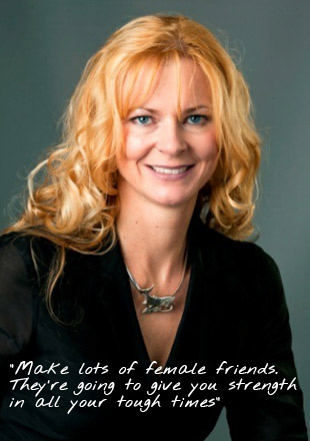
One of the outstanding women engineers that our Youth Think Tank interviewed for WEMADEIT.ca was gracious enough to mention us in her recent interview with powerhousegrowers.com. Thanks Laura Paul!

IN HER FIELD: LAURA PAUL, A GREEN BUILDING EXPERT WHO KNOWS NO LIMITS
Filed Under: Press Tagged With: engbeaut, inspiring, wemadeit

Kim Farwell

by admin

Kim Farwell

Q&A WITH ENGHERO: Kim Farwell

Kim is a senior technical advisor for extraction and she is the first female to reach this position in her company, Syncrude Canada Ltd. She got there by getting a chemical engineering degree, an MBA and a certificate in oil sands technology.

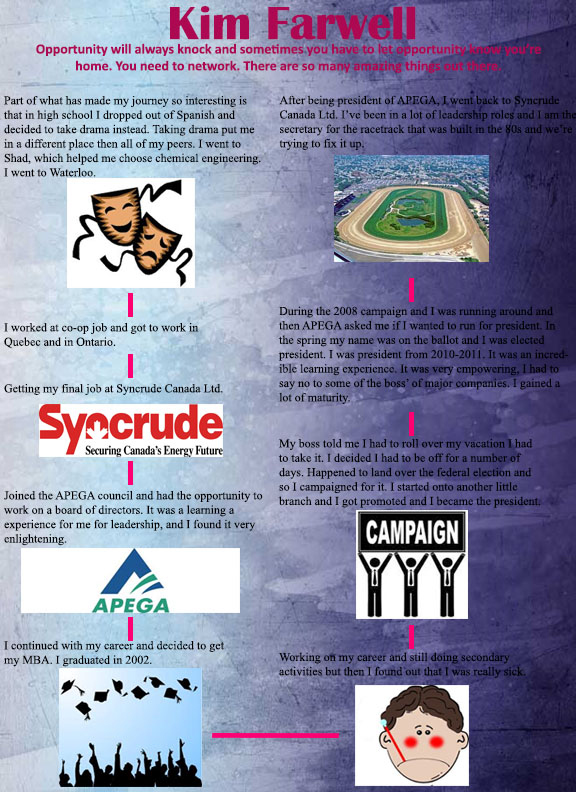
Kim Farwell Journey Map

Q: What’s one thing you wish you knew about engineering back when you were in high school?

I wish I knew that I was going to enjoy it as much as I do.

Q: What’s your proudest accomplishment as an engineer?

I’m proud of that I received the Early Accomplishment Award and was president of APEGA in 2010. I’m also proud of the time I figured out a very interesting technical problem at the plant.

Q: Tell me about a time in your career when your work has been about discovery or curiosity?

My work was about discovery and curiosity when I solved a problem at the plant. A geologist and I figured out why oils weren’t coming off the separator by applying the fundamentals we had learned to real life.

Q: What are you doing these days?

My job now is a senior technical advisor for extraction and I’m the first female to reach this position in my company, Syncrude Canada Ltd. I got there by getting a chemical engineering degree, an MBA and a certificate in oil sands technology. I also have a co-op degree with six work terms, all with different companies. When I started out in high school, I was planning to be a political journalist but my friend convinced me to enter a Popsicle stick bridge contest. We drilled holes in the Popsicle sticks, put ribbons through them and won.

This is when I really started to consider engineering as a career path. Also, I went to Shad Valley and I worked with Xerox to study a pigment used for photocopiers. This helped me realize that I wanted to work in the field of chemistry.

Q: Do you feel your work contributes to society? How so?

I do. I secure Canada’s energy future with every drop of oil. My work provides jobs and energy to the world-without any ethical issues like in Nigeria or environmental issues.

Q: Why do we need more female engineers?

We need more female engineers because engineering is very much a team effort. You need a team of diverse group of people so they can solve problems and female engineers bring a different skill set.

Q: If you could recommend something for girls in high school what would it be?

I would recommend that you make lots of female friends. They are going to give you strength in all your tough times, ground you when you’re being mistreated and encourage you to never give up.

Filed Under: Journeys Tagged With: AMAZING, engbeaut, inspirational, intelligent, Interesting, Kind, Nice, Outgoing, Smart

Laura Paul

by admin

Laura Paul

Q&A WITH EngHERO: Laura Paul

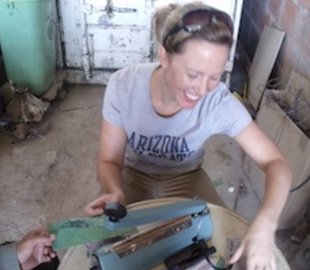
Laura Paul is a field engineer, and sustainability analyst working forLaura Paul Morrison Hershfield. Every day, Laura helps minimize the negative impacts buildings have on the environment and optimize the positive ones.

Q: What’s one thing you wish you knew about engineering back when you were in high school?

There are so many related fields you can work it rather than just typical design streams. There are lots of social sides to Engineering as well, rather than just purely technical work.

Q: What’s your proudest accomplishment as an engineer?

One of my proudest moments as an Engineer was getting my iron ring presented to me by my Grandfather, Malcolm Paul, who also was a Civil Engineer. The iron ring is worn by Engineers as a reminder of the ethical obligations associated with our work.

Q: Tell me about a time in your career when your work has been about discovery or curiosity?

When I first go out on a construction site as field engineer it was a time when everything was new, and I was learning a huge amount. I was able to take the theory I learned in school and put it into practice. I learned a lot about materials, and constructability, and how each individual component worked with others in a system. I would highly suggest for all Engineers to have experience in the field on a construction site.

Q: What are you doing these days?

Sustainability Analyst, Morrison Hershfield, I work doing LEED (Leadership in Energy and Environmental Design) consultancy and assessments, which includes helping designers reducing energy and water, choose less impactful materials, and improve the indoor environment for occupants (such as access to daylight and views).

I got here through experience on LEED projects, obtaining LEED Accredited Professional (LEED AP) accreditation with specialties in: Building Design and Construction, Existing Building Operations and Maintenance, and Neighbourhood Design

I didn’t really know where I was going when I started, but I was hired by a General Contractor, so if I hadn’t learned more about sustainability I likely would have been headed towards general Project Management on Building projects.

Q: Do you feel your work contributes to society? How so?

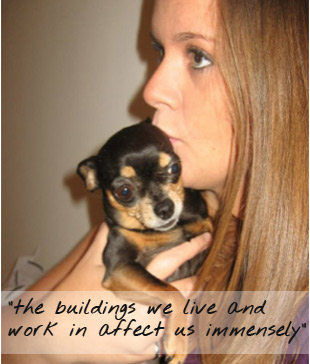
Absolutely. I think that the buildings we live and work in affect us immensely – from the way we feel, to how healthy we are, to how they impact nature and the environment. Working as a Sustainable Building Specialist allows me to minimize the negative impacts buildings have and optimize the positive ones.

Q: Why do we need more female engineers?

I think the perspective of women is unique from the perspective of men (not better or worse, just different) – and encouraging many different perspectives always enhances decision making.

Q: What does a typical day on the job look like?

A typical day on the job involves working and coordinating with a team.

Filed Under: engHEROES Tagged With: achieve, beautiful, cute, engbeaut, fun, hero, inspire, society, work

Erica Lee Garcia

by admin

Erica Lee Garcia

Q&A WITH EngHERO: Erica Lee Garcia

Engbeaut Erica Lee Garcia

Erica Lee is a professional engineer who not only provides professional consultation to engineering companies, but also uses her experience and abilities to help young engineering students/graduate get started in their career and also raises awareness about engineering alongside Engineers Without Borders.

Q: What’s one thing you wish you knew about engineering back when you were in high school?

I think that one thing would be that engineering is really different from math or science. Of course they are related and needed, but engineering itself is nothing like the educational experience. Engineering is fun! It’s about problem-solving, improvising, and teamwork. Also engineering helps people’s lives, make it safe, cost-effective.

Q: What’s your proudest accomplishment as an engineer?

I used to work in a mining company. I travelled to Africa and South America where there were a lot of mines and I was a speaker for workers of the company. I talked about a method similar to 6-sigma (later explained) and problem solving. Even though there were a lot of mines in some places, after all that can be drained is taken from the mine, there is no more work available and many lose their jobs. For me, it’s a proud accomplishment, because I got to visit them and train some people, and give them some skills that not only helped them save money at the present time, but also could be used for the rest of their lives, allowing them to solve problems.

Q: Tell me about a time in your career when your work has been about discovery or curiosity?

I used to work for a company called Magna which produces all sorts of car parts. When working in the factory, we had a problem where some of the parts did not fit together properly. Now each part was worth about $17, so if they were thrown out, that would be thousands of dollars per day. So I was put in charge of a group to try and solve this problem. In this group we used a 6-sigma method, where there are specific steps to follow; mainly we need to identify what the problem is, why does it matter, what are its causes, and finally find a solution. When we came up with a possible solution, we had to test them and collect data, like “how many bad ones now?” Finally, we realized that the problem came from the supplier of a specific part, where all of the parts were not identical, so we solved the problem by allowing a tighter window to our supplier. It was one of my first projects, and the problem we were working on was very subtle, so it felt good when we were able to solve it; and then I got started on a next project.

Engbeaut Erica Lee Garcia
Q: What are you doing these days?

My work is a combination of entrepreneurship and engineering. I am the president of my own company, Erica Lee Consulting, where we give our client companies advise on how to get better results while wasting less. I am also a coach/mentor for young engineering students or young engineers who have just graduated; it is really difficult when you have just graduated to know what the next step is, so we try and help them become more clear and confident with what they are going to do. And finally, I also work with Engineers Without Borders, where I talk to younger kids to help them understand their capabilities to make a difference in the world and make it better. I also help organizers of events for children to come up with different activities, where we’re talking to children in their own language, not ours.

Q: Do you feel your work contributes to society? How so?

For sure, in terms of my mentoring, I help young engineers gain clarity and confident and be happy with what they have chosen to do; it’s very important to enjoy what you do and be happy with your work. With the work I do in Engineers Without Borders, we can see the next generation as growing up with much greater understanding, empathy, and tolerance for complexity. They will care about sustainability when thinking of solutions and those kids are going to be 21st century problem solvers. Talking to children is something that other engineers can also volunteer to do, and it is coming that will have a great impact in the long run.

Q: Why do we need more female engineers?

I believe that engineering field needs to be as diverse as the population it serves. Because engineering and what it develops has a ripple effect, influence many other things around the world. Whenever you make something new, you need to consider the opinion of the stockholders and its sustainablitity, because it you don’t it won’t last long. Traditionally, we have had a lot of men in the field, and we have to fix a lot of problems; this doesn’t mean that men are to blame for these problems that we yet have to solve, but our resources are much better now and men have a specific type of intelligence. To have a balanced viewpoint, we need to have women who are commonly good at characteristics like empathy, creativity and caring. It’s easy to reach a decision when all people share the same opinions and are on the same page, but having one person who questions that decision is a must even though it can be tricky.
Also, it’s not just that we need a balance between men and women in engineering; engineering needs to have all different types of diversity, from background ethics to physical characteristics.

Q: Why did you choose to go into engineering?

I don’t really know how I chose engineering; there isn’t anyone in my family in engineering either. I know that I wanted to impact the physical world. Even as a kid, I was always looking for ways to optimize and do things better (for example, when it rained, I would go in the driveway and dig channels into the dirt to make the water flow better out of the driveway). For me, it was between going into engineering or music. I did not want to be a scientist, because I did not want to work with theories. But because I was good at math and science, school counsellors suggested and I chose to go into engineering. I believe that I made the right decision, because now I know that through engineering I am making a tangible impact, and from the beginning that was very important to me.

– – – – – – – – – – – – – – – – – – – – – – – – – – – – – – – – – – – – – – – – – – – – – –

View Erica’s Profile at EWB

Filed Under: engHEROES Tagged With: awareness, borders, children, consultant, engbeaut, engineering, future, graduate, inspirational, mentor, without, young minds

Ayah Bdeir

by admin

Ayah Bdeir

Q&A WITH EngHERO: Ayah Bdeir

Ayah Bdeir is an artist, engineer, and entrepreneur who founded littleBits, a library of tiny interactive circuit-boards which can be easily snapped together to perform specific functions.

Q: What’s one thing you wish you knew about engineering back when you were in high school?

That when you combine engineering with creativity and design you can create the most magical experiences.

Q: What’s your proudest accomplishment as an engineer?

Creating my company, littleBits! littleBits put the power of electronics in the hands of everyone and are changing the way people interact with and understand technology.

Q: Tell me about a time in your career when your work has been about discovery or curiosity?

I started littleBits as a prototype when I was a fellow at the Art and Technology Lab in New York, called Eyebeam, and made some prototypes and put them on my desk and put them on my website. There was only me at the time, so I continued, and I obsessed about the problem. I obsessed about this idea of how to make electronics accessible and how to make them modular. Three and a half years later, I had a product, and that’s when I decided to start a company.

Q: What are you doing these days?

I am the Founder & CEO of littleBits. littleBits are electronic modules that snap together with magnets for prototyping, learning and play.

I have a background in engineering. I did my undergrad as a computer engineer. In my 3rd year of undergrad we were required to do an internship and I got one at MIT as part of LIDS (Lab for Information and Decision Systems). It was a very dry and technical internship so I frequently went looking for something artistic. One day I stumbled upon a talk by the founder of IDEO at the MIT Media Lab and decided that was where I wanted to do my masters.

When I started engineering, I kept trying to find ways to bring more creative practices into engineering. When I went to the Media Lab it started my mission that I’ve been on for the past many years on how to make electronics accessible, and how to make electronics a creative medium.

Q: Do you feel your work contributes to society? How so?

Electronics are everywhere. We now produce, consume and throw out more electronic gadgets and technology enhanced products than ever before.

Over the past years, technology has moved from being an integral part of our lives, to helping define who we are. Yet, engineering is mystified, electronic objects are black-boxed and creativity is limited by the tools and materials available to each discipline.

I believe creativity with electronics (light, sound, sensors, etc.) will explode when they can be used as, and combined with other traditional materials such as paper, cardboard and screws. Materials are intuitive, accessible, self-contained, expressive, and most of all, can be integrated early in the creative process. Why not be able to combine felt with wood and light? Or Popsicle sticks with sound and motion sensitivity? Electronics are too pervasive and the technology too widespread for it to remain sequestered in its own space.

Q: Why do we need more female engineers?

I was lucky to be raised in a household where we were never led to believe that women were different than men, or ever thought that there was anything we couldn’t do. That upbringing has informed my view in how to contribute to the betterment of women in the workplace. I just try to do the best possible work I can every single day and be proud of it, and hopefully make others proud and inspired too. But what I do actually take a lot of care in, is making a gender-neutral product. This helps us achieve part of our mission to get more girls interested in science and engineering, and has been working very well. It is important to me that men and women are evenly represented at my own company and in the larger field of engineering.

Q: Is there a person who influenced your decision to become an engineer?

Yes, see above. I actually tried to quit multiple times during my undergrad but my parents encouraged me to at least complete my degree and then I could try something else. By the time I graduated, I was convinced of all the creative and powerful things I could do as an engineer.

– – – – – – – – – – – – – – – – – – – – – – – – – – – – – – – – – – – – – – – – – – – – – –
Check out: Little Bits

Filed Under: engHEROES Tagged With: AMAZING, awesome ENG, Ayah Bdeir, electronics, engbeaut, engspirational, inspirational, littleBits, simplified engineering

Abigail Hutty

by admin

Abigail Hutty

Q&A WITH EngHERO: Abigail Hutty

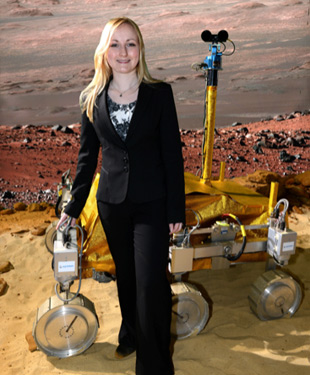
Abbie Hutty is a Spacecraft Structures Engineer at Airbus Defense and Space. She helped create the ExoMars rover , which is the Mars Rover prototype, and her job involves making technical decisions about the design development on the rover structure. She is an artist and an engineer and she won the IET Young Woman Engineer of the Year 2013.

Q: What’s one thing you wish you knew about engineering back when you were in high school?

That engineering is part of pretty much everything in our daily lives, and how high tech and cutting edge technology is always developed by a team of engineers! When I was at high school I shared the common misconception that “Engineers” were the people that came out to fix your home appliances in their overalls- I didn’t realize it included the design and development side too.

Q: What’s your proudest accomplishment as an engineer?

There are satellites in orbit with bits on them designed by me! That’s a pretty great feeling. You can see satellites sometimes with the naked eye, when the sun has set on Earth but is still shining on thing up in orbit- as they flash in the light from the sun they look like shooting stars. It’s great to go out and look up and know that something on that “shooting star” was once just an idea in your mind, that you developed and perfected, had made, and is now functioning all that way away!

Q: Tell me about a time in your career when your work has been about discovery or curiosity?

A lot of Airbus’ Science focused space missions are all about curiosity and discovery- exploring new worlds, imaging other planets, learning about our solar system, our galaxy, our universe. On a personal level though, the challenge of having to design such missions is so great that I am constantly having to learn about new things- for example today it was how the dust environment on Mars abrades the Materials we are designing our rover out of. You have to stay curious, and love learning new things and finding out about stuff like that.

Q: What are you doing these days?

I am a Spacecraft Structures Engineer at Airbus Defence and Space. My project is the ExoMars Rover- which means I am responsible for making sure the design is strong enough to withstand the launch, entry, descent and landing, and driving around on the surface, whilst also fulfilling all the secondary requirements that the structure fulfils- like thermal insulation, bio-containment, electrical grounding, and so on.

Q: Do you feel your work contributes to society? How so?

My work is helping to further mankind’s understanding of the Universe- so at the highest level, the findings from our missions contribute to society. On a more tangible level, though, discoveries and developments made in the Space industry to meet the unusual requirements up there, often then our found to have uses down on earth- like Teflon, which is now used on non-stick pans- that was developed as a Space material. You never know how something that you develop will one day be used.

Q: Why do we need more female engineers?

We need more engineers in general- a lot of the world’s biggest problems need engineers to fix them- power production, a growing population, an ageing population. Engineers, solve problems, and improve things. We don’t have enough engineers qualifying now to meet the future demand- so we need to increase the numbers entering the profession. If we aren’t targeting females as well as males we are missing out on half our potential recruits!

Q: What initially intrigued you to go into engineering?

I was first inspired to consider engineering when I saw a European Mars mission on the news, and saw that British engineers were working on parts of it. Knowing that such exciting projects were going on in the UK was a real light bulb moment for me- I had no idea. We always hear that high tech industries in the US or China are making these big leaps forward- but is going on all over the world, just some nations are less good at publicising their successes. Now I work on a Mars Mission- the very thing that inspired me to consider engineering in the first place!

Q: How did your project concerning the ExoMars Rover come about? What initiated this project? What new information do engineers and scientists plan to gain from this project?

ExoMars is a European Space agency mission- and its primary goal is to search for signs of life, past or present, on Mars. We have a large drill on board that can drill down up to 2m below the Martian surface, to where there is both protection from the harsh radiation environment at the surface, and where there are still water ice deposits. If life still exists on Mars, that’s where we expect to find it! No rover mission has ever had the capability before to take anything other than surface samples- so this is a really exciting part of the mission. We could be answering the question of whether we are alone in the Universe, or whether there is life right here in our own solar system- that would be a huge discovery.

– – – – – – – – – – – – – – – – – – – – – – – – – – – – – – – – – – – – – – – – – – – – – –
Check out Abigail on youtube: https://www.youtube.com/watch?v=81J40tcMDX4

Filed Under: engHEROES Tagged With: AMAZING, beautiful, creative, engbeaut, engspirational, innovative, inspiring, intelligent, positivity, successful, talent., uplifting, young

Next Page »

Footer

Menu

  • About WEMADEIT
    • Donor
    • Partners
      • Toronto Metropolitan University
      • Ontario Tech University
      • University of Waterloo
      • Western University
  • For Students
    • Blog
    • Getting There
      • Engineering Disciplines
      • Student Life
      • Where Can I Study?
      • What You Don’t Know About Engineering
      • ENG BLING
    • Black Students
    • Indigenous Students
    • 2SLGBTQIA+ Students
    • Women and Girls
  • For Parents
    • Where Can You Study Engineering?
    • What is Engineering?
  • For Undergrads
    • Gaining work experience
    • Peer Mentorship
    • One Awards
    • Next Generation in Power
    • New Grad Program
  • For Teachers
    • Teacher Resources
  • Getting Involved
  • Contact Us
    • Newsletter Signup

Search

Teacher Login

Register | Lost your password?

  • Facebook
  • Instagram
  • Twitter

© 2026 · WEMADEIT | Site Design by rtraction