
• Skip to primary navigation
  • Skip to content
  • Skip to primary sidebar
  • Skip to footer

We Made a Difference. We Made it Together. WEMADEIT.

  • About WEMADEIT
    • Donor
    • Partners
      • Toronto Metropolitan University
      • Ontario Tech University
      • University of Waterloo
      • Western University
  • For Students
    • Blog
    • Getting There
      • Engineering Disciplines
      • Student Life
      • Where Can I Study?
      • What You Don’t Know About Engineering
      • ENG BLING
    • Black Students
    • Indigenous Students
    • 2SLGBTQIA+ Students
    • Women and Girls
  • For Parents
    • Where Can You Study Engineering?
    • What is Engineering?
  • For Undergrads
    • Gaining work experience
    • Peer Mentorship
    • One Awards
    • Next Generation in Power
    • New Grad Program
  • For Teachers
    • Teacher Resources
  • Getting Involved
  • Contact Us
    • Newsletter Signup

engSPIRATIONAL

No more of this cheesy “inspirational quote of the day” business. These women and ideas are the real deal. We dare you to not be inspired by them (it’s impossible).

Decoding Engineering Jargon: Making Sense of Complex Projects

by wemadeit

Decoding Engineering Jargon: Making Sense of Complex Projects

Sometimes, when reading about different engineering projects, the words they use can make it feel like they’re speaking a completely different language! Have no fear, we’re here to break down some of these terms 👊:

⚙️ STEM: You’ve probably heard this one before, but maybe you don’t know what it stands for! STEM is an acronym that means science, technology, engineering, and mathematics.

⚙️ Sustainability: With climate change being a big concern for engineers, this term gets used a lot! It refers to using the Earth and its natural resources in a way that won’t compromise our planet, or negatively impact humans years down the road.

⚙️ Artificial Intelligence: Also known as AI, this refers to a computer or computer controlled robot that is able to carry out tasks that require some kind of thinking — meaning it normally would have to be done by humans!

⚙️ Machine Learning: This refers to technology that, through the use of AI, is able to learn and improve its systems and processes without being programmed — or from any help from humans. It’s able to do this by observing and studying patterns and data!

Sources:

Image Source: https://www.pexels.com/photo/young-annoyed-female-freelancer-using-laptop-at-home-3808008/

Sources: https://www.mcgill.ca/sustainability/files/sustainability/what-is-sustainability.pdf
https://www.britannica.com/technology/artificial-intelligence

Filed Under: #shareABLE, engSPIRATIONAL

The World of Animal Prosthetics

by wemadeit

The World of Animal Prosthetics

Are you an animal lover? Have you ever been curious about how engineering could possibly help the millions of species that exist on Earth? One of the ways engineers can do this is through the use of prosthetics!

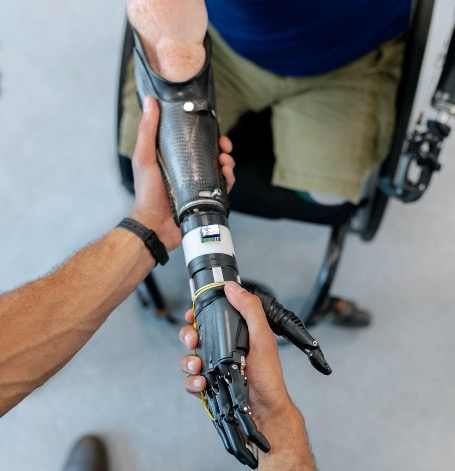
Prosthetics are artificial limbs or devices, created with the purpose of replacing missing body parts for people who have either lost limbs, or were born without them. This isn’t just for humans though — this technology is now being increasingly applied to animals.

The world of animal prosthetics is very broad, and has great variation. The prosthetics are made by licensed mechanical engineers who help increase an animals’ mobility based on their specific needs. This includes body parts such as tails, fins, legs and beaks!

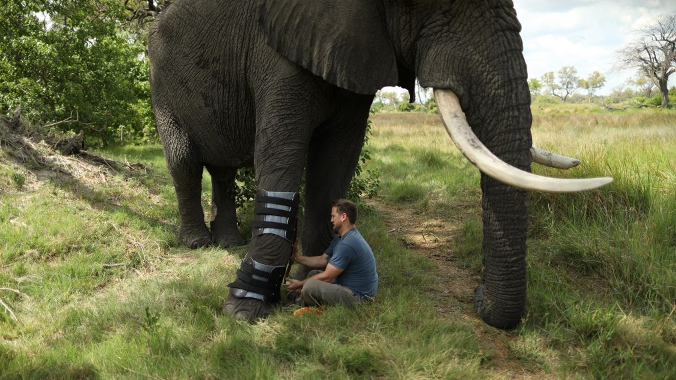
For dogs with mobility problems, for example, where their front legs or back legs are injured, the use of a specifically designed cart with wheels allows them to be able to move freely. An eagle who lost part of its beak was able to be helped by engineers by 3D printing a new, sturdy one made of plastic! An elephant who lost the lower half of its leg stepping on a landmine was able to have a new, artificial leg after engineers created one for her.

With this being said, the potential to help is endless. Mechanical engineers in this profession draw on their wide bank of knowledge to come up with appropriate and advanced solutions using the most beneficial materials.

Filed Under: #shareABLE, engSPIRATIONAL

Ways to Support Female Engineering Entrepreneurs

by wemadeit

Ways to Support Female Engineering Entrepreneurs

As you most likely know, there is a major gender gap in leadership roles in the workforce. In 2017, only 15.6% of Canadian businesses were owned by women, while 63.5% were owned by men and 20.9% were owned equally by men and women. Research shows that in communities where female-owned businesses thrive, the country’s GDP grows and the global economy benefits. In places where women’s entrepreneurship is restricted or limited, the opposite happens. Individuals, communities, countries and the global economy miss out on unrealized economic gains when women are underrepresented. Here are ways to help lessen the gap and support women engineers and entrepreneurs.

1 – Buy from women-owned businesses

The easiest way to show your support for women entrepreneurs is to help keep their sales booming. All you have to do is search which businesses in your region are women-owned, keep them handy in a list, and remember to prioritize them the next time you go shopping or are looking for a particular service. Chances are, some of your favourite businesses are led by women. Some examples of female-owned tech and software companies are Canva (Melanie Perkins), Cloud9Insight (Carlene Jackson), Rumarocket.com (Kathleen Yu), LaunchDarkly (Edith Harbaugh), Task Rabbit (Leah Solivan), and Re:3D (Samantha Snabes).

2 – Promote these businesses on social media

Every business needs new customers coming in regularly and a good way to get in contact with potential buyers and make new connections is through social media. Everyone has their own audience on social media that the business may not have access to, so posting the products you buy and tagging the female entrepreneurs that you support will help  increase interest  in their businesses. There are even existing hashtags like #NWSBM (National Women’s Small Business Month) and #BuyWomenOwned that have lots of followers which can help you get your posts noticed by an even bigger audience. Fun Fact: Both Facebook and Youtube have women in their executive positions, with Sheryl Sandberg as the COO of Facebook and Susan Wojcicki as the CEO of Youtube.

3 – Invest in women-owned companies

You’ve probably noticed that a lot of businesses are suffering due to the Covid-19 pandemic and a lack of financial support. Similarly, a lot of businesses are having trouble getting off the ground because of these economic issues, so making an investment can help give women the means to keep their business thriving. Even making a small donation and telling a few friends can amount to a big impact on these small businesses.


Links

https://www.ic.gc.ca/eic/site/061.nsf/eng/h_03115.html

Supporting Women Entrepreneurs Is Just Good Business

https://business.tutsplus.com/articles/top-women-in-tech-entrepreneurs-in-2018–cms-30686

https://www.women-in-technology.com/wintec-blog/7-female-tech-entrepreneurs

Filed Under: #shareABLE, engSPIRATIONAL

Rising Careers in Engineering

by wemadeit

Rising Careers in Engineering

What is the first thing that you think of when you hear the word ‘engineering’? Circuits? Computer softwares? Spaceships? Engineering is such a diverse field of study, you may not know what career to choose. It is important to understand all the different possibilities available to engineering students and which ones will hold the most critical roles in the near future. Here are some of the fastest-growing areas in engineering to help you out.

Biomedical Engineering

Biomedical engineers, or bioengineers, connect engineering principles and design concepts with medicine and biology. As many new medical devices and technologies get introduced to the world of healthcare every day, more and more bioengineers are needed to keep up with the demand. Employment in biomedical engineering saw a 72% growth rate through 2018.

Software Engineering

Software engineering is one of the fastest rising professions in the world! This is because the number of people switching to digital platforms and technologies to do everyday tasks is growing more than ever, especially due to the coronavirus pandemic. Software engineers use computer programming to create software products, internet services, network control systems, and more. The employment of software developers is projected to have the fastest growth of all professions, 22 percent from 2019 to 2029.

Civil Engineering

Civil engineering focuses on designing and constructing roads, bridges, electrical and water systems, dams and tunnels, and many other public projects and systems. Infrastructure development is going through big changes as new renewable energy sources and modern technologies emerge. Civil engineers are using solar and wind power to pave the way for a more eco-friendly world. The employment of civil engineers is projected to grow 2 percent from 2019 to 2029.

Electrical Engineering

Electrical engineers are involved with design and application of electrical devices and equipment as well as the study of electricity and electromagnetism. They manufacture motors, vehicle parts, navigation systems, solar arrays, semiconductors, and many other consumer devices which will continue to be in high demand in the coming years, with an expected growth rate of 9%

Environmental Engineering

Environmental engineers are in charge of all things sustainability. They handle water supply quality, air quality, contamination, and more. An environmental engineer today would likely focus on the water system sustainability issues that have recently emerged in many municipalities. The employment of environmental engineers is projected to grow 3 percent from 2019 to 2029.


Filed Under: Engineering Disciplines, engSPIRATIONAL, Getting There, Grade 11

Engineering a Better World: Goal 3 Good Health and Wellbeing

by wemadeit

Engineering a Better World: Goal 3 Good Health and Wellbeing

Have you ever thought about how 3D printing could be the answer to helping more people get organ transplants? Engineers across the globe are thinking about things just like this that contribute to the SDGs. The SDGs, also known as the Sustainable Development Goals, are 17 goals laid out by the United Nations that aim to make the Earth a better and more sustainable place to live. Goal #3, Good Health and Wellbeing, looks to promote and ensure healthy wellbeing for all.

Here are 3 innovative and unique ways some engineers are improving health and wellbeing across the globe:

Virtual Rehab

The uses of virtual reality (VR) are truly endless, and engineers like Dr. ir. Isabel Van De Keere are applying just that to healthcare. She created Immersive Rehab, a type of neurorehabilitation (a process of healing or helping with nervous system-related injuries, like multiple sclerosis and strokes) that combines treatment with VR. Through the use of a VR headset, patients are able to enter a virtual world to perform rehab exercises, interacting with virtual objects. She created this after going through neurorehabilitation herself, following a workplace accident, and finding the exercises tedious with slow recovery. Immersive Rehab is not only fun but aims to improve recovery for patients and reduce lengthy referral times.

Phone App to Prevent Maternal Mortality

https://twitter.com/theGiftedMom/status/1019489078578958336

In Cameroon, as of 2017, for every 100,000 live births, there were 529 maternal deaths related to pregnancy. The high maternal and infant mortality rates in the country led engineer Alain Nteff to develop GiftedMom, an app that delivers medical information to mothers before and after their baby is born! Users will first message how long they’ve been pregnant. Every week after, they’ll receive texts that provide information on topics like breastfeeding, vaccines, and booking doctor appointments, which builds public awareness around pregnancy. Users can also submit their questions, to which they’ll get a response from doctors. This is extremely helpful for women living in rural and isolated areas!

3D Printing a Human Heart

https://nypost.com/2019/04/15/scientists-create-entire-human-heart-with-3-d-printer-for-the-first-time/

3D printing is a super cool process that allows you to turn a digital file into a real object — but have you ever imagined this could be used for human organs? At Tel Aviv University, researchers were able to successfully print a human heart. While people have printed the structure of hearts before, this is the first time it has been done using human cells and biological materials. This is a major breakthrough! Around 5,000 heart transplants occur around the world every year, but it is believed up to 50,000 people are in need of them. With such an unmet demand for a life-changing surgery, being able to print hearts to transplant would save countless lives. The technology has a long way to go, as the hearts are currently small and need training to perform like human hearts, but this breakthrough is huge!

Health and wellbeing is something that every single person across the globe is impacted by. Using engineering to come up with solutions to complex problems like these, is a powerful tool that can and will change lives!


Sources:

https://observers.france24.com/en/20160517-engineer-app-cameroon-maternal-death-rate-infant

https://www.voanews.com/africa/cameroon-continues-suffer-staggering-mother-child-birth-mortality-rate

https://www.indexmundi.com/cameroon/maternal_mortality_rate.html

Immersive Rehab

https://time.com/5710295/top-health-innovations/

https://www.biospace.com/article/tel-aviv-university-researchers-3d-print-a-human-heart/#:~:text=Researchers%20at%20Tel%20Aviv%20University,in%20the%20journal%20Advanced%20Science.

https://www.uptodate.com/contents/heart-transplantation-beyond-the-basics#:~:text=More%20than%205000%20cardiac%20transplants,should%20receive%20a%20heart%20transplant.

Filed Under: #shareABLE, Engineering Disciplines, engSPIRATIONAL, Listen Up

Advice from a NASA Astronaut

by wemadeit

Advice from a NASA Astronaut
Photographer: James Blair

Before Loral O’Hara became a NASA Astronaut, she was an Aerospace Engineering graduate from the University of Kansas. In a Zoom meeting with STEM-field students, Loral gave these three pieces of advice for finding their success.

Lean on your community.

When she was asked for advice on overcoming challenging coursework, Loral recommended to ‘lean on your community’ and the support systems around you. These are the people who know you and your potential, and will help to build your confidence when you face obstacles.

She also suggested to visualize instances in the past when you faced a challenge, and overcame it.  “When I get to a really hard task, I think back to when I struggled and succeeded.”

Be aware of what your own personality is telling you.

Loral is aware that many students struggle to find the right program for them. Her advice is to pay attention to the things that interest you and what you find exciting.  She says that it is all about “being aware of what your own personality is telling you, what skill sets you’re developing, what things you’re drawn to — and how you might be able to best serve the world, the community, your school, whatever, just by being you.”

There is no one path to success.

Being a part of NASA, Loral sees firsthand how a team of diverse backgrounds is necessary to producing the best work. The path to achieving your goals is not ‘one size fits all’, and will look completely different for everyone. “This is one of my favorite things about the astronaut office,” Loral says, “It shows that there’s no one path to success.” She also shares that “the best science and math is done by diverse teams.”


Adapted from: Source

Filed Under: #shareABLE, engHEROES, engSPIRATIONAL, Journeys

Next Page »

Primary Sidebar

Categories

  • #shareABLE (70)
  • #surveySAYS (8)
  • engHEROES (50)
  • Engineering Disciplines (35)
  • engSPIRATIONAL (59)
  • Getting There (17)
  • Grade 11 (4)
  • Health (3)
  • Journeys (20)
  • Listen Up (5)
  • listenUp! (2)
  • More2Life (7)
  • Our Favourite Articles (2)
  • Press (3)
  • Recipes (2)
  • Reviews (5)
  • TED talk (17)
  • TheFieldTrip (5)
  • Uncategorized (4)
  • weTHINK (15)

Teacher Login

Register | Lost your password?

Sign Up To Our Newsletter

Footer

Menu

  • About WEMADEIT
    • Donor
    • Partners
      • Toronto Metropolitan University
      • Ontario Tech University
      • University of Waterloo
      • Western University
  • For Students
    • Blog
    • Getting There
      • Engineering Disciplines
      • Student Life
      • Where Can I Study?
      • What You Don’t Know About Engineering
      • ENG BLING
    • Black Students
    • Indigenous Students
    • 2SLGBTQIA+ Students
    • Women and Girls
  • For Parents
    • Where Can You Study Engineering?
    • What is Engineering?
  • For Undergrads
    • Gaining work experience
    • Peer Mentorship
    • One Awards
    • Next Generation in Power
    • New Grad Program
  • For Teachers
    • Teacher Resources
  • Getting Involved
  • Contact Us
    • Newsletter Signup

Search

Teacher Login

Register | Lost your password?

  • Facebook
  • Instagram
  • Twitter

© 2026 · WEMADEIT | Site Design by rtraction