
• Skip to primary navigation
  • Skip to content
  • Skip to footer

We Made a Difference. We Made it Together. WEMADEIT.

  • About WEMADEIT
    • Donor
    • Partners
      • Toronto Metropolitan University
      • Ontario Tech University
      • University of Waterloo
      • Western University
  • For Students
    • Blog
    • Getting There
      • Engineering Disciplines
      • Student Life
      • Where Can I Study?
      • What You Don’t Know About Engineering
      • ENG BLING
    • Black Students
    • Indigenous Students
    • 2SLGBTQIA+ Students
    • Women and Girls
  • For Parents
    • Where Can You Study Engineering?
    • What is Engineering?
  • For Undergrads
    • Gaining work experience
    • Peer Mentorship
    • One Awards
    • Next Generation in Power
    • New Grad Program
  • For Teachers
    • Teacher Resources
  • Getting Involved
  • Contact Us
    • Newsletter Signup

engineering

Cosmetic Engineering

by wemadeit

Cosmetic Engineering

There are no limits with a degree in engineering, instead there is only a multitude of possibilities. Engineering has so many different career paths, so that everyone can make a difference in a field they are passionate about. Some engineers want to use their education towards a creative industry, which is where cosmetic engineering comes in. That’s right, you can be a part of creating several beauty products with an engineering degree. Producing and manufacturing makeup products is a complex process that is very technical, which is why we need engineers. However, with all of this said, there is also a great deal of creativity at play to create a product that follows a cohesive story. A career in cosmetic engineering really does bridge the gap between creativity and technical skills.

Engineers in makeup?

Engineers are involved in developing, researching and creating makeup products. The reason behind this is there is a great deal of research that goes into creating these products since it affects the skin and health of everyone that uses it. Therefore the combination of chemicals and elements used in the product needs to be perfectly balanced and thought out. This process involves chemistry, which means chemical engineers will work with other chemists. Not only do the products need to be tested to be safe for use, but they also need to be crafted in a way that creates the outcome the cosmetics company/designers envisioned. This is where the creative application of engineering comes in. New techniques are tested and used at this stage to create cutting edge products.

How do you get there?

Does this sound like the perfect job for you? Do you live and breathe both creativity and STEM? The first step (like most careers in STEM) is getting a bachelor’s degree. The recommended degree for this career is chemical engineering. Through this degree you will take a deeper look at the process as well as developing materials and the impact of certain ingredients. After you get your bachelor’s degree you will need approximately 1-3 years of experience in product formulation. That doesn’t have to be cosmetic development in particular, it could even be in skin care, or other products.

The most important skill to gain from this work experience is the ability to manipulate different materials and chemicals to create a very specific product. While you are working it is always good to join a professional organization that can help you hone your skills. An example of this is The Society of Cosmetic Chemists. Even though this name includes the term “chemists” engineers are also welcomed, because they all work together in the industry. The advantages of joining, is you will have access to several networking opportunities and conferences, as well as presentations to help develop your professional skills. It is also a great thing to put on your resume to help you stand out when applying to jobs. Once you get your job in the cosmetic engineering industry you can expect to make roughly 78,000 dollars annually.

What soft skills do you need?

Soft skills are essential in every job. These are skills you learn outside of the classroom. These are the skills you use to work better with others and express yourself well. You will need excellent communication and teamwork skills for this career path, because you will 100% need to work with others. You will also need problem-solving skills because there are tons of issues that will surface in product development. Your end goal is to make products that are adaptable and suitable for multiple skin types, and this involves a lot of trial and error. Ultimately for this job you need to have a great rounded set of skills. Overall if you love getting creative and have a passion for makeup, cosmetic engineering may be perfect for you. The great thing about this career path is it shows how STEM has room for everyone! It also proves that joining the STEM community looks different for everyone. Cosmetic engineering is not an easy task, it needs talented, passionate and hardworking STEM leaders, and that leader could be you.


Filed Under: #shareABLE, Engineering Disciplines, Getting There Tagged With: cosmetic, engineering, shoshauna, western

ENGHERO: Elizabeth Norman

by wemadeit

ENGHERO: Elizabeth Norman

Elizabeth Norman has an undergraduate degree in Biomedical Engineering and is currently pursuing her Master’s in Biomedical Engineering.

What is one thing you wish you knew about engineering when you were in high school?

One thing I found surprising in first year was the diversity of courses that I was required to take. Courses I would have never imagined that I would need to take such as the history of science and technology. In retrospect, I found these courses enlightening and helped to provide a solid foundation for the rest of my education.

What made you want to pursue engineering?

I have always had an aptitude for math and science and an analytical approach to life. I was fortunate enough to have engineers in my family which exposed me to this field. In addition, I have always wanted to help people and there are endless ways in which engineers can not only help individuals but also society as a whole. I always admired how engineers find solutions to the root of problems not just fixing the current issue at hand.

What branch of engineering is your major and how did you decide on it?

From a young age I wanted to help people.  My grandparents needed physical assistance at times due to arthritis hand implants and other ailments.  In looking through the various fields of engineering it was made clear to me that I could combine my passions, helping people, along with math and science.  Therefore, I chose to major in Biomedical Engineering.

What do you plan on doing with your engineering degree?

I am currently pursuing a Masters in Biomedical Engineering and aspire to design the next generation of medical devices that will enable and empower people to live a healthy and fulfilling life.

What advice would you give to a young female who is considering the field of engineering, but isn’t sure if it’s right for them?

Do your research and talk to professionals that are currently in the field that interests you. Have the confidence to pursue your passions and remember the world needs more female engineers!

Filed Under: #shareABLE, engHEROES, engSPIRATIONAL Tagged With: biodmeical, engineering, undergraduate, western university

Why Not Get Creative?

by wemadeit

Why Not Get Creative?

Identifying as a “creative” means you can innovate, visualize ideas, make new things and overall seen the world differently. Engineering in particular needs more people who can innovate and create designs that help populations grow and thrive. This field is often associated with solely logic-based thinking, but an “outside of the box” perspective is just as important in the mindset of an engineer. Don’t let your creativity steer you away from a career in engineering, because this field depends on different perspectives and innovation. Behind every life-changing invention is a big imagination, and a great deal of creativity. The concept of innovation and creating new technology itself requires creativity. This outside of the box thinking has lead to the creation of medicine, cars, and electricity. Here are just a few examples of inventions that were a product of creative minds in engineering. 

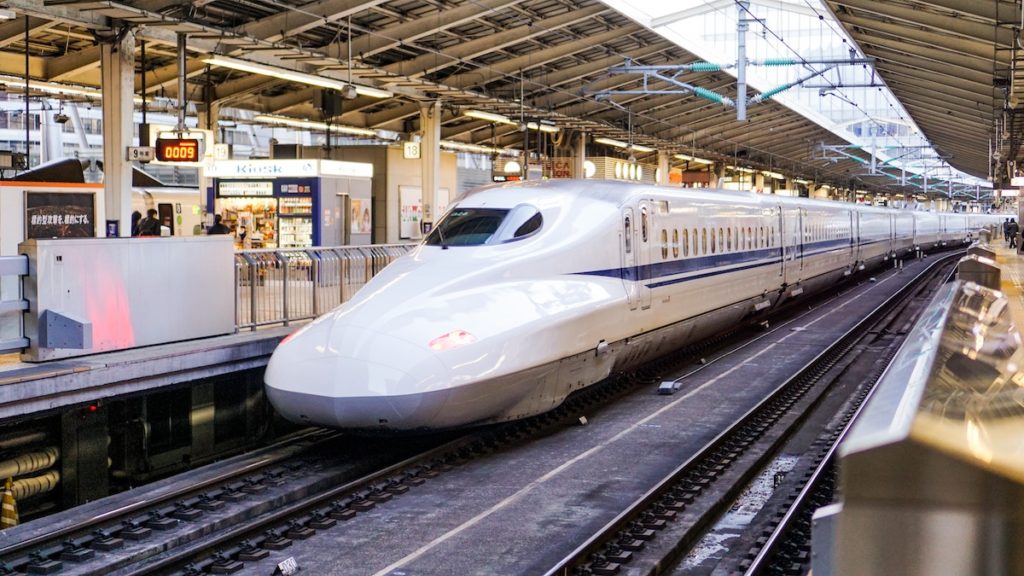
Bullet trains are Japan’s high-speed trains that run at 200 miles per hour and are earthquake-proof. The idea of such a vehicle is ambitious and required the inventors to draw inspiration from the kingfisher bird to reduce the amount of noise it produced. The invention of this vehicle defied the rules and design of all previous trains. This example of outstanding problem solving and innovation never would have been possible without thinking outside of what was possible at the time. Looking to better the world, in ways that aren’t even possible yet, is essential in engineering.

An example we see in our homes is the bagless vacuum invented by James Dyson. James deconstructed the vacuum to research ways to prevent clogging and loss of suction. Creating a bagless vacuum was the solution, which changed the device forever. The bagless design prevented waste buildup in one central location. 

Since creativity is such a huge part of the job title, engineers often practice this skill inside and outside of their work. Engineers have admitted to playing games outside of work to specifically exercise this part of their brain. Problem-solving games help engineers see their work from a different perspective and implement their ideas more effectively. 

Engineers also practice the art of rapid prototyping, which is making many different versions of a device during the design process. This forces the engineer to imagine their original design differently with each version. Rapid prototyping is especially effective because in the end, there are several devices to compare/contrast and test. In fact, Dyson is known to have built 5127 prototypes before he came upon a successful one. 

Reverse engineering is also an excellent way to understand how something works and reimagine it. Reverse engineering is taking something apart and reassembling it. During this process engineers and everyday people alike, can learn more about each part of the device and how they all work together. Discovering how to change this device can also come across during this process. 

Being an engineer is all about the perfect balance of logical, and outside of the box thinking. Without both mindsets, designs will be lackluster or never exist. Therefore, we need more people to join this industry that see the world differently and can apply that talent to technology. This makes the stereotype of engineers not being creative, officially debunked! If you identify as a “creative” I encourage you to pursue a career in engineering, the world needs more fascinating minds like yours. 

Filed Under: #shareABLE, engSPIRATIONAL, Getting There Tagged With: creative, engineering, protoyping, wemadeit

EngHERO: Markio Shimoda

by wemadeit

EngHERO: Markio Shimoda

Markio Shimoda is in her final year of engineering at the University of Waterloo. Although she was a little nervous about how much studying she thought she would have to do, she knew she wanted to be an engineer and “Professional Problem-Solver”.

What’s one thing you wish you knew about engineering back when you were in high school?

I wish that I knew that engineers are typically knowledgeable in a lot of different fields! That means in university you have to do a bit of everything, which can be really annoying when you come across a subject you don’t like. But it is also great because it opens a lot of doors for future careers and industries!

When you decided to go to school to become an engineer, were you nervous and stressed out about all the math and science? What made you push through and become an engineer? What’s your proudest accomplishment so far?

I wasn’t too worried about all the math and science.. although maybe I should have been! I was actually nervous about how much time and studying it would be. I’ve always pushed through because I believe that changing the world through technology is what I want to do with my life. I am most proud of making it through each year so far! Engineering isn’t easy and it’s a huge accomplishment to say you finished a semester!

Were you sure that you wanted to become an engineer when you were in grade 12?

I was very sure. As soon as I heard someone call engineers “professional problem-solvers” I knew that was what I wanted to do with my life. Engineering is the best way to combine science, math, creativity, and change!

Tell me about a time during your studies when your work has been about discovery or curiosity?

All engineering work has aspects of creativity. Whether it’s design work, optimizing a process, or managing a project, every engineering job allows you to transform your ideas into reality and finding the best possible solution. In school, there are plenty of opportunities to use creativity in your design projects and extracurriculars.

What are you doing these days/what do you plan to do after you graduate?

I’m heading into my final year of engineering when I’ll be working on my big final design project! After graduation, I’m hoping to work in project management, in a company doing robotics, health entrepreneurship, or anything that is new and exciting!

Filed Under: engHEROES, engSPIRATIONAL Tagged With: engHERO, engineering, university, waterloo

Musical Engineers

by wemadeit

Musical Engineers

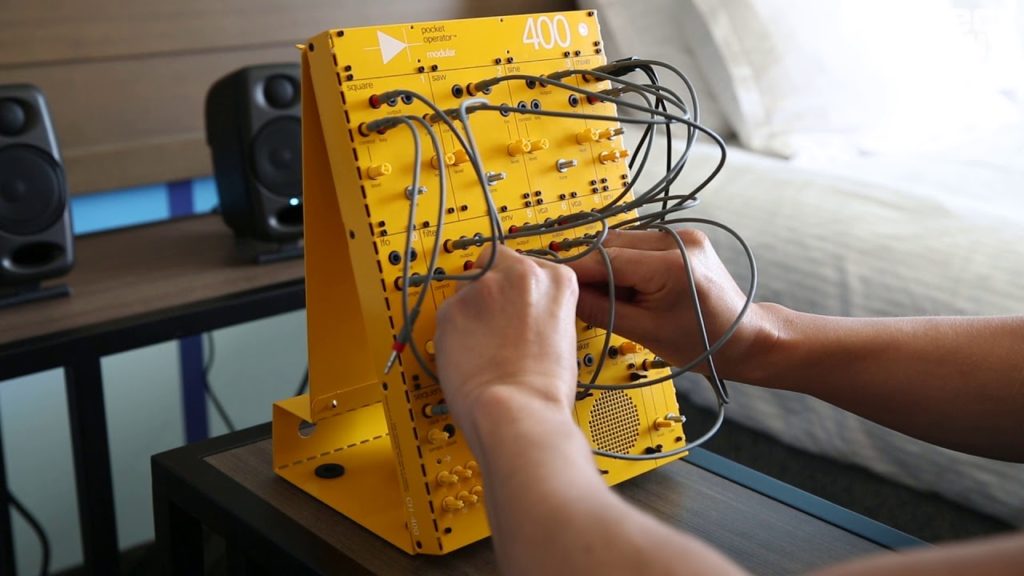
Engineering is full of creativity! Though sometimes it’s easy to forget that when you only focus on STEM. There are new advances in creative fields all the time because of the hard work of engineers. The tech company Teenage Engineering is a perfect example of where creativity and engineering collide.  

Teenage Engineering are famous for their unique and design-forward synthesizers.

For anyone that doesn’t know, synthesizers are an electronic musical instrument that takes audio signals and converts them into sound. Synthesizers are also known for being able to generate/copy virtually any sound. The term “synthesize” means to make something new, and in this case, that is often done by putting old pieces together. Not only is this a place for musicians to buy instruments, but they recently launched their own record company under the name Teenage Engineering Records. 

This record label has two rules for musicians who want to have their music released. 

  1. It has to be a good song (who would’ve thought?)
  2. The song must use at least one Teenage Engineering instrument

The first release for this new record company came from a Swedish artist named Buster. The song was called “You’re in Love With Your Hair”, this artist is a newcomer in the music industry. One of Teenage Engineers Record’s goals is to shine a light on emerging talent. It will be exciting to see the new unique music that will be released because of labels like Teenage Engineers Records. 

The amount of opportunities for tech-savvy enthusiasts and musicians alike is growing, with additions like Teenage Engineering Records to the industry. Next time you think of engineering maybe it will be while listening to Buster’s new song on Spotify- give it a listen! 

Filed Under: #shareABLE, Engineering Disciplines, engSPIRATIONAL, Reviews Tagged With: engineering, engineers, music, musicak, snythesizer, teenage

Aerospace Engineering – Explained

by wemadeit

Aerospace Engineering – Explained

Have you ever wondered what Aerospace Engineering was all about?

Some universities have a total of 8 different branches of engineering, and with all those names and degree options it is easy to be overwhelmed and a bit confused. Instead of randomly picking a field of engineering, it is important to understand what each program does. This will help you decide what school to go to and really find your passion for engineering.

Aerospace engineering is offered at 5 universities in Canada, and 2 of those are right here in Ontario. This emerging field, is one of the newest and advancing areas of engineering. 

In simple terms, aerospace engineering is designing and building machines –that fly. That’s right, anywhere from drones, airplanes– to even rockets! There are two specialties within this field; aeronautical engineering and astronautical engineering.

Aeronautical Engineering

Aeronautical engineering involves designing air crafts that are categorized as “lighter than air” this includes helicopters, gliders, airplanes and jets.

Astronautical Engineering

Astronautical is just what it sounds like, it is the design of spacecraft. This means that a career in aerospace engineering can look very different depending on which specialty you choose. So, whether you are interested in making an impact on flying technology in this world or in this universe, aerospace engineering has got you covered. 

Aerospace engineering is a very specialized and a relatively new field, so there is only a select few universities that offer the program here in Canada. The universities that do offer a bachelors in aerospace engineering include: Ryerson University, Carleton University, Concordia University, École Polytechnique de Montréal and the Royal Military College of Canada. 

Careers in Aerospace Engineering

Aerospace engineers can work in the corporate field, for an airline. This would involve designing commercial airplanes, and even change the way they run to adapt to the escalating problem of climate change. Commercial engineers have really had to rethink their design recently, because of climate change. This proves to make their jobs interesting, and of course impactful on the world. 

Then, of course, you have the opposite side of the scale which would be spacecraft engineers. These engineers help countries propel into space technology, and research more about outer space to understand the world we live on. Spacecraft engineers often find themselves using supercomputer simulations, because of the danger surrounding their line of work.

The geniuses behind this technology are engineering, science and data processing managers. These process managers make the simulations more efficient and effective to use. This is vital to the spacecraft engineer position, because the ability to try machines before being used by astronauts, will save lives.

Since safety is such an important part of aerospace, there are also compliance officers. These are the engineers that use their knowledge of aerospace to ensure that all rules and regulations are followed to meet safety standards. 

Lastly, drafters are engineers that create detailed drawings and specification sheets for the product designed. That can range from commercial airplanes to a spacecraft. either way very specific and detailed drawings are needed. 

Aerospace is a branch of engineering that covers everything flying under the sun. Hopefully, you have a better understanding of this branch of engineering. This field of engineering is going to change the world as we know it, and you can be a part of the change. It’s only up from here!

Filed Under: #shareABLE, Engineering Disciplines Tagged With: #gettingthere, aerospace, disciplines, engineering, explained

« Previous Page
Next Page »

Footer

Menu

  • About WEMADEIT
    • Donor
    • Partners
      • Toronto Metropolitan University
      • Ontario Tech University
      • University of Waterloo
      • Western University
  • For Students
    • Blog
    • Getting There
      • Engineering Disciplines
      • Student Life
      • Where Can I Study?
      • What You Don’t Know About Engineering
      • ENG BLING
    • Black Students
    • Indigenous Students
    • 2SLGBTQIA+ Students
    • Women and Girls
  • For Parents
    • Where Can You Study Engineering?
    • What is Engineering?
  • For Undergrads
    • Gaining work experience
    • Peer Mentorship
    • One Awards
    • Next Generation in Power
    • New Grad Program
  • For Teachers
    • Teacher Resources
  • Getting Involved
  • Contact Us
    • Newsletter Signup

Search

Teacher Login

Register | Lost your password?

  • Facebook
  • Instagram
  • Twitter

© 2026 · WEMADEIT | Site Design by rtraction