• Skip to primary navigation
  • Skip to content
  • Skip to footer

We Made a Difference. We Made it Together. WEMADEIT.

  • About WEMADEIT
    • Donor
    • Partners
      • Toronto Metropolitan University
      • Ontario Tech University
      • University of Waterloo
      • Western University
  • For Students
    • Blog
    • Getting There
      • Engineering Disciplines
      • Student Life
      • Where Can I Study?
      • What You Don’t Know About Engineering
      • ENG BLING
    • Black Students
    • Indigenous Students
    • 2SLGBTQIA+ Students
    • Women and Girls
  • For Parents
    • Where Can You Study Engineering?
    • What is Engineering?
  • For Undergrads
    • Gaining work experience
    • Peer Mentorship
    • One Awards
    • Next Generation in Power
    • New Grad Program
  • For Teachers
    • Teacher Resources
  • Getting Involved
  • Contact Us
    • Newsletter Signup

fun

Erika Kiessner

by admin

Erika Kiessner

Q&A WITH EngHERO: Erika Kiessner

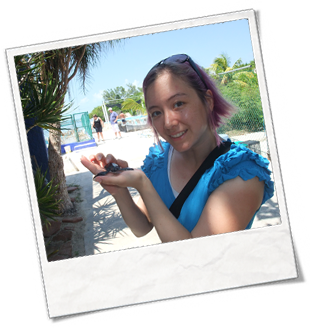
Erika Kiessner is an exhibit developer for an independent exhibit design and fabrication company. She creates all the cool interactive exhibits at places like the ROM or Ontario Science Centre!Erika Keissner Polaroid 2
Q: What’s one thing you wish you knew about engineering back when you were in high school?

I honestly wasn’t sure what I was getting into when I signed up for engineering. I just knew that it was a good place to go if you were good at math and interested in science. I guess I wish someone had told me how abstract it is. An engineering degree isn’t about learning a set of concrete skills. It is more about learning a set of mental tools and approaches for solving problems. Thankfully that toolkit can be useful in a lot of fields. I’m very glad that I did an internship as part of my degree. It showed me the kind of work that I wouldn’t be happy doing long term.

Q: What’s your proudest accomplishment as an engineer?

This question is hard since I don’t work as an engineer. I have done some work doing mechanical and electrical design for artists and I have developed some elegant systems for several art pieces. Ironically the mechanisms were all hidden away inside the pieces so no one but me could really appreciate them!

Q: Tell me about a time in your career when your work has been about discovery or curiosity?

I am very fortunate that most of my career has been about discovery and curiosity. I have done a lot of work for science museums and to properly design an exhibit to explain a concept you really need a deep understanding of that concept. Plus, one of my goals in designing a good exhibit is to get people curious. And to do that I have to be curious myself.

Q: What are you doing these days?

My job now is as an exhibit developer for a small independent exhibit design and fabrication firm called Aesthetec Studio, in Toronto. We do concept development, prototyping and electronics fabrication for exhibits for museums and other institutions. Basically anything interactive that is a hybrid of the digital and physical is in our wheel house. I started at the Ontario Science Centre as floor staff talking about science to visitors.

I knew before I graduated that I wasn’t interested in going into a traditional engineering job and through my undergraduate thesis, I got to know some people at the OSC. So I started on the floor and worked my way into designing exhibits, something I can definitely thank my engineering degree for.

I spent three years there developing new exhibits and that was where my career started. After the OSC I took a year to do a masters degree in Fine Arts, specializing in interaction design. This gave me another set of tools to apply to my practice and helped me look at my work in more than one way.

Q: Do you feel your work contributes to society? How so?

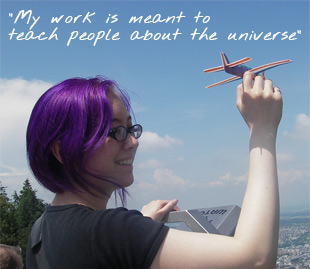
Absolutely. My work is meant to teach people about the universe and more importantly, get them excited about finding out how and why things work.

Q: Why do we need more female engineers?

I think there are two reasons. The first is that in any field that is involved in problem solving, the more perspectives that come to a problem the better scope the proposed solutions will have. The second is that engineering culture would be better served by having more women, for much the same reason.

Q: Why do you personally believe the statistics are the way they are in terms of females in engineering?

Not all of the streams of engineering have an unbalanced female to male ratio. At the University of Toronto, where I studied, chemical engineering was affectionately known as “Fem Eng” because it was predominantly women. Similarly, I would estimate that industrial engineering, the stream I studied was about 40% women. I believe computer engineering was a bit lower but the ones that really stood out were mechanical engineering and electrical engineering, in which there were far more men than women. So what I really wonder is why some types of engineering attract women and others do not.

Generally, I think males get more encouragement to be strong in math and science than women do. That is changing, I hope. I also think that females are more willing to assert themselves in these areas over any societal opposition, than they were a generation ago. The old guard is turning over into the new, and ever more women will get into engineering. At one time doctors were all men and now women are pretty much equally represented. I think engineering will go that way too.

– – – – – – – – – – – – – – – – – – – – – – – – – – – – – – – – – – – – – – – – – – – – – –
Check out Aesthetec Studio‘s work
Filed Under: Journeys Tagged With: education, ENGartist, exhibitdeveloper, Female Engineer, fun, indie, innovative, interactive, Interview, Jobs, Jobs in Engineering, Path to Engineering, unique, Women, Women's in Society

Engineering a Viral Video

by admin

Engineering a Viral Video

Procrastinating? We’ve got just the thing! The YTT have pulled together a series of TED Talks that they LOVE. Grab some popcorn and get comfy, because you’re about to get seriously inspired by these amazing engineering projects.

What is this TED talk about?

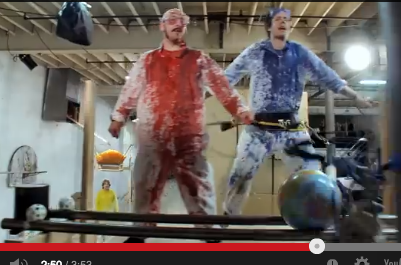
This TED Talk was about the creation of an extensive Rube Goldburg machine that was used in a viral music video.

What’s awesome about it?

It was great seeing the music video after Adam Sadowsky explained all the difficulties in making the machine because knowing just how hard it was to make that machine made it that much cooler seeing it in action.

How did it inspire you?

Seeing how much fun it was makes me realize that there are so many ways to enjoy yourself and be entertained without keeping your face glued to a screen. (Which is ironic because I had my face glued to the screen throughout that whole video)

What surprised you?

Even though Adam Sadowsky explained how complicated the machine was, I was still blown away at how extensive it was. While watching the machine work, I kept thinking about how hard so many people worked for so long, just for a few seconds of footage.

Did you ever have an idea about developing something yourself that solves a problem in the world? Tell us all about it

When I was young I thought about creating zip lines between high rises as fun and faster way to get from one to another. I used to try this out by tying up string across the house and making my barbies ride in baskets.

– – – – – – – – – – – – – – – – – – – – – – – – – – – – – – – – – – – – – – – – – – – – – –
Here’s the video:

Filed Under: TED talk Tagged With: fun, machine, music, OK Go., project, Rube Goldburg, TED, video, viral

Laura Paul

by admin

Laura Paul

Q&A WITH EngHERO: Laura Paul

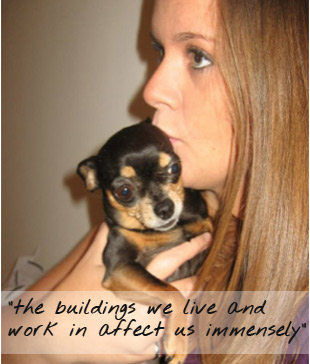
Laura Paul is a field engineer, and sustainability analyst working forLaura Paul Morrison Hershfield. Every day, Laura helps minimize the negative impacts buildings have on the environment and optimize the positive ones.
Q: What’s one thing you wish you knew about engineering back when you were in high school?

There are so many related fields you can work it rather than just typical design streams. There are lots of social sides to Engineering as well, rather than just purely technical work.

Q: What’s your proudest accomplishment as an engineer?

One of my proudest moments as an Engineer was getting my iron ring presented to me by my Grandfather, Malcolm Paul, who also was a Civil Engineer. The iron ring is worn by Engineers as a reminder of the ethical obligations associated with our work.

Q: Tell me about a time in your career when your work has been about discovery or curiosity?

When I first go out on a construction site as field engineer it was a time when everything was new, and I was learning a huge amount. I was able to take the theory I learned in school and put it into practice. I learned a lot about materials, and constructability, and how each individual component worked with others in a system. I would highly suggest for all Engineers to have experience in the field on a construction site.

Q: What are you doing these days?

Sustainability Analyst, Morrison Hershfield, I work doing LEED (Leadership in Energy and Environmental Design) consultancy and assessments, which includes helping designers reducing energy and water, choose less impactful materials, and improve the indoor environment for occupants (such as access to daylight and views).

I got here through experience on LEED projects, obtaining LEED Accredited Professional (LEED AP) accreditation with specialties in: Building Design and Construction, Existing Building Operations and Maintenance, and Neighbourhood Design

I didn’t really know where I was going when I started, but I was hired by a General Contractor, so if I hadn’t learned more about sustainability I likely would have been headed towards general Project Management on Building projects.

Q: Do you feel your work contributes to society? How so?

Absolutely. I think that the buildings we live and work in affect us immensely – from the way we feel, to how healthy we are, to how they impact nature and the environment. Working as a Sustainable Building Specialist allows me to minimize the negative impacts buildings have and optimize the positive ones.

Q: Why do we need more female engineers?

I think the perspective of women is unique from the perspective of men (not better or worse, just different) – and encouraging many different perspectives always enhances decision making.

Q: What does a typical day on the job look like?

A typical day on the job involves working and coordinating with a team.

Filed Under: engHEROES Tagged With: achieve, beautiful, cute, engbeaut, fun, hero, inspire, society, work

Eng Songs MEGAMIX #1

by admin

Eng Songs MEGAMIX #1

What’s better than music? Seriously though. You can’t think of anything! Well, maybe love. But can you dance to love!?

Here’s a bunch of tunes to inspire, inform, and act as soundtrack in your Eng World!

Beyonce – I Was Here

This is an inspiring song about making positive changes to make the world a better place.

They Might Be Giants – Meet the Elements


“I love They Might be Giants their songs are informative but actually awesome in an adorable cheesy way”

Vlog Brothers – I LOVE SCIENCE!


“Thank you for putting a good deal of my love into words.”

Lenka – Everything at Once


“not exactly about science, but this song could be a great example and inspiration showing that there is really no limit to anyone’s personality and who they choose to be.”

The Lab Song – Bruno Mars Parody


“Very funny and creative. A great way of thinking about science! :D”

Science Groove – The Nucleus I Like Best


“My teacher was singing this ahahahaaaaaa!”

Solve Me Maybe


“this parody to “Call Me Maybe” is awesome!”

Mr Parr – Electromagnetic Spectrum Song


“A song my science teacher showed us to get the order of the electromagnetic spectrum.”

Bil Nye the Science Guy – G-R-A-V-I-T-Y


“Bill Nye’s science songs are always the most funniest and the best! :D”

Filed Under: More2Life Tagged With: art, dancing, fun, life, more2life, music, science songs

Vision Boards

by admin

Vision Boards

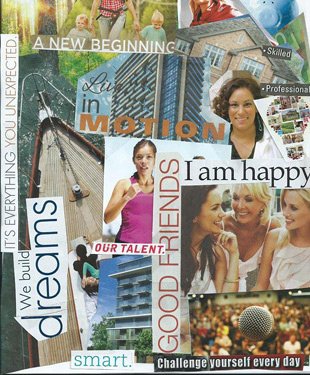
There’s more to life than career! Most engineers work 9-5 jobs, leaving them time to pursue all of life’s pleasures. We made these collages to picture what we’ll be doing with our time outside of work.     [Read more…] about Vision Boards

Filed Under: More2Life Tagged With: adventure, ambitious, art, artistic, collage, creative, dreams, engineer, family, free-time, friends, fun, fun craft activity, future, Future plans., Goals, green, hope, Ideas for future, imaginative, inspiration to the future, inspiring, Interesting, Jobs, life, life after work, life as an engineer, lifestyle, love, more2life, nature, outdoors, Pictures, Plans, relaxing, science, sentimental, success, successful, surf, the start of something new, Things I want, travel, unexpected, vision, What I want, work

Melissa Griffin

by admin

Melissa Griffin

Q&A WITH EngHERO: Melissa Griffin

Melissa Griffin is a Human Factors Analyst, whose work focuses on improving safety by improving the systems that people live and work in. Instead of trying to change how people should act, Melissa and her colleges advocate for changing the system so it’s more natural for people to interact normally.

Q: What did you wish you knew about engineering back when you were in high school?

That engineering is actually really fun! The very first day of frosh week I realized that there was a wonderful community of students who actually liked science and math, and that a lot of them were really fun. I also wish I knew that you can do a lot with an engineering degree, and it doesn’t have to mean you’ll end up behind a desk crunching numbers 24/7. In my current role, I have the chance to get out into the field and spend time with a range of other disciplines and specialists including other engineers, psychologists, doctors, nurses, pharmacists, policy makers, regulatory bodies, researchers and administrators.

Q: What’s your proudest accomplishment as an engineer?

At this point, probably getting my P.Eng. Another proud moment was when I got my first job.

Q: Tell me about a time in your career when your work has been about discovery or curiosity?

The role that I’m in now has a lot to do with curiosity and discovery. I am working in health care research as a Human Factors Engineer and as part of that we get to ask and answer research questions. I also have a lot of freedom in my work to explore areas that interest me. For example, right now I do quite a bit of work with different hospitals and cancer centres, helping them to make their technologies, processes and environments safer for patients and staff. I look at workflows, how people tend to interact with technologies, and how different polices and regulations affect the healthcare system. When we see something out in the field that is of interest, often, if we can find supporters and funding, we are able to further explore these areas to improve patient safety.

Q: What’s your job now (title, company, description)? How did you get there (education, internships, mentors, other experiences)? Where did you think you were going when you started out?

Human Factors Analyst/Engineer at University Health Network (UHN) as part of the research team HumanEra. I am part of a multi-disciplinary team that tries to improve patient safety by improving the systems that people work and live within. We know that people have certain strengths and weaknesses and instead of trying to change how people should act, we advocate for changing the system so it’s naturally easier for people to interact correctly. I had no idea I’d end up where I am now. I started in Mech Eng at Queen’s University, and ended up working in the automotive industry for 2 years, first as a Project Engineer and then as an Account Manager.

After a couple of years there I realized I wanted to do something that had more of a positive impact on other people. I came across the Masters of Clinical Engineering program at U of T, which appealed to me because it included several internships. Through this program I completed a thesis about applying human factors to home care environments, and did an internship at Massachusetts General Hospital (MGH) in the Clinical Engineering department, at the Toronto Rehab Institute in the Dysphagia Lab, and at the Centre for Global eHealth Innovation, where I currently work.

My thesis supervisor was a great influence on me and is now my boss. When I started out, I had no idea this kind of job even existed and didn’t know much about human factors. Having my undergrad Mechanical Engineering degree opened the door for me to get into the Master’s program that led to where I’m working today.

Q: Do you feel your work contributes to society? How so?

I definitely think the work I do contributes to society. Our teams’ mandate is to improve the safety of patients and health care workers by making the systems they work and live in safer. We get to be activists for patients and front line staff and highlight ways in which things could be improved. We also do a fair bit of education for front line staff to help them identify areas of risk, so they can make their own practices safer and more robust.

Q: Why do we need more female engineers?

I think women are able to provide a unique perspective for many engineering problems. In the work I do, I am often interacting with nurses, who predominantly tend to be women so I think it makes it a bit more comfortable and easier for them to open up about what they do and the challenges they face in their day to day jobs. Also, many of the female engineers I know are great mentors. We need more female engineers because we can be creative problem solvers, empathetic, and approach problems from a slightly different perspective than our male counterparts.

Q: Do you have any hobbies/passions that give you a unique perspective in engineering?

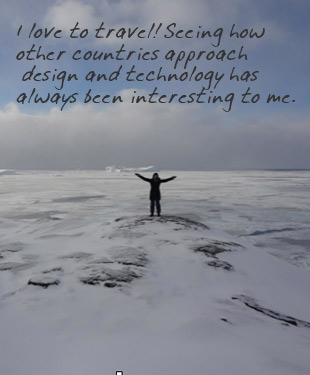
I love to travel and so seeing how other countries approach design and technology has always been interesting to me. There are often several possible solutions to a problem or challenge, especially when it comes to systems and design, and so seeing how different cultures take on these challenges can be inspiring and useful in helping you think about your own engineering challenges.

– – – – – – – – – – – – – – – – – – – – – – – – – – – – – – – – – – – – – – – – – – – – – –Check out where Melissa works! http://ehealthinnovation.org/

Filed Under: engHEROES Tagged With: awesome, education, engbeaut, fun, health, HumanEra, inspirational, risk, safety, travel

Next Page »

Footer

Menu

  • About WEMADEIT
    • Donor
    • Partners
      • Toronto Metropolitan University
      • Ontario Tech University
      • University of Waterloo
      • Western University
  • For Students
    • Blog
    • Getting There
      • Engineering Disciplines
      • Student Life
      • Where Can I Study?
      • What You Don’t Know About Engineering
      • ENG BLING
    • Black Students
    • Indigenous Students
    • 2SLGBTQIA+ Students
    • Women and Girls
  • For Parents
    • Where Can You Study Engineering?
    • What is Engineering?
  • For Undergrads
    • Gaining work experience
    • Peer Mentorship
    • One Awards
    • Next Generation in Power
    • New Grad Program
  • For Teachers
    • Teacher Resources
  • Getting Involved
  • Contact Us
    • Newsletter Signup

Search

Teacher Login

Register | Lost your password?

  • Facebook
  • Instagram
  • Twitter

© 2026 · WEMADEIT | Site Design by rtraction