• Skip to primary navigation
  • Skip to content
  • Skip to footer

We Made a Difference. We Made it Together. WEMADEIT.

  • About WEMADEIT
    • Donor
    • Partners
      • Toronto Metropolitan University
      • Ontario Tech University
      • University of Waterloo
      • Western University
  • For Students
    • Blog
    • Getting There
      • Engineering Disciplines
      • Student Life
      • Where Can I Study?
      • What You Don’t Know About Engineering
      • ENG BLING
    • Black Students
    • Indigenous Students
    • 2SLGBTQIA+ Students
    • Women and Girls
  • For Parents
    • Where Can You Study Engineering?
    • What is Engineering?
  • For Undergrads
    • Gaining work experience
    • Peer Mentorship
    • One Awards
    • Next Generation in Power
    • New Grad Program
  • For Teachers
    • Teacher Resources
  • Getting Involved
  • Contact Us
    • Newsletter Signup

wemadeit

5 Engineering Picture Books – That Place Young Girls at the Center of STEM

by wemadeit

5 Engineering Picture Books – That Place Young Girls at the Center of STEM

A great way to get girls excited about STEM is through storytelling. In the past few years, there has been an upsurge in amazing picture books that star female protagonists who delve into the world of Science and discovery. Traditionally books about robots, space, machinery, and science experiments have always focused on boys and science as a male subject. This is why seeing female faces at the center of these books has such an important and positive impact- it sends the message that STEM is for everyone. Check out the list below for 5 picture books that showcase science-loving girls and women who love to wonder, push boundaries, try, fail, and try again, all in the name of science.
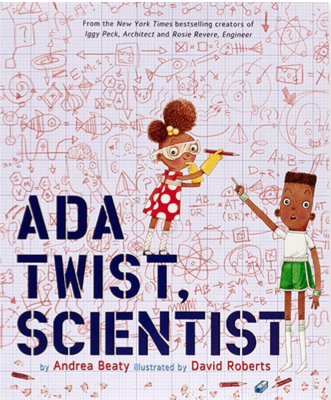
Ada Twist Scientist by Andrea Beaty

Recommended Age: 4 – 9

Young Ada has a boundless imagination and has always been hopelessly curious. Why are there pointy things stuck to a rose? Why are there hairs growing inside your nose? When her house fills with a horrific, toe-curling smell, Ada knows it’s up to her to find the source. Not afraid of failure, she embarks on a fact-finding mission and conducts scientific experiments, all in the name of discovery. But, this time, her experiments lead to even more stink and get her into trouble! Beaty, who also wrote the book Rosie Revere, Engineer, reinforces the importance of curiosity, perseverance and celebrates life long learning.  http://abramsbooks.com/adatwist/
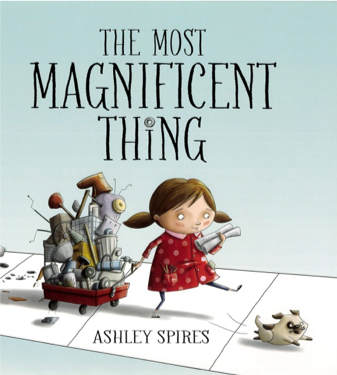
 

The Most Magnificent Thing by Ashley Spires 

Recommended Age: 4 – 9 (but even adults can benefit from this book!)

This is a charming picture book about an unnamed girl and her very best friend, who happens to be a dog. The girl has a wonderful idea. “She is going to make the most MAGNIFICENT thing! She knows just how it will look. She knows just how it will work. All she has to do is make it, and she makes things all the time. Easy-peasy!” But making her magnificent thing is anything but easy, and the girl tries and fails, repeatedly. Eventually, the girl gets really, really mad. She is so mad, in fact, that she quits. But after her dog convinces her to take a walk, she comes back to her project with renewed enthusiasm and manages to get it just right. The girl doesn’t just “make” her magnificent thing — she “tinkers and hammers and measures,” she “smoothes and wrenches and fiddles,” she “twists and tweaks and fastens.” These precise action words are likely to fire up the imaginations of youngsters eager to create their own inventions and is a great tie-in to learning about Science, Technology, Engineering and Math. https://amzn.to/2Ol0imv
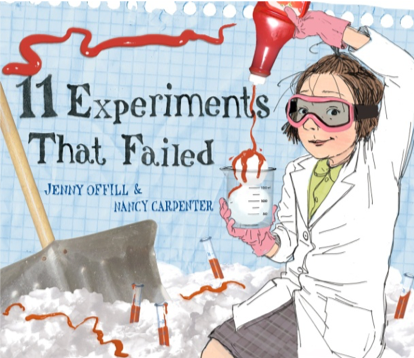
 

11 Experiments That Failed by Jenny Offill

Recommended Age: 4 – 8

Is it possible to eat snowballs doused in ketchup—and nothing else—all winter? Can a washing machine wash dishes? By reading the step-by-step instructions, kids can discover the answers to such all-important questions along with the book’s curious narrator.

Here are 12 “hypotheses,” as well as lists of “what you need,” “what to do,” and “what happened” that are sure to make young readers laugh out loud as they learn how to conduct science experiments (really!). https://amzn.to/2OpbyhI
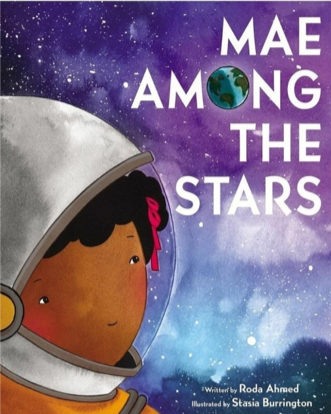
 

Mae Among the Stars by Stasia Burrington

Recommended Age: 4 – 8

When Little Mae was a child, she dreamed of dancing in space. She imagined herself surrounded by
billions of stars, floating, gliding, and discovering. She wanted to be an astronaut. Her mom told her, “If you believe it, and work hard for it, anything is possible.” Little Mae’s curiosity, intelligence, and determination, matched with her parents’ encouraging words, paved the way for her incredible success at NASA as the first African American woman to travel in space. This book will inspire other young girls to reach for the stars, to aspire for the impossible, and to persist with childlike imagination. https://amzn.to/2P4PPZd
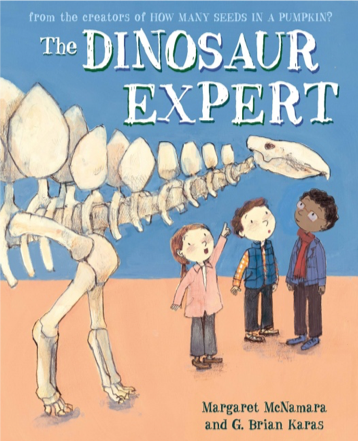
 

The Dinosaur Expert / by Margaret McNamara

Recommended Age: 4 – 8

Mr. Tiffin and his students are back in another picture book, and this time the focus is on dinosaur-loving Kimmy. During a field trip to the natural history museum, Kimmy is thrilled to share what she knows about the Stegosaurus and the Archaeopteryx and even the ginormous Titanosaurus. That changes when one of her classmates questions whether girls can be paleontologists. Kimmy starts to feel shy. What if they can’t? What if no one wants to hear what she has to say? It will take some help from Mr. Tiffin–and from a famous scientist–for Kimmy to find her voice again.
Join Mr. Tiffin’s class as they learn about dinosaurs big and small, feathered and scaly, winged and ocean-dwelling. And root for Kimmy, the dinosaur expert . . . who might just learn something about herself. https://amzn.to/2O0uK64

Filed Under: #shareABLE, Reviews

Elda Topuzi

by wemadeit

Elda Topuzi

“It is important that we have more female engineers because they have an opportunity to shape the future and help to break down gender stereotypes that assume that the profession is for men. Having a good representation of both women and men in the industry increases collaboration and productivity through diversity of thoughts.”


What’s one thing you wish you knew about engineering back when you were in high school?

One thing I wish that I knew was exactly how important good communication, presentation, and technical writing skills are to being an effective communicator to different audiences (peers, clients, users and other stakeholders).  A question that I answer often is, “How can you simplify a complex engineering process or a system in order to present it in a way that your audience, who is not an engineer, will understand”? Most engineering students entering the workforce are facing challenges transferring their technical knowledge into a technical report, analysis or presentation that others can understand. Incorporating technical writing and presentation classes during high school can strengthen students’ communication skills and their expectations when they apply themselves in the real world.


Q#2 What’s your proudest accomplishment as an engineer?

I’m very proud to be able to contribute my knowledge and skills, gained in the Ryerson Civil Engineering Department, back to my alma mater by being a key player during the design and construction of Daphne Cockwell Health Sciences Complex building. I have always believed in Ryerson’s guiding principles of campus development and their commitment to design excellence. Working on a multi-use building project early in my career that fosters student innovation, promotes student education and introduces a healthy lifestyle is a proud accomplishment.


Q#3 Tell me about a time in your career when your work has been about discovery or curiosity?

They say follow your curiosity because it will develop into an amazing discovery. I think knowing when to switch off autopilot and simply being more curious can improve your performance at work and introduce you to new exciting things; for example in one project, we were heavily involved with Municipal Approvals and meeting city requirements. The challenges that this project presented always piqued my interest and by taking part I was able to learn about Zoning By-laws in compliance with lot requirements, building setback, flight path regulations, and protecting and monitoring sensitive structures adjacent to construction.


Q#4 What are you doing these days?

Currently, I am working on a few essential projects at Michael Garron Hospital.  These projects include replacing the aging infrastructure by providing the hospital with more efficient and reliable systems including high voltage electrical switchgear and boiler replacement.  I am also working on a facility renovation for the Medical Device Reprocessing Department, which is where surgical equipment and instruments for the entire hospital are sterilized and inspected. An enormous, but motivating, challenge is having to do this while the hospital is in operation 24 hours. Once the projects are completed I will be focusing more on the Ken and Marilyn Thomson Patient Care Tower which is a new 8 story patient care center that is currently under construction. And of course it is summertime, so I am trying to get out more and get sun-kissed.  


Q#5 Do you feel your work contributes to society? How so?

The engineering profession itself is about the safeguarding of life and social well-being and is the driving force behind the cultural and economic growth. Michael Garron Hospital’s diverse range of projects allows me to be proud of my work because I am improving patient’s healthcare and hospital experience during a stressful time.  I think helping others when they need it is an essential contribution to society. Wearing the iron ring on your finger is a great reminder that your actions and decisions have a great impact on society.


Q#6 Why do we need more female engineers?

It is important that we have more female engineers because they have an opportunity to shape the future and help to break down gender stereotypes that assume that the profession is for men. Having a good representation of both women and men in the industry increases collaboration and productivity through diversity of thoughts. A lot of girls don’t realize the diversity of the profession or the possibilities that come with having a career in engineering and that needs to change now. This is one of the reasons why I got involved with Women in Engineering at Ryerson, so that I can encourage young girls to enter the profession by sparking their curiosity and help them understand how broad the industry is.  

Q#7 Do you have any hobbies/passions that give you a unique perspective in engineering?

I like to draw buildings in perspective. When I draw, I like to see buildings as isolated entities so that I can focus on the details. By doing so, I can understand why they are an integral part of cities and how they contribute to the urban development. I create a personal, emotional connection with my work. It helps me visualize the design content much faster and allows me to think about ideas and improvement. I also appreciate black and white photography. It allows you to focus on key elements such as lighting, composition and spatial arrangements. Blending art with engineering is like blending aesthetics with function so having an appreciation for both helps me with the work I do and the interaction I have with my stakeholders, engineers, and architects.


Q#8 When you were becoming an engineer, were you nervous and stressed out about all the math and science? What made you push through and become an engineer? Were you sure that you wanted to become an engineer when you were in gr12?

I was very comfortable with math and science and that’s why I went into engineering. My mom is a civil engineer and she suggested I become one as well. At grade 12, I was working towards going into architecture school and I applied to engineering as a backup. It turned out to be the other way around, I got into engineering and ended up loving it. I completed 4 years out of 5 years of Civil Engineering at home and had to retake math and other engineering courses all over again when I moved to Canada, but I have never regretted it!                                                                                                                                                    

Q#9 Tell us about a cool project you’ve worked on.

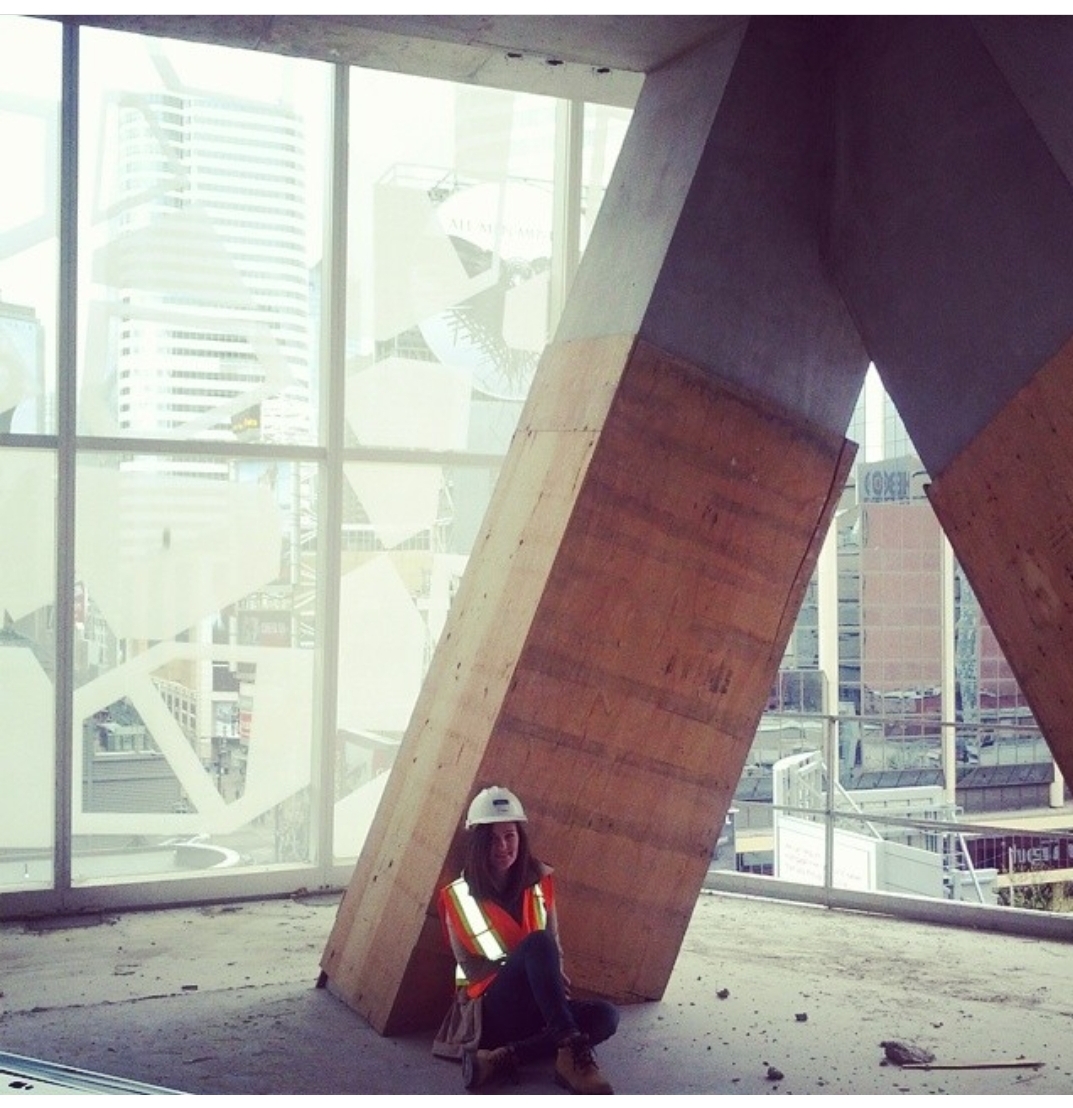
I have a special place for Daphne Cockwell Health Science Building not only because it is a remarkable building that is designed as a learning tool but also it fulfills the commitment of Ryerson University to enrich generations of the future. I also found it interesting because of the impact it had on the students and the community around while we were still in the planning and design phase. Part of the requirements for the building were driven by how students and professors would engage and interact in the space with each other, which provides students with a unique building where they can live study and but also allow them to explore their learning environment. This was done by incorporating a natural light atrium space, a fabrication zone, feature stairs, green roof and collaboration spaces. It’s also worth mentioning the big A-frame columns that spanned through the floors spiking a lot of structural reviews and discussion. I learned a lot about teamwork and communication with different stakeholders, planners, designers, board members and faculty users during this project, which as invaluable to my future career. I was also able work with amazing mentors that were truly inspiring and supportive of my career growth.

Filed Under: engHEROES, engSPIRATIONAL

Top 5 Engineer Podcasts

by wemadeit

Top 5 Engineer Podcasts

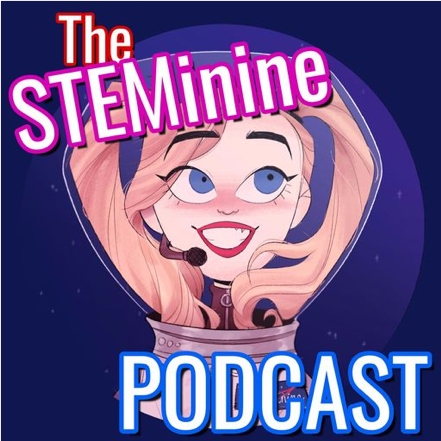
1. STEMinine: A Podcast About Science, Engineering, Technology, Math, and Women

The STEMinine podcast is hosted by Jessica Droujko (mechanical engineer), Victoria Morad (chemist) and Elisabeth Nilsson (chemical engineer). This podcast is a discussion around everything that affects women in STEM fields. It hosts interviews with women in STEM, the #AskAnEngineer show, and the #AskVika show (where you ask a question and we try to answer it).

https://soundcloud.com/steminine


2. STEMxm: The STEM Career Podcast

Hosted by @MelTheEngineer, STEMxm is a podcast about STEM careers. Most episodes feature a guest interview from a STEM field, and covers topics such as how to get into that career field, what that path’s education requirements are like, and the interviewees recommendations for being successful in that field or sector.
http://www.stemxm.com/ 


3. Femmes of STEM

Feminist. History. Podcast. The Femmes of STEM is a bi-monthly show focusing on the history of women in STEM: science, technology, engineering, and mathematics. From the Roman Empire to modern America, join lady scientist Michelle as she brings to light the femmes who have always been a part the past – but haven’t always been a part of history.
https://www.femmesofstem.com/episodes/


4. Witty: Women in Tech Talk to Yaz

Join Yasmin every week as she chats with female techies about their career, the challenges of the industry, tech news and more. Her guests range from young engineers to top execs; working at the largest tech goliaths to the smallest startups; hailing from North America to Asia.
https://wittypodcast.com/


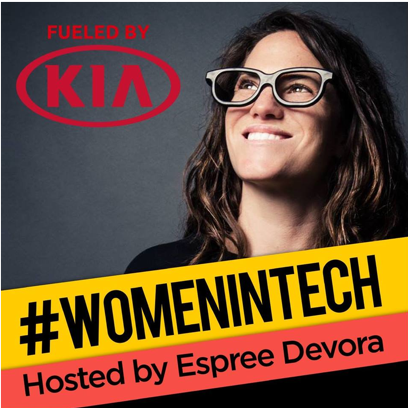
5. Women in Tech Podcast, hosted by Espree Devora

The #womenintech Podcast is hosted by WeAreLATech’s Espree Devora and features inspiring Women in Tech from Engineers, Female Founders, Investors, UX and UI Designers, Journalists all sharing their story how they got to where they are today. The purpose of the show is for every listener to walk away feeling ‘If She Can Do It So Can I’. I call it “actionable empowerment”.
http://podcast.womenintechshow.com/

Filed Under: #shareABLE, engSPIRATIONAL

Nhu Nguyen

by wemadeit

Nhu Nguyen

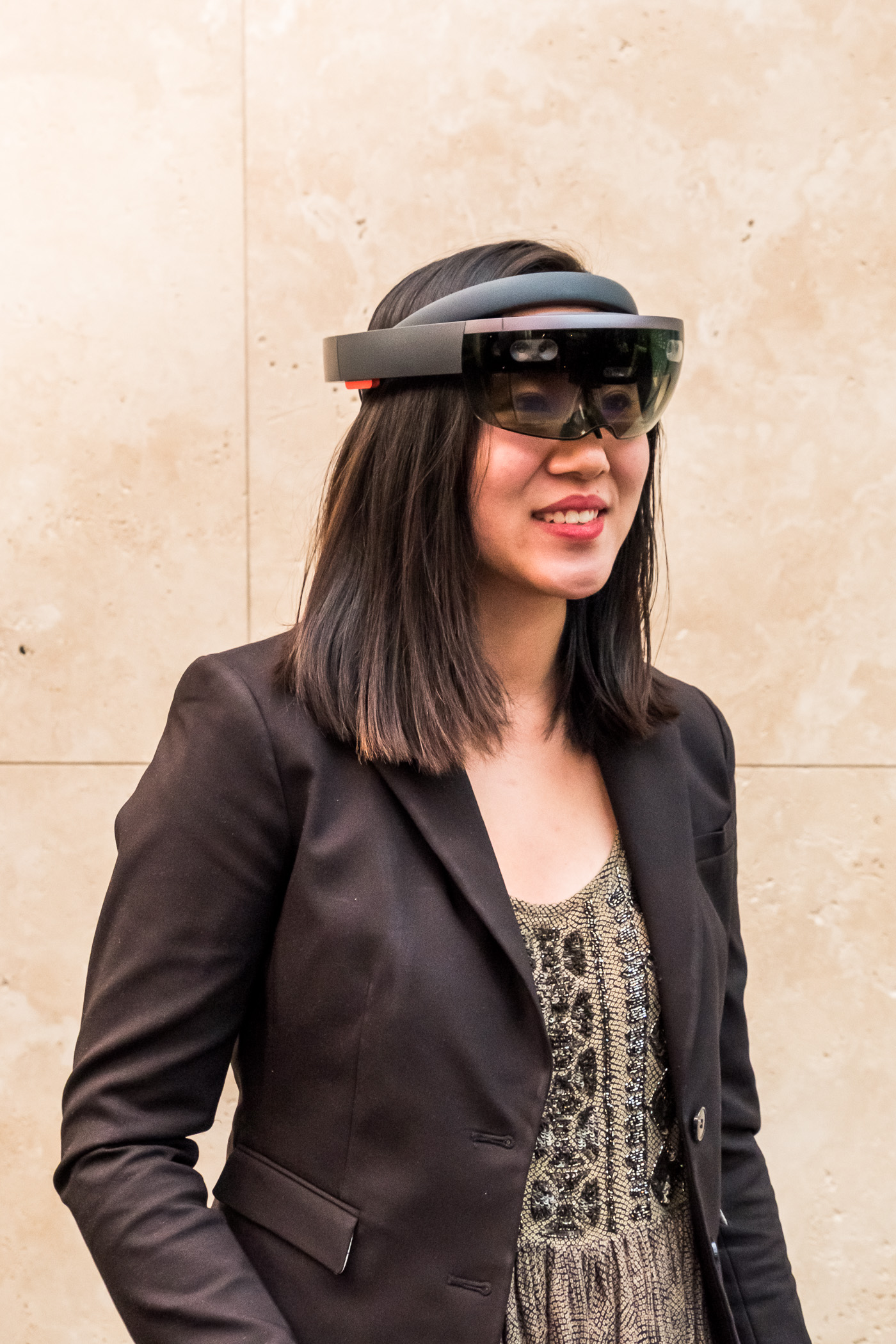
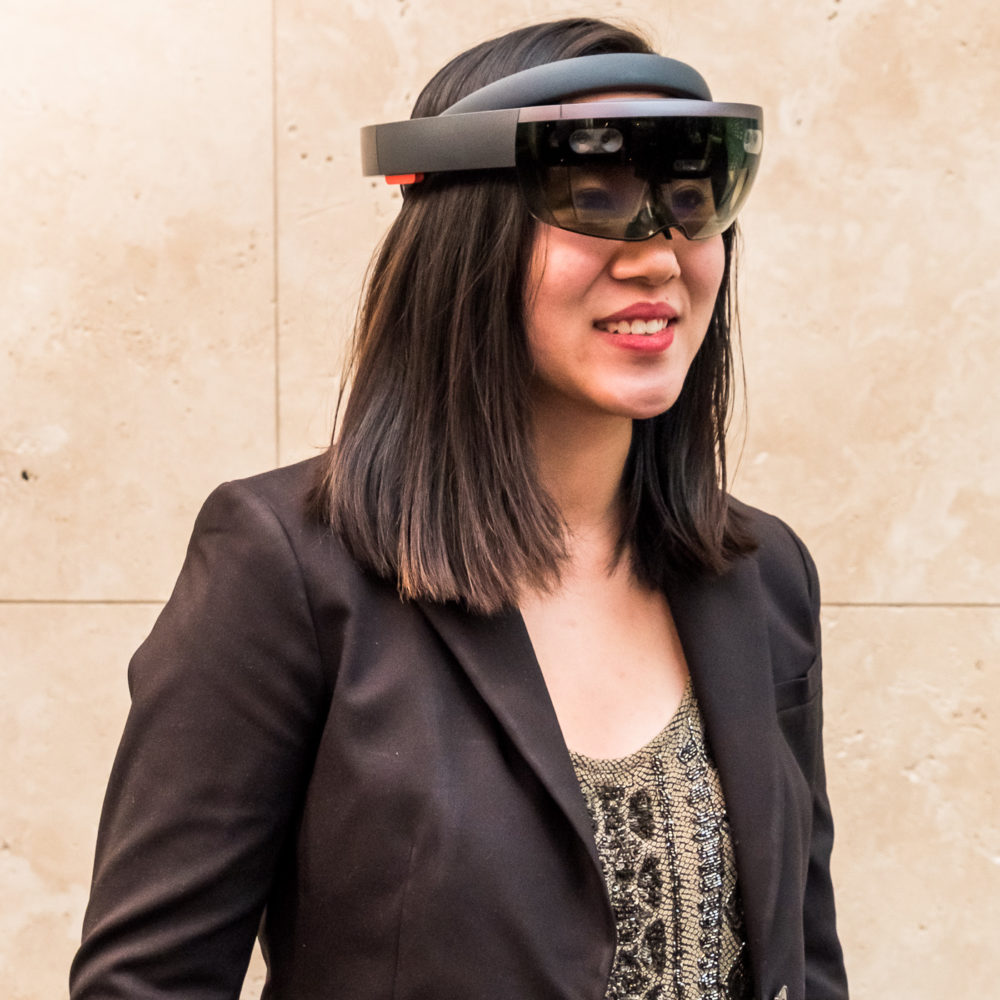
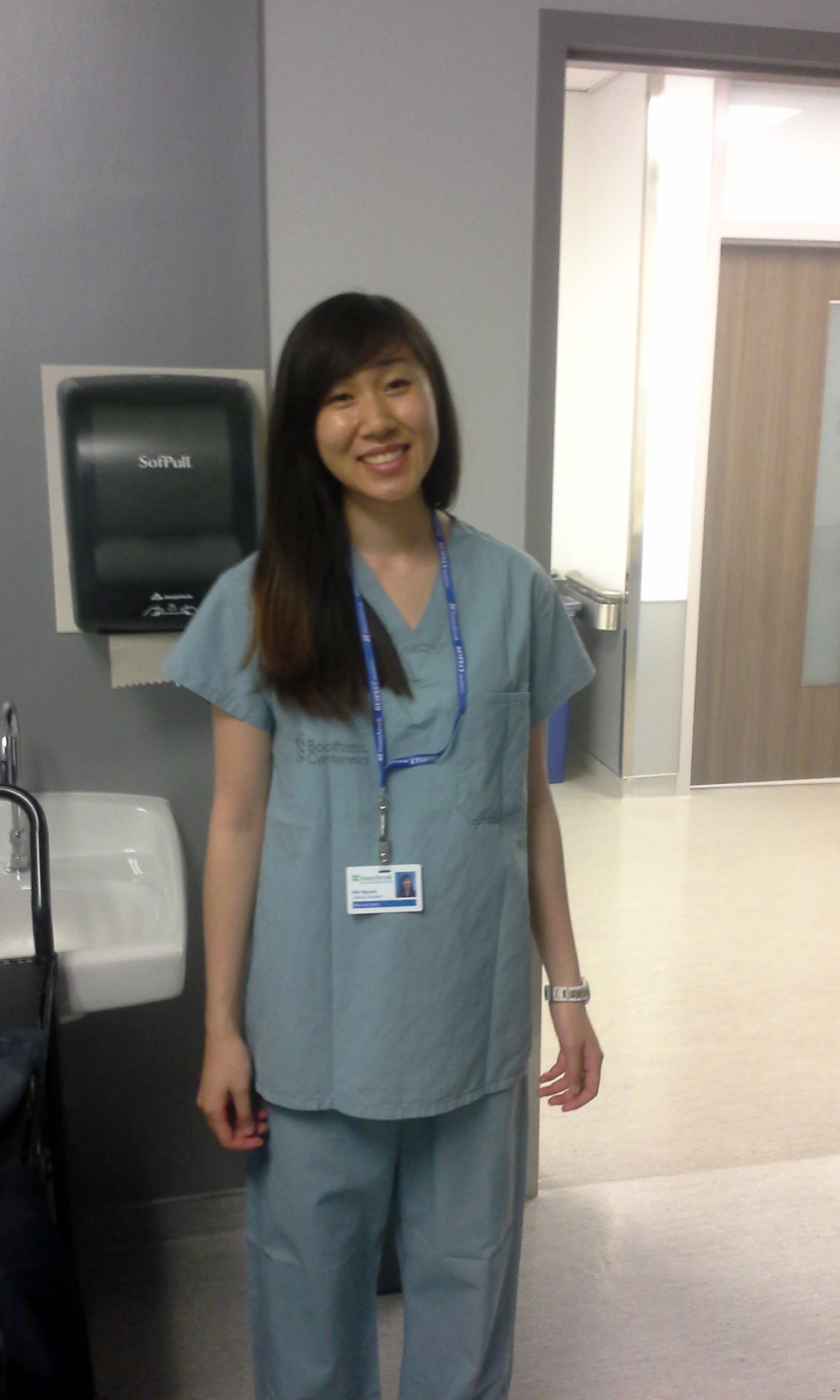
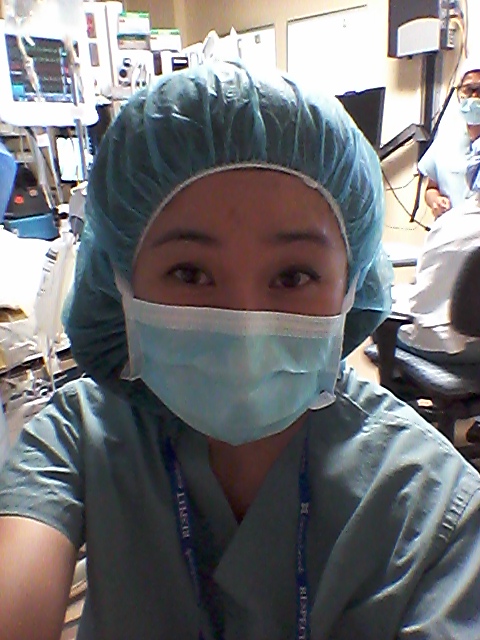
Nhu, a MASc Electrical and Computer Engineering Student at Ryerson University, was an intensely curious child and never afraid to constantly ask “why?”. Harnessing that power of curiosity Nhu has seen her research used in medical operations, currently runs a clinical trial at Sunnybrook Health Sciences Centre, and is currently doing more research involving augmented reality.

What’s one thing you wish you knew about engineering back when you were in high school?

I wish I knew that failure is never the end of the world. I was so terrified of never being good enough in many aspects of my life including doing well enough in my courses. Failure is just an opportunity to learn, and it will happen often in your life. I’ve learned much more from my mistakes than my successes- including failing courses!


What’s your proudest accomplishment as an engineer?

Seeing my work translate into the operating room is my proudest accomplishment as an engineer. I am currently running a clinical trial at Sunnybrook Health Sciences Centre to determine the viability of state of the art augmented reality technologies within the operating room. One day, I hope that my research fuels future work for an augmented reality surgical navigation system.

Tell me about a time in your career when your work has been about discovery or curiosity?

As a researcher, everything you do is about discovery and curiosity. We do research to drive answers to the questions that people have never answered before. Researchers are the adult versions of those annoying kids who always ask “why?!”. The only difference is that now we write the questions down and attempt to strategically answer them because we were tired of the adults saying that they didn’t know.


What are you doing these days?

Right now, I am currently a MASc student in the Electrical and Computer Engineering department. My research involves the use of augmented reality in the operating room for neurosurgery. We are studying the accuracy of current augmented reality systems and determining how to display patient information such that surgeons can intuitively understand what they see on the headset.

Photography by: JAE YANG at jaeyangphotography.com

Do you feel your work contributes to society? How so?

I already know it does. Research helps society and fuels the solutions for today’s problems. Without research who knows where we would be right now? My research sounds far-fetched like it’s something out of a movie. But in reality, a lot of inspiration comes from movies, and they reflect some of the most ground-breaking technologies discovered! What would life be like without cell phones, laptops or GPS technologies?


Why do we need more female engineers?

Engineering aims to solve a diverse set of problems which are aimed to meet an even more endlessly diverse society. Why should we let women take the back seat and let everyone else decide what is an important problem in society? Female engineers bring valuable and different perspectives and ideas to the table. Women have shaken the world in so many ways, whether it be in business, medicine, law or other professions. Is engineering any different? Absolutely not.


When you were becoming an engineer, were you nervous and stressed out about all the math and science? What made you push through and become an engineer? Were you sure that you wanted to become an engineer when you were in grade 12?

I had no idea that I wanted to be an engineer in grade 12. I just knew that I wanted to do something math and science related and that whatever it was going to be, engineering would take me there. It’s such a large field, who knows where you’ll end up later? The math and science did stress me out, but I knew that these were the things I was excited about learning. I may not have always had the highest grades but just because I don’t test well, that didn’t mean I should stop learning what I love. There’s nothing else I could see myself doing.

Filed Under: engHEROES

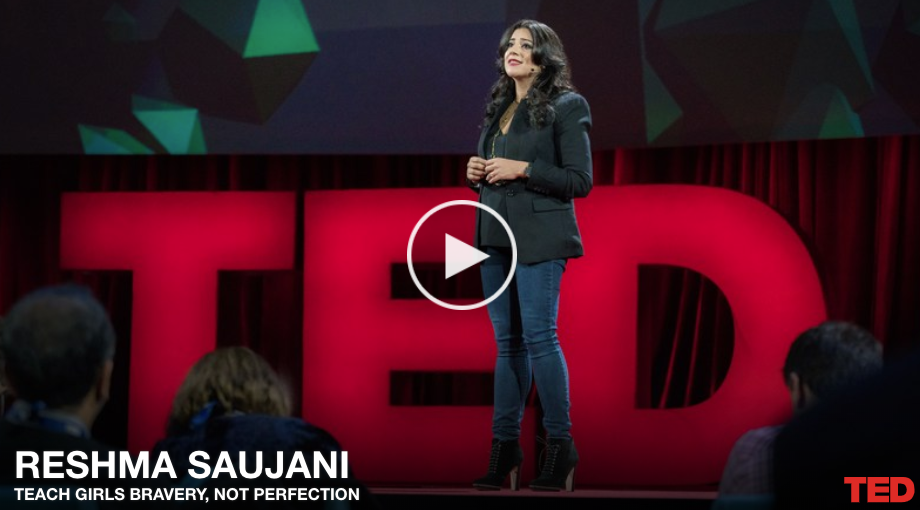
Reshma Saujani: Teach girls bravery, not perfection

by wemadeit

Reshma Saujani: Teach girls bravery, not perfection

With rise of technology and innovative solutions, coding is a skill that is and will become the most important ever. Reshma Saujani discusses the current gender gap between the way we teach girls versus the way we teach boys and firmly believes that girls should be taught how to be brave, not how to be perfect. Check out her inspirational talk!


Reshma Saujani is the founder of Girls Who Code and has only one goal in mind – to reach one million women in computer science by 2020. Reshma dives into the core issue that we’re raising boys to brave but girls to be perfect. To close the gap, the creation of Girls Who Code aims to teach girls to take risks, become innovative and how to code.

Filed Under: engSPIRATIONAL, TED talk

Mechatronics Engineering

by wemadeit

Mechatronics Engineering

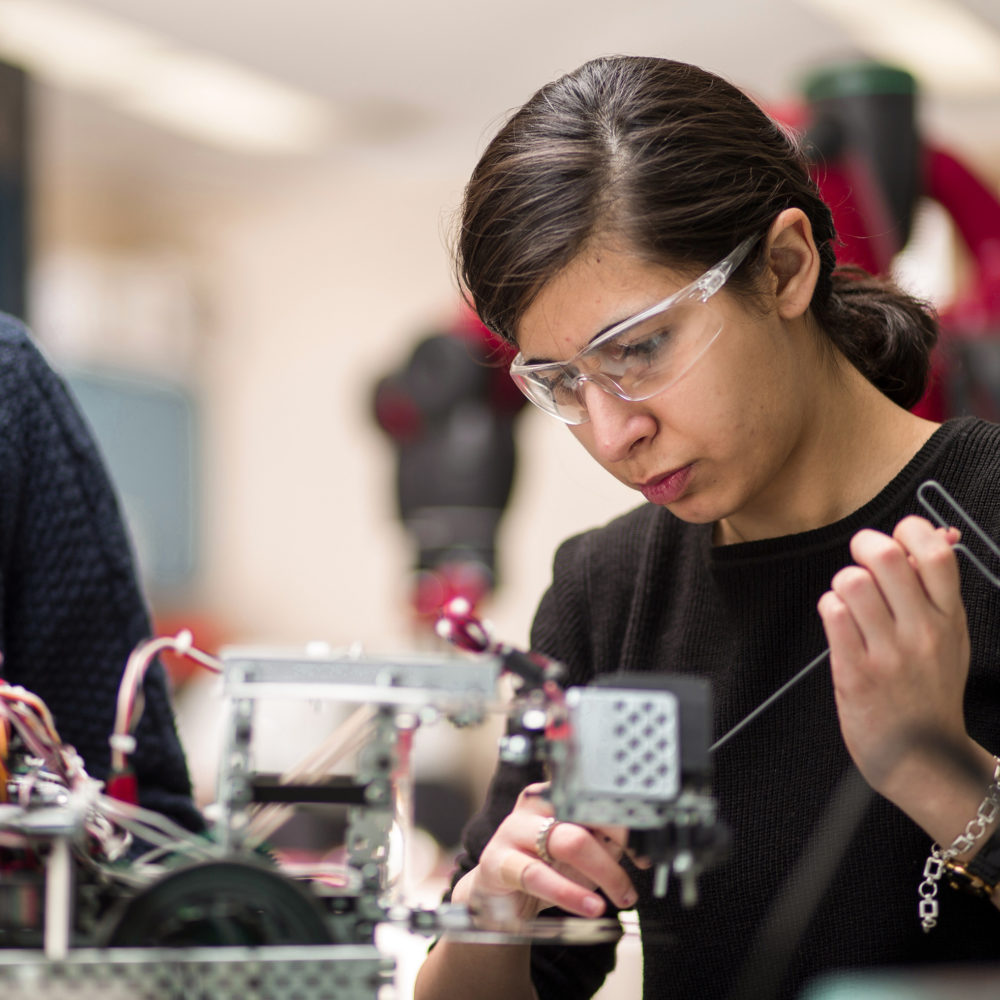
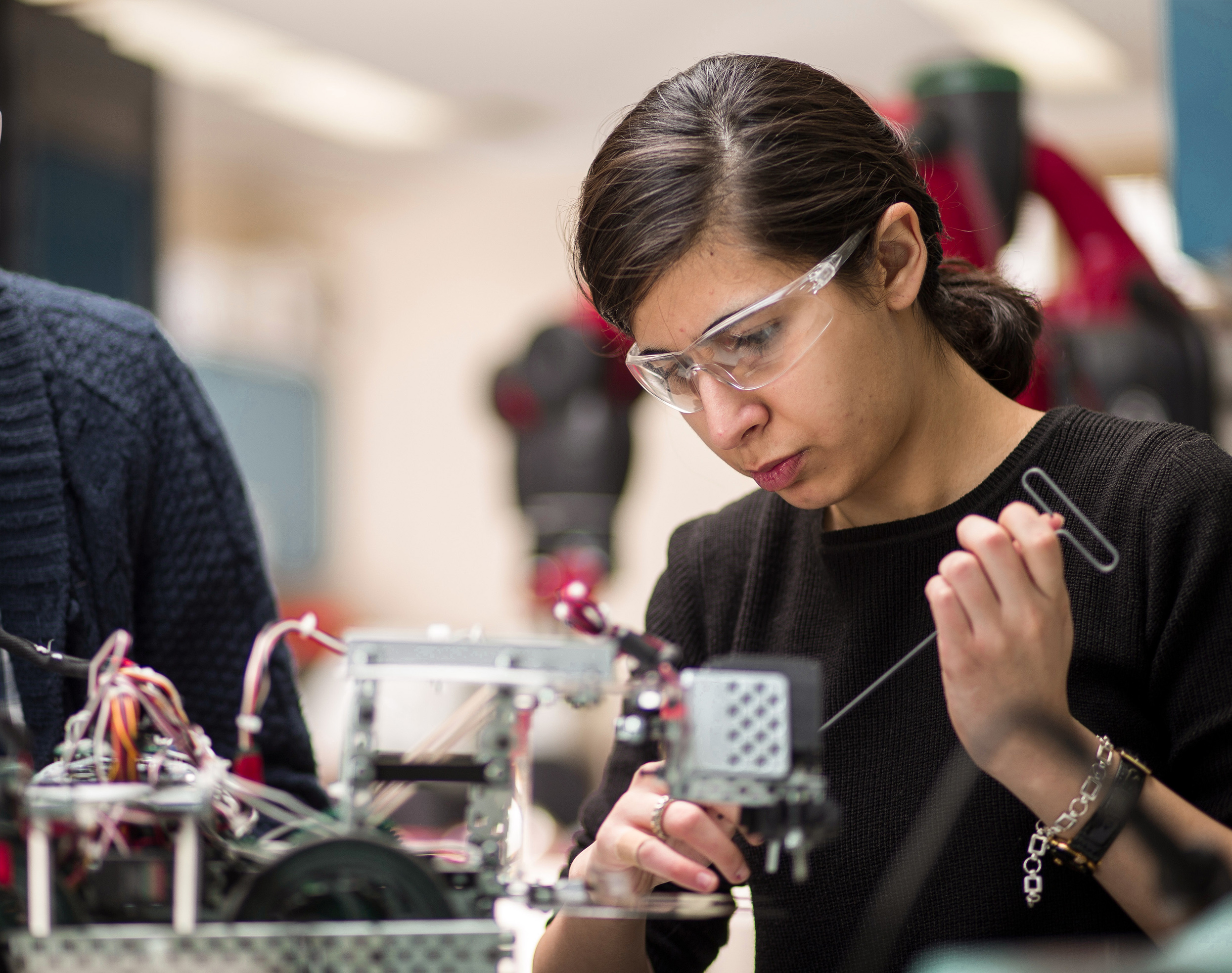
Mechatronics Engineering is a multidisciplinary field of study, which integrates Mechanical, Electrical, Computer or software, Systems Engineering and many more. The study and application of Mechatronics Engineering is often linked with robotics and automation.

WHAT KIND OF COURSES DO MECHATRONICS ENGINEERS STUDY IN SCHOOL?
  • Computer Aided Design
  • Robotics & Automation
  • Electronic Circuit Design
  • Object Oriented Programming
  • Structures and Properties of Materials
WHAT ARE SOME COOL PROJECTS THAT MECHATRONICS ENGINEERS GET TO WORK ON?
  • Designing and Fabricating a bionic arm or other prosthetics that can mimic human gestures
  • Designing Automated Vehicles and creating a mini city to test fully automated technologies
  • Designing medical devices that can identify health issues which are typically difficult to detect
  • Designing and building automated systems to efficiently harvest grains, fruits and vegetables in large quantities.
  • Developing humanoid robots that possess artificial intelligence
WHAT ARE 5 QUALITIES OF A MECHATRONICS ENGINEER?
  • Problem Solving
  • Written, Oral & Visual Communication
  • Strong Mathematical Ability
  • Logical Thinking
  • Creativity and Imagination
HOW DO MECHATRONICS ENGINEERS CONTRIBUTE TO MAKING THE WORLD A BETTER PLACE?

This new field of engineering is purposed to use the principles behind all existing disciplines to develop devices that solve real-world problems. This can be as simple as a household robot, intended to vacuum your floors, or items on a larger scale such as medical devices, or self-driving vehicles to make the world a safer and better place.

Filed Under: Engineering Disciplines

« Previous Page
Next Page »

Footer

Menu

  • About WEMADEIT
    • Donor
    • Partners
      • Toronto Metropolitan University
      • Ontario Tech University
      • University of Waterloo
      • Western University
  • For Students
    • Blog
    • Getting There
      • Engineering Disciplines
      • Student Life
      • Where Can I Study?
      • What You Don’t Know About Engineering
      • ENG BLING
    • Black Students
    • Indigenous Students
    • 2SLGBTQIA+ Students
    • Women and Girls
  • For Parents
    • Where Can You Study Engineering?
    • What is Engineering?
  • For Undergrads
    • Gaining work experience
    • Peer Mentorship
    • One Awards
    • Next Generation in Power
    • New Grad Program
  • For Teachers
    • Teacher Resources
  • Getting Involved
  • Contact Us
    • Newsletter Signup

Search

Teacher Login

Register | Lost your password?

  • Facebook
  • Instagram
  • Twitter

© 2026 · WEMADEIT | Site Design by rtraction