
• Skip to primary navigation
  • Skip to content
  • Skip to primary sidebar
  • Skip to footer

We Made a Difference. We Made it Together. WEMADEIT.

  • About WEMADEIT
    • Donor
    • Partners
      • Toronto Metropolitan University
      • Ontario Tech University
      • University of Waterloo
      • Western University
  • For Students
    • Blog
    • Getting There
      • Engineering Disciplines
      • Student Life
      • Where Can I Study?
      • What You Don’t Know About Engineering
      • ENG BLING
    • Black Students
    • Indigenous Students
    • 2SLGBTQIA+ Students
    • Women and Girls
  • For Parents
    • Where Can You Study Engineering?
    • What is Engineering?
  • For Undergrads
    • Gaining work experience
    • Peer Mentorship
    • One Awards
    • Next Generation in Power
    • New Grad Program
  • For Teachers
    • Teacher Resources
  • Getting Involved
  • Contact Us
    • Newsletter Signup

Engineering Disciplines

Quoth wikipedia:

“Engineering (from Latin ingenium, meaning “cleverness” and ingeniare, meaning “to contrive, devise”) is the application of scientific, economic, social, and practical knowledge in order to invent, design, build, maintain, and improve structures, machines, devices, systems, materials and processes.

The discipline of engineering is extremely broad, and encompasses a range of more specialized fields of engineering, each with a more specific emphasis on particular areas of applied science, technology and types of application.”

Well put crowd sourced mega brain!

Check out our breakdowns of the Fields of Engineering.

5 Weird things you can do with a Chemical Engineering Degree

by wemadeit

5 Weird things you can do with a Chemical Engineering Degree

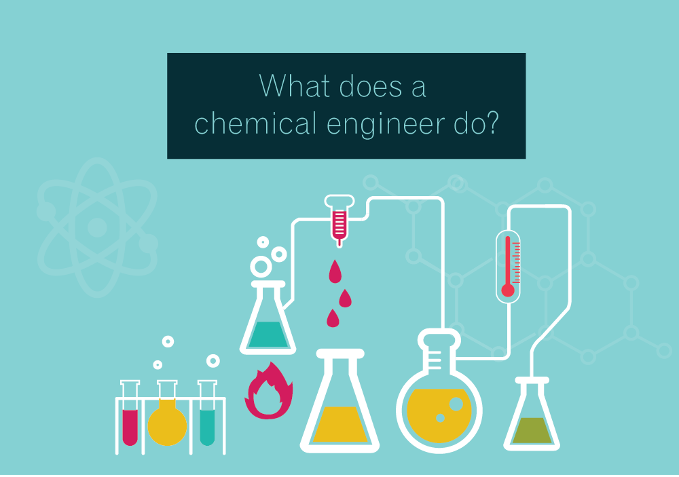
What is chemical engineering? Chemical engineering is a discipline of engineering that involves transforming raw materials and creating innovative processes in products to solve global issues. However, a chemical engineer is NOT a chemist. In fact, the two are quite different! Chemists spend most of their time conducting research with novel substances in a laboratory. While chemical engineering does involve the study of chemistry, chemical engineering focuses on applying the research done by chemists, and it also involves the application of biology, math and physics to create useful tools for society. There are lots of ways to apply a chemical engineering degree to help society. Below are some interesting industries you could work with as a chemical engineer:

1. Cosmetics

Many chemical engineers work in research labs and manufacturing plants that develop chemical-based products. New cosmetic products are the result of blending different chemical products, so you could work in a cosmetics industry as a chemical engineer!

2. Ice Cream

Similarly, to pharmaceutical, chemical and consumer product companies, ice cream development is a multiphase system. Chemical engineers in the ice cream industry control many different aspects that impact texture, taste and shelf life.

3. Toilet Paper

2020’s hottest commodity: toilet paper! Toilet paper can be manufactured from new or recycled paper. Then, chemical engineers use water, bleaches and different chemicals to break down the raw materials into usable fibers.

4. Toothpaste

Toothpaste is another must-buy product for most households An important ingredient in toothpaste in fluoride, as well as binders, abrasives, foaming agents, flavours and colourants. Chemical engineers experiment with these substances to find the perfect product to make our teeth sparkle!

5. Medicine

There are many opportunities for chemical engineers to get involved in the advancing medical and health sciences fields. One way is to develop new pharmaceuticals or medications like ibuprofen, acetaminophen, etc. Chemical engineers may also use bacteria, animal, and plant cells to increase the understanding of diseases, disease pathways, and human responses to drugs.


Filed Under: #shareABLE, Engineering Disciplines

Self-Employed Civil Engineers

by wemadeit

Self-Employed Civil Engineers

Being Your Own Boss is very Compelling

Making your own rules, and having complete control over your workload and earnings. This comes with freelance work and running your own business. Unfortunately, when people think of freelancers they often only think of IT workers. However, self-employed IT workers only make up 15% of the industry and is dropping steadily. Engineering is a profession that is often done in firms and large groups of collaborators, however, there is a new wave of civil engineers who are changing that landscape.

Why is Civil Engineering Heading Towards Self-Employment?

The number of civil engineers working for themselves rose by 33% between 2013 and 2018. An interesting point in this research is that large portions of these engineers are women. Currently, 4% of self-employed civil engineers are women (2,250) compared to 1.6% in 2013 (659). Self-employment is great when the work you are doing can be completed primarily independently, and works on a per gig basis. Access Financial chief executive Kevin Austin said the civil engineering sector’s project-based work “lends itself to self-employment”.

Kevin Austin also stated that there is a skills shortage in the transportation sector, which paves the way for civil engineers to fill that gap by working independently. Gig based work is also becoming an increasing trend in the economy today, this can be attributed to deteriorating employee benefits in companies. It is becoming harder to find a stable job that offers everything you want both financially, through the form of benefits,  and long term needs.

What Types of Gigs Can You Expect?

The initial stages of freelancing work often take place online. As a freelancer, you want to make sure you are utilizing as many platforms as possible to ensure that your schedule is busy with clients and work. This can be difficult if your network is just beginning to grow, and you need to build a strong reputation. Instead of clients coming to you directly, freelancers often use websites such as; freelancer.ca, workana.com, and upwork.com.

Once you have logged onto these sites and the search has begun, what can you expect to find as a civil engineer? Well, there is a great deal of speciation and variety when it comes to civil engineering postings online. Take this, for example, there is gig-based work posting on freelancing.ca calling for designers of racetracks. The posting can also be more generalized such as; construction manager, structural engineer, and concrete designer. There are also other job postings on these sites including; 3D design artists, and report writing experts.

There is a Demand

As you can see, there is a demand for independent contractors among all positions under the umbrella of civil engineering. With this demand comes a huge opportunity for upcoming civil engineers. Since freelance civil engineers are becoming very popular, there are more and more reasons to join this profession. Becoming your own boss has never been so easy.

Filed Under: #shareABLE, Engineering Disciplines

Strutting the STEM Runway

by wemadeit

Strutting the STEM Runway
Photo Credit: Kelly Hofer

We all know that a lot goes into engineering, and there are endless possibilities in the field. But, with all of these options, it’s easy to overlook some of the most exciting ones. Have you ever been interested in fashion, and love STEM just as much? Well, there is a new community and event just for it, that will satisfy your creative hobby with the exciting world of STEM. MakeFashion is an amazing company that showcases the combination of high fashion and the newest tech to create an unforgettable experience. This organization takes engineers, designers, and creators alike and brings them together, to create clothing that is both wearable and decked out with the latest tech as accessories and materials. Let’s take a closer look at this exciting collaboration of professionals!

MakeFashion has an annual gala that takes place in Calgary, Canada and is the largest event this organization holds. Every year at this gala hundreds of creatives gather and are paired with tech whizzes and engineers to create jaw-dropping pieces. Some of these fashion inventions amaze audiences by glowing, and some by moving. All that is guaranteed when taking part in this event is,  you will never see anything else like it. Some of the tech that has walked this runway include; fashion pieces that regulate your body temperature, accessories that monitor your vital signs, and a necklace that begins to glow when the sun goes down.

MakeFashion also runs year wide shows around the world, in North America, and across Europe! Each event takes inspiration from local talent, and local fashion trends to create a unique experience. The best part of these showcases is that technology is involved, however, fashion and aesthetics are weighted equally. Therefore, engineers and designers must work together in perfect harmony to execute pieces that are fit to walk this runway. This sets a great example that other designers and engineers should follow, to collaborate and create together.

MakeFashion doesn’t just hold show-stopping fashion exhibits, but they also run a series of workshops and leadership events meant to inspire the minds of tomorrow. This includes offering in-class lectures for age groups ranging from kindergarten to grade 12! This is an amazing opportunity because it gives the knowledge and power to kids that may not have the opportunity to travel to these fashion shows. The message of STEM and creativity being combined is one that is truly worth spreading to young students. The more collaboration that we encourage, the more discoveries that will be made in the future.

MakeFashion also hosts a series of maker events, that provide kids with hands-on experience creating new and exciting creations that fuse creativity with technology. In these workshops kids are instructed on how to build new tools and creations with every lesson, that will give everyone something wonderful to take home.

Overall MakeFashion’s message is clear through every initiative they have, we need to keep creating and collaborating across every industry. The reasoning behind this is simple, collaboration is beautiful and can lead to amazing products and even fashion pieces. The world of STEM needs more out of the box thinkers, who can create inventions that are suited for the runway and the world!

Filed Under: #shareABLE, Engineering Disciplines, engSPIRATIONAL Tagged With: engineering, fashion, makefashion, STEM

Programming… Explained

by wemadeit

Programming… Explained

Computers are running our world; they help us in school, connect us with our friends and family, and fit in our pockets! But what controls these amazing machines we use every day? Understanding the basics of what makes our computers function the way they do is powerful information. That is where the world of computer programming comes in. Simply put, computer programming is a way to instruct a computer to complete various tasks. Let’s break down this area of STEM a little more so we can understand how a major part of our world works.

The Basics

If we break down a computer, they can really only understand two types of data, on and off. Essentially this means when communicating with this type of technology we are relaying different combinations of on and off switches to result in different outcomes. Confused yet? This might be difficult to understand, but we have a lot more information to help you out.

The combination of on and off switches is known as binary code, which can be written using 1s and 0s. Binary code is grouped into bytes which are groups of 8 digits representing 8 transmitters (the collection of on and off switches).

However, writing code by using solely 1s and 0s is extremely inefficient and unrealistic, that is where coding languages come in. Different coding languages are essentially a set of rules on how code should be written and programmed. Some examples of different coding languages include; JavaScript, Python, HTML and Ruby– each language is designed to work for different purposes. For example, some are better suited to work for development, web design and even game design!

The Difference Between High-Level and Low-Level Programs

Low-level programming languages are closer to binary code and high-level programming languages are a lot less similar to binary code and much easier to work with typically. This means the high-level programming languages are closer to english, so they are easier to work with.  That is why most of the programming languages used by software engineers today are high-level.

How to Create a Command?

How do we take all of this information and turn it into real results? What does this process look like, and can anyone do it? Well the answer is creating a program/line of code to instruct a computer is fairly simple, and yes anyone can do it. In its essence, a code is simply a text file written in a given coding language. This means to write code all you need to do is write the code in a text editor like notepad, and save it to your computer. How you actually implement this line of code into your computer varies depending on the coding language you are working in. Some languages operate under a certain software that will implement the code, and some save a separate accompanying binary code file that your computer can directly run.

Fields that Involve Coding

Coding and computer programming may seem like a faraway and foreign practice, but coding is starting to influence and affect every industry. This includes fields outside of STEM such as art and design. A huge part of the art and design industry includes web design, and this, of course, goes hand in hand with coding. Software engineers and designers collaborate in order to make highly effective and aesthetic websites. This career clearly affects technology in a big way, so there is no surprise that coding is also a huge part of the healthcare industry. The technology and tools behind the health care system are often created and managed in collaboration with software engineers because they involve computers. Finance is also heavily affected by coders, which includes creating the websites in which people complete online banking.

There are so many possibilities when it comes to the beautifully complex world of coding and programming. Every field is evolving and moving the direction to need code. Computers control our future, which means coding will control our future in a big way. Do you want to be a part of that change?

Filed Under: #shareABLE, Engineering Disciplines, Getting There Tagged With: basics, computers, engineering, explained, programming

Recycling old Batteries into Fertilizer

by wemadeit

Recycling old Batteries into Fertilizer

In 2019, Canada produced over 1.33 billion metric tonnes of waste, leading every country in the world in the most garbage produced per capita. Included in this collection of waste are potentially harmful products such as batteries and electronic waste (e-waste). While placing a small number of normal alkaline batteries in the trash is not particularly harmful, some batteries including lead-acid, lithium, nickel-cadmium, silver oxide and mercury batteries pose a higher threat due to their deleterious impacts on the environment. Although some cities have hazardous household waste (HHW) programs and provide drop-off options for some consumer batteries, these programs are not available to everyone and are not always used. What if there was another alternative for these metal tubes?

An Australian company, Lithium Australia, has managed to close the loop on the energy-metal cycle as they recover zinc and manganese from used batteries. They have found a way to use the metal dust from batteries to create a micronutrient supplement for plant fertilizers. The company looks to build a circular battery economy and they are focusing on supplying sustainable and ethical materials for battery companies. The type of engineers behind this project are called environmental engineers. Environmental engineers use the principles of engineering, science, and biology to develop sustainable solutions to protect the health of living organisms while improving the quality of the environment. Environmental engineers play a crucial role in a quickly developing society, as they encourage humans to reduce their negative effects on the environment, while providing simple solutions for this to be accomplished. The environmental engineers working with Lithium Australia hope to reduce the carbon footprint of the battery industry, and one such method is by recycling their components into fertilizer!

So far, they are able to convert batteries that are on the smaller end of the scale, such as the ones used in remotes or small appliances. Their technology has found a way to extract the main components of alkaline batteries (zinc and manganese) and turn them into supplements for fertilizer.

Safely and sustainably disposing of alkaline batteries has become a major issue around the globe. However, Lithium Australia has already been carrying out tests on its new product and plans on expanding this testing in the future. We can be hopeful that this innovation will soon find its way to other countries so we have a method to reuse these batteries in a safe and practical manner!

Work Cited

https://interestingengineering.com/old-batteries-can-now-be-recycled-into-fertilizer

https://www.usatoday.com/story/money/2019/07/12/canada-united-states-worlds-biggest-producers-of-waste/39534923/

https://www150.statcan.gc.ca/n1/pub/16-002-x/2016001/article/14570-eng.htm

Filed Under: #shareABLE, Engineering Disciplines, engSPIRATIONAL Tagged With: battery, engineering, fertilizer, waste

Cosmetic Engineering

by wemadeit

Cosmetic Engineering

There are no limits with a degree in engineering, instead there is only a multitude of possibilities. Engineering has so many different career paths, so that everyone can make a difference in a field they are passionate about. Some engineers want to use their education towards a creative industry, which is where cosmetic engineering comes in. That’s right, you can be a part of creating several beauty products with an engineering degree. Producing and manufacturing makeup products is a complex process that is very technical, which is why we need engineers. However, with all of this said, there is also a great deal of creativity at play to create a product that follows a cohesive story. A career in cosmetic engineering really does bridge the gap between creativity and technical skills.

Engineers in makeup?

Engineers are involved in developing, researching and creating makeup products. The reason behind this is there is a great deal of research that goes into creating these products since it affects the skin and health of everyone that uses it. Therefore the combination of chemicals and elements used in the product needs to be perfectly balanced and thought out. This process involves chemistry, which means chemical engineers will work with other chemists. Not only do the products need to be tested to be safe for use, but they also need to be crafted in a way that creates the outcome the cosmetics company/designers envisioned. This is where the creative application of engineering comes in. New techniques are tested and used at this stage to create cutting edge products.

How do you get there?

Does this sound like the perfect job for you? Do you live and breathe both creativity and STEM? The first step (like most careers in STEM) is getting a bachelor’s degree. The recommended degree for this career is chemical engineering. Through this degree you will take a deeper look at the process as well as developing materials and the impact of certain ingredients. After you get your bachelor’s degree you will need approximately 1-3 years of experience in product formulation. That doesn’t have to be cosmetic development in particular, it could even be in skin care, or other products.

The most important skill to gain from this work experience is the ability to manipulate different materials and chemicals to create a very specific product. While you are working it is always good to join a professional organization that can help you hone your skills. An example of this is The Society of Cosmetic Chemists. Even though this name includes the term “chemists” engineers are also welcomed, because they all work together in the industry. The advantages of joining, is you will have access to several networking opportunities and conferences, as well as presentations to help develop your professional skills. It is also a great thing to put on your resume to help you stand out when applying to jobs. Once you get your job in the cosmetic engineering industry you can expect to make roughly 78,000 dollars annually.

What soft skills do you need?

Soft skills are essential in every job. These are skills you learn outside of the classroom. These are the skills you use to work better with others and express yourself well. You will need excellent communication and teamwork skills for this career path, because you will 100% need to work with others. You will also need problem-solving skills because there are tons of issues that will surface in product development. Your end goal is to make products that are adaptable and suitable for multiple skin types, and this involves a lot of trial and error. Ultimately for this job you need to have a great rounded set of skills. Overall if you love getting creative and have a passion for makeup, cosmetic engineering may be perfect for you. The great thing about this career path is it shows how STEM has room for everyone! It also proves that joining the STEM community looks different for everyone. Cosmetic engineering is not an easy task, it needs talented, passionate and hardworking STEM leaders, and that leader could be you.

Filed Under: #shareABLE, Engineering Disciplines, Getting There Tagged With: cosmetic, engineering, shoshauna, western

« Previous Page
Next Page »

Primary Sidebar

Categories

  • #shareABLE (70)
  • #surveySAYS (8)
  • engHEROES (50)
  • Engineering Disciplines (35)
  • engSPIRATIONAL (59)
  • Getting There (17)
  • Grade 11 (4)
  • Health (3)
  • Journeys (20)
  • Listen Up (5)
  • listenUp! (2)
  • More2Life (7)
  • Our Favourite Articles (2)
  • Press (3)
  • Recipes (2)
  • Reviews (5)
  • TED talk (17)
  • TheFieldTrip (5)
  • Uncategorized (4)
  • weTHINK (15)

Teacher Login

Register | Lost your password?

Sign Up To Our Newsletter

Footer

Menu

  • About WEMADEIT
    • Donor
    • Partners
      • Toronto Metropolitan University
      • Ontario Tech University
      • University of Waterloo
      • Western University
  • For Students
    • Blog
    • Getting There
      • Engineering Disciplines
      • Student Life
      • Where Can I Study?
      • What You Don’t Know About Engineering
      • ENG BLING
    • Black Students
    • Indigenous Students
    • 2SLGBTQIA+ Students
    • Women and Girls
  • For Parents
    • Where Can You Study Engineering?
    • What is Engineering?
  • For Undergrads
    • Gaining work experience
    • Peer Mentorship
    • One Awards
    • Next Generation in Power
    • New Grad Program
  • For Teachers
    • Teacher Resources
  • Getting Involved
  • Contact Us
    • Newsletter Signup

Search

Teacher Login

Register | Lost your password?

  • Facebook
  • Instagram
  • Twitter

© 2026 · WEMADEIT | Site Design by rtraction