
• Skip to primary navigation
  • Skip to content
  • Skip to primary sidebar
  • Skip to footer

We Made a Difference. We Made it Together. WEMADEIT.

  • About WEMADEIT
    • Donor
    • Partners
      • Toronto Metropolitan University
      • Ontario Tech University
      • University of Waterloo
      • Western University
  • For Students
    • Blog
    • Getting There
      • Engineering Disciplines
      • Student Life
      • Where Can I Study?
      • What You Don’t Know About Engineering
      • ENG BLING
    • Black Students
    • Indigenous Students
    • 2SLGBTQIA+ Students
    • Women and Girls
  • For Parents
    • Where Can You Study Engineering?
    • What is Engineering?
  • For Undergrads
    • Gaining work experience
    • Peer Mentorship
    • One Awards
    • Next Generation in Power
    • New Grad Program
  • For Teachers
    • Teacher Resources
  • Getting Involved
  • Contact Us
    • Newsletter Signup

#shareABLE

6 Simple Ways to Get Ahead in STEM

by wemadeit

6 Simple Ways to Get Ahead in STEM
  • Eat breakfast everyday: This may seem obvious but a healthy diet and a good breakfast in the morning is essential to starting the day right and having enough fuel to get yourself through those tough math problems!

  • Procrastinate less: The quicker you get your homework done, then the more time you have to recharge! Resting is just as important as working, so by managing your time and getting things done right away you can have fun and still be productive.
  • Keep up with the news: Being obsessed with breaking news isn’t too healthy, but keeping up with your industry, whether that be science, engineering or something else, is a great way to be informed and build those soft skills like writing and communication. Try to read just one article related to your field a day. Or better yet check out some of these podcasts to stay up to date if you’re short on time!

  • Get involved: Joining groups at school is the perfect way to flex your engineering muscles while having fun. Do some math competitions, take debate or even take up a sport to build your focus. Associating hard work with social interaction is a great way to cope with any stress that may come along with engineering.
  • Stay hydrated: Did you know drinking more water can improve your mood, make your skin clearer and make you more productive? So maybe skip the coffee or hot chocolate during your daily Tim Hortons run and opt for a crisp bottle of water instead.
  • Rely on your network: This is essential in the future when looking for a job, but also for your mental health! Having friends or family around that support you and who you can be yourself around is so important for your mental health. Make time for the ones you love and you’ll be so much happier.


Filed Under: #shareABLE, #surveySAYS Tagged With: eng, engineering, STEM, tips

6 Exam Studying Tips From 6 University Engineering Students

by wemadeit

6 Exam Studying Tips From 6 University Engineering  Students

Perfect your time management skills so you study effectively, make time for self-care and spend time with your friends and family.”

Sheila (4th-year Industrial Engineering)

Take breaks and study in groups so that you don’t completely isolate yourself.”

Jeffrey (3rd-year aerospace engineering)

Everyone learns differently, so try different ways of studying and find what’s most effective for you.”

Colin (3rd-year mechanical engineering)

Do work as you go instead of doing it all last minute.”

Carol (1st year biomedical engineering)

Make a studying schedule and rest well.”

Sophia (3rd-year aerospace engineering)

Study for a set amount of time without any distractions, and then take that same amount of time off, separating yourself from your work during that time so you can come back strong.”

Div (4th-year aerospace engineering)

Filed Under: #shareABLE, engSPIRATIONAL, Journeys Tagged With: engineering, exams, study, tips, wemadeit

Engineering Craft Ideas

by wemadeit

Engineering Craft Ideas

We know December has passed, but the snow just means it’s a perfect time to stay indoors, grab a hot chocolate and craft!

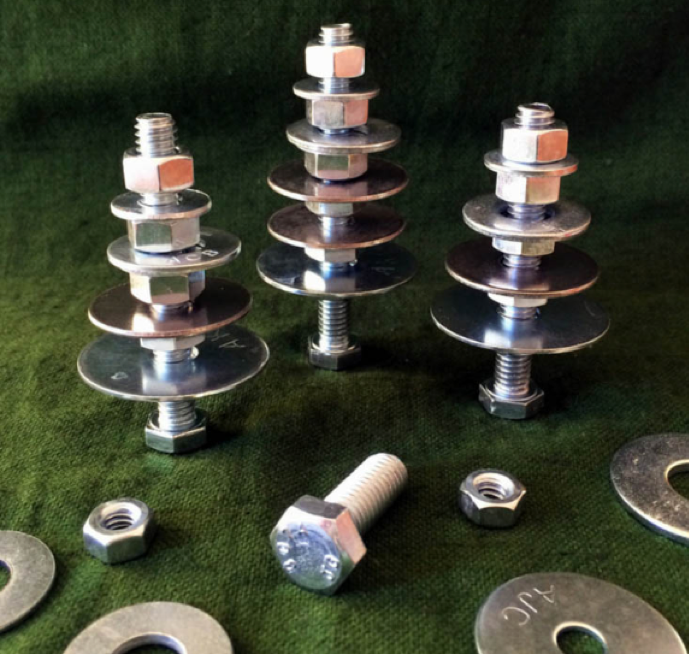
Tinkering Trees

The Tinkering Trees activity is simple, fun, AND festive!

Supplies:

  • 4 washers per tree, decreasing in size
  • Multiple 5/8″ diameter bolts in different lengths for different sized trees (one per tree)
  • 5 x 5/8″ size nuts

Instructions:

  1. Start with a bolt, then alternate stacking different sized nuts and washers to build a tree shape
  2. For extra fun, paint the materials a forest green colour, and add dots of red, blue and yellow as twinkling lights. Add a paper star or angel, and you’re all set for Saint Nick!

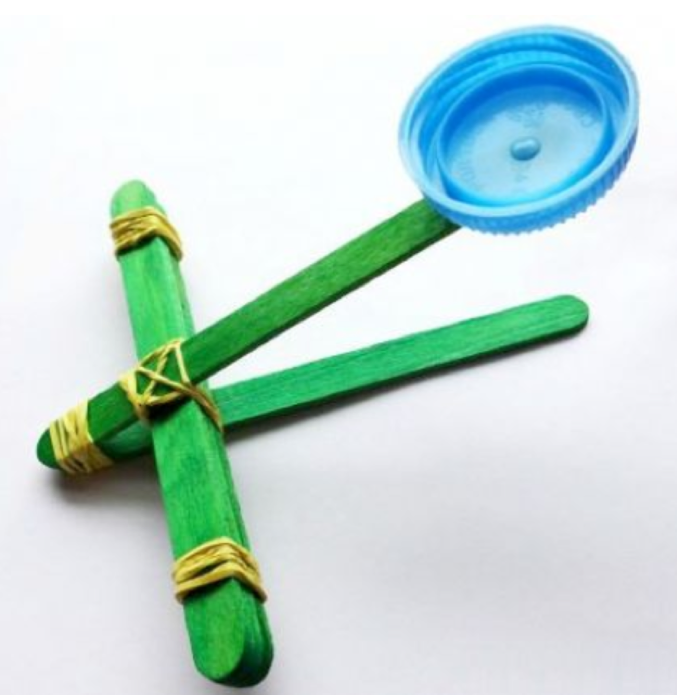
Mini-Catapult

Take your snowball fight indoors with this mini “snowball” shooter!

Supplies:

  • 7 popsicle sticks
  • 3 rubber bands
  • A bottle cap
  • Mini marshmallows
  • White glue

Instructions:

  1. Glue 5 popsicle sticks together.
  2. Stack remaining 2 popsicle sticks together and wrap a rubber band around one end.
  3. Pull the two popsicle sticks apart and wedge the stack of 5 popsicle sticks between them.
  4. Secure the catapult together with a rubber band.
  5. Glue a bottle cap upside down on the end of the top popsicle stick.
  6. Place a marshmallow snowball on the bottle cap, pull back, and let it fly!

Filed Under: #shareABLE, Recipes Tagged With: crafts, engineering, Ideas

5 Games to Flex your Engineering Brain

by wemadeit

5 Games to Flex your Engineering Brain

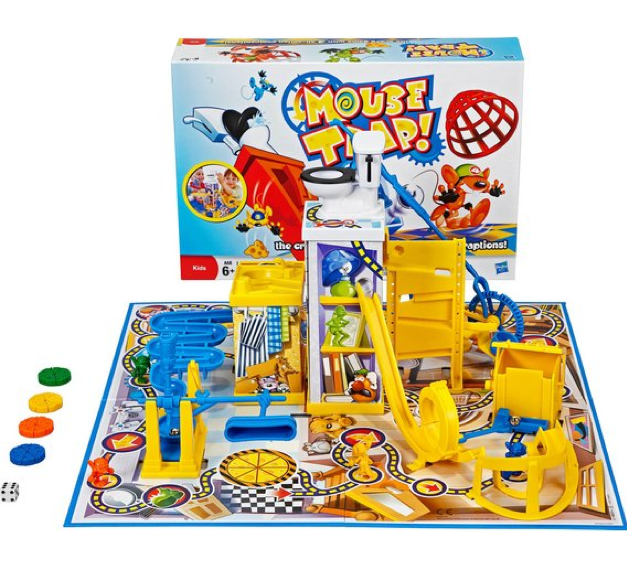
1. Mouse Trap

To win this game you take turns to build the trap and then try to spring it on your opponent’s mouse without yours getting caught! Problem solving and innovation is the key to being an engineer, and this will test your strengths in both!

2. Jenga

Jenga is a game of careful movements and calculations. Every civil engineer knows that to build the tallest structures, you need the strongest foundation. Test your tower by pulling blocks out until it can no longer stand and then build it back up to topple again!

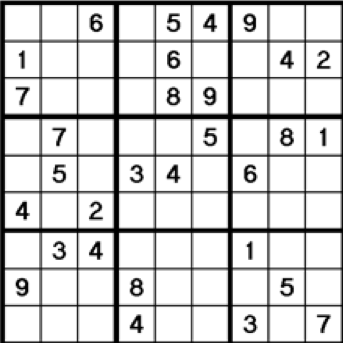
3. Sudoku

Practice your math and logic skills with a game of Sudoku. Each line needs to contain the numbers 1-9, both vertically and horizontally, and no number can be repeated in a line. Math and engineering are partners in crime, and this is one game that will strengthen our skills in both.

4. Tetris

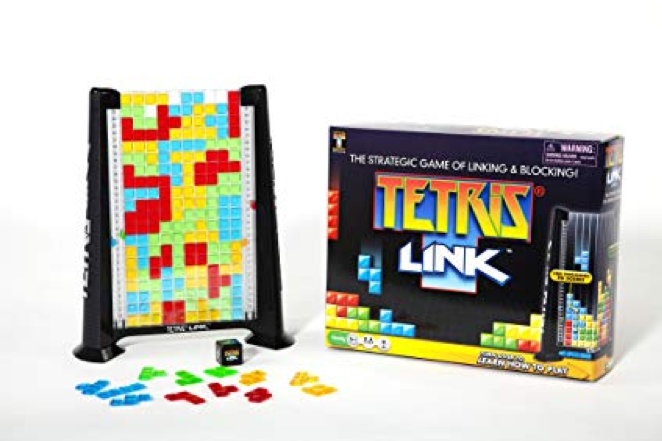
Tetris began as a classic video game but over time has been adapted into a board version! Fitting together different shaped boxes helps with concentration and organization, which mechanical engineers especially appreciate.

5. Operation

For all the biomedical engineers out there, Operation is the game for you! Practice your steady hand-eye coordination (and client relations!) by pulling out different pieces from your patient. Electrical engineers will also love this game, as the game contains a circuit to make the buzzing noise.

Filed Under: #shareABLE, engSPIRATIONAL, Reviews Tagged With: #shareABLE, engineering, game, STEM game

HOW TO: Make a Rubber Band Car

by wemadeit

HOW TO: Make a Rubber Band Car

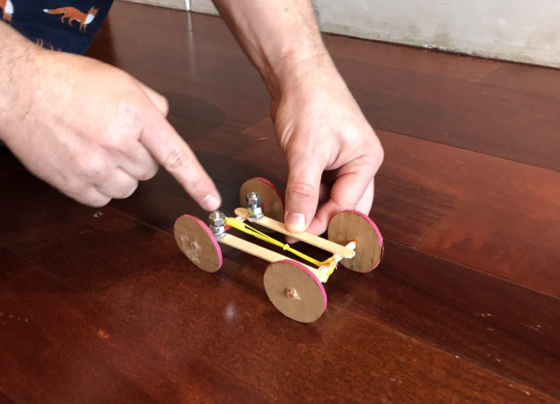
Mechanical Engineers focus on how to make things move and work, and cars are no exception! In this activity you will be practicing motion, elasticity and mechanics. Make sure to look up Newton’s Laws of Motion after you finish to learn more about the science behind this activity!

You will need:

  1. One Toothpick
  2. Hot Glue
  3. Hot Glue Gun
  4. Five Rubber bands
  5. Scissors
  6. Straw
  7. Two 4” dowels
  8. Two 4.5” thick popsicle sticks
  9. Cardboard
  10. One-hole punch
  11. Two bolts
  12. Four nuts

STEPS:

  1. Cut the straws into four 1” pieces.
  2. Cut the toothpick into two halves.
  3. Cut out four 2” cardboard circles for wheels. Punch a hole through the centre.
  4. Fasten the remaining four rubber bands around the cardboard wheels to increase friction.
  5. Twist one 4” dowel through the centre hole of one cardboard wheel to make an axel. Repeat with the other dowel and one other wheel. Leave the other two wheels to the side.
  6. Secure the dowel to the wheel by hot glueing it together on the outside of the wheel. Repeat for both wheels.
  7. Insert two straw pieces on each dowel.
  8. Attach the remaining two wheels to the two dowels, and secure on the outside of the wheel with glue. You will now have two completed wheel-and-axles.
  9. Separate the straw pieces on the dowel to each side, and hot glue a small toothpick piece in the centre of each dowel.
  10. Hot glue one end of one popsicle stick to one piece of straw on the first wheel-and-axle, and then connect the other end to the second wheel-and-axle straw piece with hot glue. Repeat on the other side with the second popsicle stick. This is the chassis (framework) of your car.
  11. Hot glue the bolts upright on the popsicle sticks at the back of your chassis near the wheels to add weight. Add nuts as needed, depending on the size and weight of your bolts.
  12. Attach a rubber band to the front axle at the toothpick.
  13. Connect the other end of that rubber band to the back axle on the toothpick, twist it to wind it up, and then let go for it to run.
  14. Congratulations! You’ve just successfully completed a mini car.

Filed Under: #shareABLE Tagged With: band, car, engineering, how to, mechnical, rubber, wemadeit

5 Engineering Picture Books – That Place Young Girls at the Center of STEM

by wemadeit

5 Engineering Picture Books – That Place Young Girls at the Center of STEM

A great way to get girls excited about STEM is through storytelling. In the past few years, there has been an upsurge in amazing picture books that star female protagonists who delve into the world of Science and discovery. Traditionally books about robots, space, machinery, and science experiments have always focused on boys and science as a male subject. This is why seeing female faces at the center of these books has such an important and positive impact- it sends the message that STEM is for everyone. Check out the list below for 5 picture books that showcase science-loving girls and women who love to wonder, push boundaries, try, fail, and try again, all in the name of science.

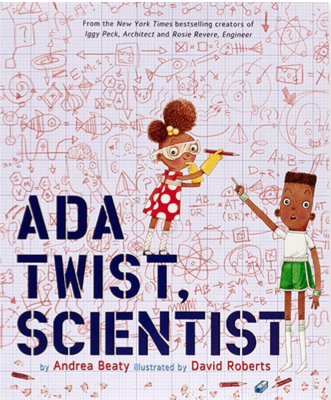
Ada Twist Scientist by Andrea Beaty

Recommended Age: 4 – 9

Young Ada has a boundless imagination and has always been hopelessly curious. Why are there pointy things stuck to a rose? Why are there hairs growing inside your nose? When her house fills with a horrific, toe-curling smell, Ada knows it’s up to her to find the source. Not afraid of failure, she embarks on a fact-finding mission and conducts scientific experiments, all in the name of discovery. But, this time, her experiments lead to even more stink and get her into trouble! Beaty, who also wrote the book Rosie Revere, Engineer, reinforces the importance of curiosity, perseverance and celebrates life long learning.  http://abramsbooks.com/adatwist/


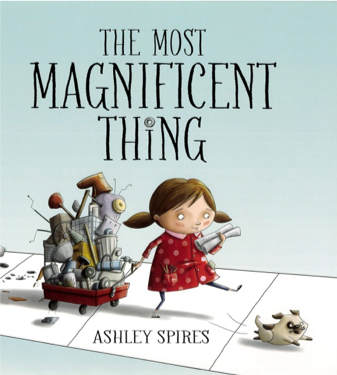
The Most Magnificent Thing by Ashley Spires 

Recommended Age: 4 – 9 (but even adults can benefit from this book!)

This is a charming picture book about an unnamed girl and her very best friend, who happens to be a dog. The girl has a wonderful idea. “She is going to make the most MAGNIFICENT thing! She knows just how it will look. She knows just how it will work. All she has to do is make it, and she makes things all the time. Easy-peasy!” But making her magnificent thing is anything but easy, and the girl tries and fails, repeatedly. Eventually, the girl gets really, really mad. She is so mad, in fact, that she quits. But after her dog convinces her to take a walk, she comes back to her project with renewed enthusiasm and manages to get it just right. The girl doesn’t just “make” her magnificent thing — she “tinkers and hammers and measures,” she “smoothes and wrenches and fiddles,” she “twists and tweaks and fastens.” These precise action words are likely to fire up the imaginations of youngsters eager to create their own inventions and is a great tie-in to learning about Science, Technology, Engineering and Math. https://amzn.to/2Ol0imv


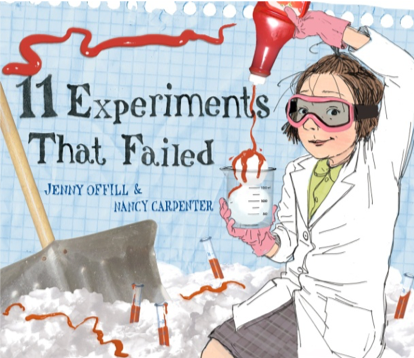
11 Experiments That Failed by Jenny Offill

Recommended Age: 4 – 8

Is it possible to eat snowballs doused in ketchup—and nothing else—all winter? Can a washing machine wash dishes? By reading the step-by-step instructions, kids can discover the answers to such all-important questions along with the book’s curious narrator.

Here are 12 “hypotheses,” as well as lists of “what you need,” “what to do,” and “what happened” that are sure to make young readers laugh out loud as they learn how to conduct science experiments (really!). https://amzn.to/2OpbyhI


Mae Among the Stars by Stasia Burrington

Recommended Age: 4 – 8

When Little Mae was a child, she dreamed of dancing in space. She imagined herself surrounded by
billions of stars, floating, gliding, and discovering. She wanted to be an astronaut. Her mom told her, “If you believe it, and work hard for it, anything is possible.” Little Mae’s curiosity, intelligence, and determination, matched with her parents’ encouraging words, paved the way for her incredible success at NASA as the first African American woman to travel in space. This book will inspire other young girls to reach for the stars, to aspire for the impossible, and to persist with childlike imagination. https://amzn.to/2P4PPZd


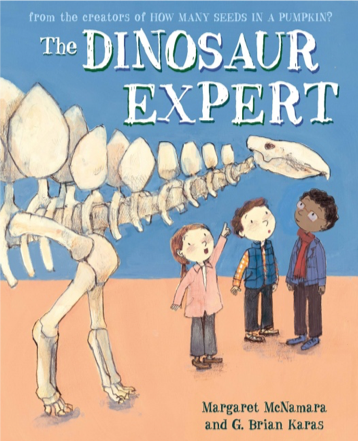
The Dinosaur Expert / by Margaret McNamara

Recommended Age: 4 – 8

Mr. Tiffin and his students are back in another picture book, and this time the focus is on dinosaur-loving Kimmy. During a field trip to the natural history museum, Kimmy is thrilled to share what she knows about the Stegosaurus and the Archaeopteryx and even the ginormous Titanosaurus. That changes when one of her classmates questions whether girls can be paleontologists. Kimmy starts to feel shy. What if they can’t? What if no one wants to hear what she has to say? It will take some help from Mr. Tiffin–and from a famous scientist–for Kimmy to find her voice again.
Join Mr. Tiffin’s class as they learn about dinosaurs big and small, feathered and scaly, winged and ocean-dwelling. And root for Kimmy, the dinosaur expert . . . who might just learn something about herself. https://amzn.to/2O0uK64

Filed Under: #shareABLE, Reviews

« Previous Page
Next Page »

Primary Sidebar

Categories

  • #shareABLE (70)
  • #surveySAYS (8)
  • engHEROES (50)
  • Engineering Disciplines (35)
  • engSPIRATIONAL (59)
  • Getting There (17)
  • Grade 11 (4)
  • Health (3)
  • Journeys (20)
  • Listen Up (5)
  • listenUp! (2)
  • More2Life (7)
  • Our Favourite Articles (2)
  • Press (3)
  • Recipes (2)
  • Reviews (5)
  • TED talk (17)
  • TheFieldTrip (5)
  • Uncategorized (4)
  • weTHINK (15)

Teacher Login

Register | Lost your password?

Sign Up To Our Newsletter

Footer

Menu

  • About WEMADEIT
    • Donor
    • Partners
      • Toronto Metropolitan University
      • Ontario Tech University
      • University of Waterloo
      • Western University
  • For Students
    • Blog
    • Getting There
      • Engineering Disciplines
      • Student Life
      • Where Can I Study?
      • What You Don’t Know About Engineering
      • ENG BLING
    • Black Students
    • Indigenous Students
    • 2SLGBTQIA+ Students
    • Women and Girls
  • For Parents
    • Where Can You Study Engineering?
    • What is Engineering?
  • For Undergrads
    • Gaining work experience
    • Peer Mentorship
    • One Awards
    • Next Generation in Power
    • New Grad Program
  • For Teachers
    • Teacher Resources
  • Getting Involved
  • Contact Us
    • Newsletter Signup

Search

Teacher Login

Register | Lost your password?

  • Facebook
  • Instagram
  • Twitter

© 2026 · WEMADEIT | Site Design by rtraction