
• Skip to primary navigation
  • Skip to content
  • Skip to footer

We Made a Difference. We Made it Together. WEMADEIT.

  • About WEMADEIT
    • Donor
    • Partners
      • Toronto Metropolitan University
      • Ontario Tech University
      • University of Waterloo
      • Western University
  • For Students
    • Blog
    • Getting There
      • Engineering Disciplines
      • Student Life
      • Where Can I Study?
      • What You Don’t Know About Engineering
      • ENG BLING
    • Black Students
    • Indigenous Students
    • 2SLGBTQIA+ Students
    • Women and Girls
  • For Parents
    • Where Can You Study Engineering?
    • What is Engineering?
  • For Undergrads
    • Gaining work experience
    • Peer Mentorship
    • One Awards
    • Next Generation in Power
    • New Grad Program
  • For Teachers
    • Teacher Resources
  • Getting Involved
  • Contact Us
    • Newsletter Signup

engineering

3 Super Cool Engineering Traditions

by wemadeit

3 Super Cool Engineering Traditions

Engineering has a very rich history with many fun traditions that have been performed by engineers all around the world for decades. Many of these traditions are still alive and well and are practiced regularly by engineering students in Canada and many other countries. Today we are going to learn about the history of three notable traditions that all engineers-to-be can look forward to participating in one day! 

Iron Ring Ceremony

  • The Iron Ring is presented to graduating engineering students as a symbol of their dedication to holding up ethical standards in the profession once they are practicing engineers
  • The Iron Ring ceremony is primarily a Canadian Engineering tradition although there are some similar ceremonies in the United States
  • The first Iron Ring ceremony was performed in 1925 in Montreal 
  • The idea was created in 1922 by a University of Toronto professor, H.E.T Haultain
  • Now this ceremony happens annually at school across Canada! 

Purple!

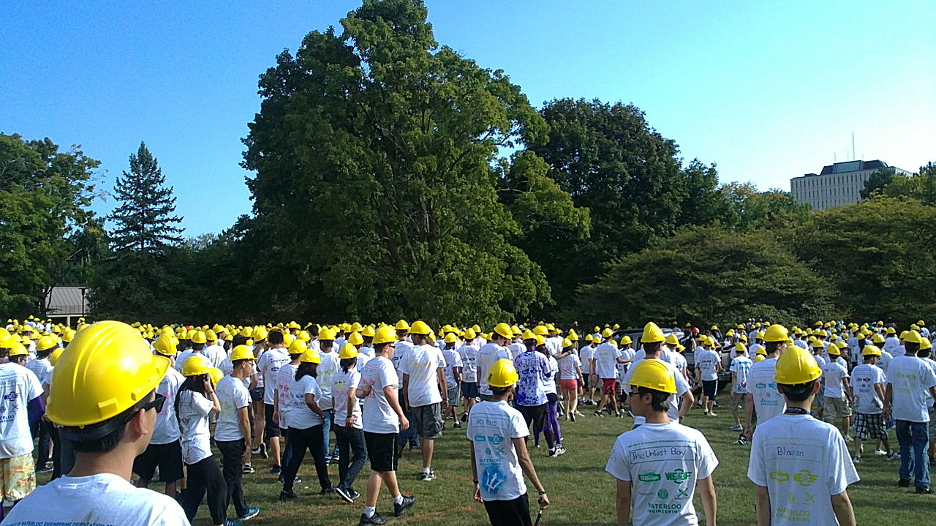
  • This was probably the strangest sight to see during the first week of university! Engineering students walking around with purple skin! 
  • Purple is a very significant colour for all engineering students. The origin of the purple traditions is not verified but it is said that this colour is used because it was the colour worn by the marine engineers on the Titanic, it is also speculated that it is because purple was the colour of the engineering corp in the British Miltary. 
  • During orientation week, new engineering students dye their skin purple in this super funny tradition!

Boiler Suits/ Patches 
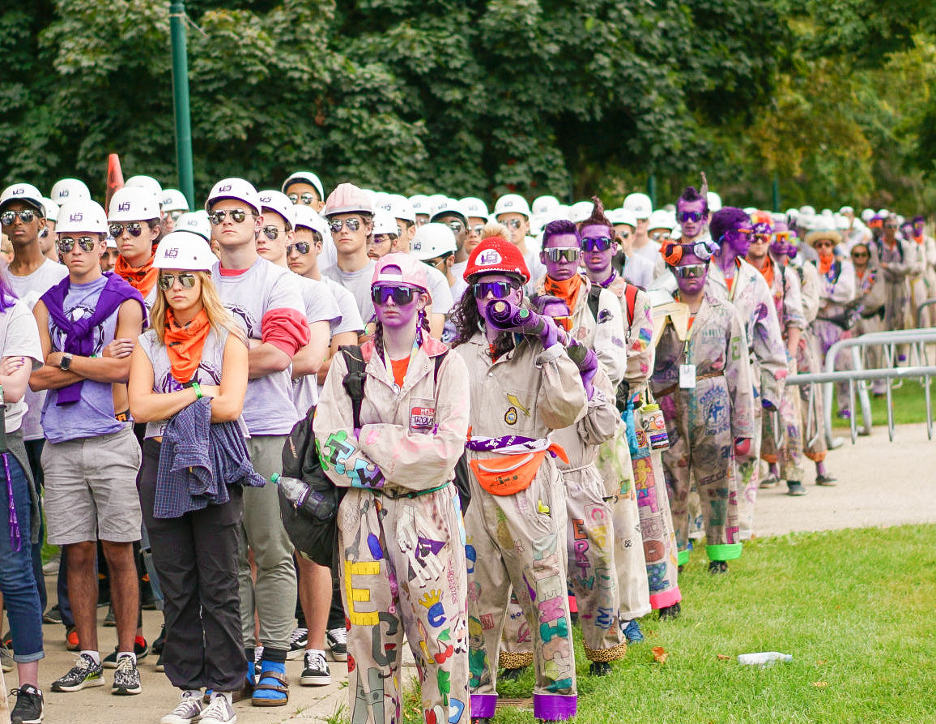
  • Boiler suits are another very fun engineering tradition to look forward to! 
  • This tradition started in Sweden in the late 1960s and spread to Finland, Canada and other countries after that
  • Engineering students would write all over their boiler suits and attach different patches to their suits. They also trade patches with other students and collect as many as they can!


Filed Under: #shareABLE, engSPIRATIONAL, Journeys Tagged With: engineering, traditions, university

Strutting the STEM Runway

by wemadeit

Strutting the STEM Runway
Photo Credit: Kelly Hofer

We all know that a lot goes into engineering, and there are endless possibilities in the field. But, with all of these options, it’s easy to overlook some of the most exciting ones. Have you ever been interested in fashion, and love STEM just as much? Well, there is a new community and event just for it, that will satisfy your creative hobby with the exciting world of STEM. MakeFashion is an amazing company that showcases the combination of high fashion and the newest tech to create an unforgettable experience. This organization takes engineers, designers, and creators alike and brings them together, to create clothing that is both wearable and decked out with the latest tech as accessories and materials. Let’s take a closer look at this exciting collaboration of professionals!

MakeFashion has an annual gala that takes place in Calgary, Canada and is the largest event this organization holds. Every year at this gala hundreds of creatives gather and are paired with tech whizzes and engineers to create jaw-dropping pieces. Some of these fashion inventions amaze audiences by glowing, and some by moving. All that is guaranteed when taking part in this event is,  you will never see anything else like it. Some of the tech that has walked this runway include; fashion pieces that regulate your body temperature, accessories that monitor your vital signs, and a necklace that begins to glow when the sun goes down.

MakeFashion also runs year wide shows around the world, in North America, and across Europe! Each event takes inspiration from local talent, and local fashion trends to create a unique experience. The best part of these showcases is that technology is involved, however, fashion and aesthetics are weighted equally. Therefore, engineers and designers must work together in perfect harmony to execute pieces that are fit to walk this runway. This sets a great example that other designers and engineers should follow, to collaborate and create together.

MakeFashion doesn’t just hold show-stopping fashion exhibits, but they also run a series of workshops and leadership events meant to inspire the minds of tomorrow. This includes offering in-class lectures for age groups ranging from kindergarten to grade 12! This is an amazing opportunity because it gives the knowledge and power to kids that may not have the opportunity to travel to these fashion shows. The message of STEM and creativity being combined is one that is truly worth spreading to young students. The more collaboration that we encourage, the more discoveries that will be made in the future.

MakeFashion also hosts a series of maker events, that provide kids with hands-on experience creating new and exciting creations that fuse creativity with technology. In these workshops kids are instructed on how to build new tools and creations with every lesson, that will give everyone something wonderful to take home.

Overall MakeFashion’s message is clear through every initiative they have, we need to keep creating and collaborating across every industry. The reasoning behind this is simple, collaboration is beautiful and can lead to amazing products and even fashion pieces. The world of STEM needs more out of the box thinkers, who can create inventions that are suited for the runway and the world!

Filed Under: #shareABLE, Engineering Disciplines, engSPIRATIONAL Tagged With: engineering, fashion, makefashion, STEM

Kickstart your love for Engineering!

by wemadeit

Kickstart your love for Engineering!

Are you an eager learner, ready to dive into the exciting world of engineering? The good news is it’s never too early to start learning, whether you’re in high school or grade school! There are tons of ways to pique your interest in engineering including various outside of school programs, activities, and games you can play from home. We have made a list of all of these things to help you get a head start.

Apps for Engineers

Apps make our lives convenient every day and help us access the world from our fingertips. Turboviewer is an amazing app for Apple (iOS) and Android users that is perfect for 2D and 3D modeling. This is awesome for anyone who has ever had a great idea for an invention, or someone who simply wants to play around with creating. If you are looking for something more laid back and game-based, Build a Bridge, might be for you. This app is a fun game where you can build and test your bridges in various situations and settings. It is perfect for having some downtime and still practicing your engineering skills. On the opposite side of the spectrum, if you are looking for something more useful and educational Learn Java may be for you. This app has small consumable lessons and engaging activities that will teach you Java script. It’s perfect for anyone looking to get a head start in their education.

Summer Engineering Programs

Summer camps are tons of fun with activities and games to fill your hot days with entertainment and new friends. However, these camps don’t always look the same. Universities and colleges offer a variety of camps including; music, film, drama, and engineering. For example, Ryerson University has Eureka, an annual summer camp designed to bring kids into the amazing world of STEM. Campers can expect to complete a series of crafts and activities every day that teaches them something new about engineering and science. Western University also has a series of STEM-related camps offered including; coding camp, STEAM camp, and maker camps. STEAM camps bring both worlds of creativity and STEM together to create some amazing activities, that show all the fun and innovation that can come from engineering.

In conclusion, there are tons of ways to start satisfying all of your initial curiosities around STEM. The best time to start learning more about STEM is now, no matter your age! Engineering is all about creativity and innovation and that can be accomplished by anyone who is passionate.

Filed Under: #shareABLE, Getting There Tagged With: apps, engineering, getting started, love

ENGHERO: Baraa Daher

by wemadeit

ENGHERO: Baraa Daher

What is one thing you wish you knew about engineering when you were in high school?

I wish I knew about the different engineering disciplines and research opportunities available within this field. Engineering was not something I knew a lot about in high school, so I did not consider applying to Engineering at Western. I thought it was only about building towers and bridges. However, being a lab member of the Human Biomechanics Laboratory team and taking undergraduate engineering courses, I learned that engineering is a vast and diverse field with disciplines, including electrical, mechanical, chemical, civil, industrial and biomedical engineering.

It was interesting to see the application of engineering concepts to different settings such as healthcare. As I discovered the field during my undergraduate studies, I became interested in the biomechanics of the musculoskeletal system, which led me to pursue a Master’s Degree in Biomedical Engineering.

What made you want to pursue engineering? 

Engineering is a broad field that allows for tons of creativity and discoveries. It has many hands-on experiments and projects that enable students to express their skills and strengths in different ways. It feeds my curiosity about how the world and technology work together, and challenges me to solve complex problems in our society. For example, engineers create solutions by designing devices to create reusable energy or detect diseases like cancer. They are always changing the world by coming up with new solutions and inventions, and I want to be part of this field and improve everyone’s life.

I see engineering concepts applied in daily living activities, like how airbags know when to inflate or how television screens make a colorful image. With engineering, I can combine different skills and knowledge to make people’s dreams come true. Engineers are the wizards of our society; everyone needs them to solve their problems. Being an engineer is exciting as I would get to use magic to create and invent something new every day. I believe that I can make a difference and a change in our society, and for these reasons and more, I wanted to pursue engineering.

What branch of engineering is your major and how did you decide on it?

I did my undergraduate studies in science, and I am now pursuing a Master’s Degree in Biomedical Engineering. Biomedical engineers play an essential role in our healthcare system. During my undergraduate studies and past volunteering at the Human Biomechanics Lab, I learned how to apply mechanical engineering concepts to understand how muscles and bones work when exercising and why our knee or hip breaks.

This subdiscipline of biomedical engineering, known as biomechanics, helps surgeons develop treatment plans after an injury to restore function and mobility. It also helps us understand how the human body moves to design reliable medical devices, such as orthopedic implants. Orthopedic implants are manufactured to restore function by reinforcing or replacing a damaged bone or joint. I find this very interesting because the structure and chemical properties of implants require the application of biomedical engineering principles. Biomedical engineers combine their diverse skills and knowledge to play an essential role in our healthcare system. I decided to pursue a master’s degree in biomedical engineering as I want to play a role in our healthcare system and contribute to the biomechanics discipline.

What do you plan on doing with your engineering degree?

After I graduate, I plan on working in the industry for a couple of years, hopefully, in a consulting firm designing joint implants or prosthetics. Later in my career, I plan to have my own company that will include designing, developing, testing and modifying products, equipment and medical devices.

What advice would you give to a young female who is considering the field of engineering, but isn’t sure if it’s right for them?

Imagine yourself in 5 years from where you are at right now. Where and how do you see yourself? If you see yourself as an engineer, this is the right field for you, and it is worth all the hard work, and I promise you the ride will be rewarding. Ask questions, reach out for help, and be a resource to others who might be struggling or need encouragement. Do not be overwhelmed by a room full of men or people who do not look like you. Follow your passion, learn as much as you can, and do your best. As long as you believe that engineering will light you up, everything else will follow.

What do you recommend doing outside of school?

I recommend looking for an engineering undergraduate club on campus and getting involved in your university’s community by volunteering for different events. I loved working with Western Engineering Outreach program, where I had the chance to learn more about engineering and its various disciplines. I worked with many people from different backgrounds and learned from their expertise. I also had the opportunity to teach children at different ages about engineering through a wide range of activities and events. I would recommend getting involved in similar initiatives. They are always looking for an extra set of hands and will make your study break worthwhile and fun!

Filed Under: #shareABLE, engHEROES, engSPIRATIONAL, Journeys Tagged With: biomedical, Biomedical engineering, engHERO, engineering, masters

Programming… Explained

by wemadeit

Programming… Explained

Computers are running our world; they help us in school, connect us with our friends and family, and fit in our pockets! But what controls these amazing machines we use every day? Understanding the basics of what makes our computers function the way they do is powerful information. That is where the world of computer programming comes in. Simply put, computer programming is a way to instruct a computer to complete various tasks. Let’s break down this area of STEM a little more so we can understand how a major part of our world works.

The Basics

If we break down a computer, they can really only understand two types of data, on and off. Essentially this means when communicating with this type of technology we are relaying different combinations of on and off switches to result in different outcomes. Confused yet? This might be difficult to understand, but we have a lot more information to help you out.

The combination of on and off switches is known as binary code, which can be written using 1s and 0s. Binary code is grouped into bytes which are groups of 8 digits representing 8 transmitters (the collection of on and off switches).

However, writing code by using solely 1s and 0s is extremely inefficient and unrealistic, that is where coding languages come in. Different coding languages are essentially a set of rules on how code should be written and programmed. Some examples of different coding languages include; JavaScript, Python, HTML and Ruby– each language is designed to work for different purposes. For example, some are better suited to work for development, web design and even game design!

The Difference Between High-Level and Low-Level Programs

Low-level programming languages are closer to binary code and high-level programming languages are a lot less similar to binary code and much easier to work with typically. This means the high-level programming languages are closer to english, so they are easier to work with.  That is why most of the programming languages used by software engineers today are high-level.

How to Create a Command?

How do we take all of this information and turn it into real results? What does this process look like, and can anyone do it? Well the answer is creating a program/line of code to instruct a computer is fairly simple, and yes anyone can do it. In its essence, a code is simply a text file written in a given coding language. This means to write code all you need to do is write the code in a text editor like notepad, and save it to your computer. How you actually implement this line of code into your computer varies depending on the coding language you are working in. Some languages operate under a certain software that will implement the code, and some save a separate accompanying binary code file that your computer can directly run.

Fields that Involve Coding

Coding and computer programming may seem like a faraway and foreign practice, but coding is starting to influence and affect every industry. This includes fields outside of STEM such as art and design. A huge part of the art and design industry includes web design, and this, of course, goes hand in hand with coding. Software engineers and designers collaborate in order to make highly effective and aesthetic websites. This career clearly affects technology in a big way, so there is no surprise that coding is also a huge part of the healthcare industry. The technology and tools behind the health care system are often created and managed in collaboration with software engineers because they involve computers. Finance is also heavily affected by coders, which includes creating the websites in which people complete online banking.

There are so many possibilities when it comes to the beautifully complex world of coding and programming. Every field is evolving and moving the direction to need code. Computers control our future, which means coding will control our future in a big way. Do you want to be a part of that change?

Filed Under: #shareABLE, Engineering Disciplines, Getting There Tagged With: basics, computers, engineering, explained, programming

Recycling old Batteries into Fertilizer

by wemadeit

Recycling old Batteries into Fertilizer

In 2019, Canada produced over 1.33 billion metric tonnes of waste, leading every country in the world in the most garbage produced per capita. Included in this collection of waste are potentially harmful products such as batteries and electronic waste (e-waste). While placing a small number of normal alkaline batteries in the trash is not particularly harmful, some batteries including lead-acid, lithium, nickel-cadmium, silver oxide and mercury batteries pose a higher threat due to their deleterious impacts on the environment. Although some cities have hazardous household waste (HHW) programs and provide drop-off options for some consumer batteries, these programs are not available to everyone and are not always used. What if there was another alternative for these metal tubes?

An Australian company, Lithium Australia, has managed to close the loop on the energy-metal cycle as they recover zinc and manganese from used batteries. They have found a way to use the metal dust from batteries to create a micronutrient supplement for plant fertilizers. The company looks to build a circular battery economy and they are focusing on supplying sustainable and ethical materials for battery companies. The type of engineers behind this project are called environmental engineers. Environmental engineers use the principles of engineering, science, and biology to develop sustainable solutions to protect the health of living organisms while improving the quality of the environment. Environmental engineers play a crucial role in a quickly developing society, as they encourage humans to reduce their negative effects on the environment, while providing simple solutions for this to be accomplished. The environmental engineers working with Lithium Australia hope to reduce the carbon footprint of the battery industry, and one such method is by recycling their components into fertilizer!

So far, they are able to convert batteries that are on the smaller end of the scale, such as the ones used in remotes or small appliances. Their technology has found a way to extract the main components of alkaline batteries (zinc and manganese) and turn them into supplements for fertilizer.

Safely and sustainably disposing of alkaline batteries has become a major issue around the globe. However, Lithium Australia has already been carrying out tests on its new product and plans on expanding this testing in the future. We can be hopeful that this innovation will soon find its way to other countries so we have a method to reuse these batteries in a safe and practical manner!

Work Cited

https://interestingengineering.com/old-batteries-can-now-be-recycled-into-fertilizer

https://www.usatoday.com/story/money/2019/07/12/canada-united-states-worlds-biggest-producers-of-waste/39534923/

https://www150.statcan.gc.ca/n1/pub/16-002-x/2016001/article/14570-eng.htm

Filed Under: #shareABLE, Engineering Disciplines, engSPIRATIONAL Tagged With: battery, engineering, fertilizer, waste

« Previous Page
Next Page »

Footer

Menu

  • About WEMADEIT
    • Donor
    • Partners
      • Toronto Metropolitan University
      • Ontario Tech University
      • University of Waterloo
      • Western University
  • For Students
    • Blog
    • Getting There
      • Engineering Disciplines
      • Student Life
      • Where Can I Study?
      • What You Don’t Know About Engineering
      • ENG BLING
    • Black Students
    • Indigenous Students
    • 2SLGBTQIA+ Students
    • Women and Girls
  • For Parents
    • Where Can You Study Engineering?
    • What is Engineering?
  • For Undergrads
    • Gaining work experience
    • Peer Mentorship
    • One Awards
    • Next Generation in Power
    • New Grad Program
  • For Teachers
    • Teacher Resources
  • Getting Involved
  • Contact Us
    • Newsletter Signup

Search

Teacher Login

Register | Lost your password?

  • Facebook
  • Instagram
  • Twitter

© 2026 · WEMADEIT | Site Design by rtraction