
• Skip to primary navigation
  • Skip to content
  • Skip to primary sidebar
  • Skip to footer

We Made a Difference. We Made it Together. WEMADEIT.

  • About WEMADEIT
    • Donor
    • Partners
      • Toronto Metropolitan University
      • Ontario Tech University
      • University of Waterloo
      • Western University
  • For Students
    • Blog
    • Getting There
      • Engineering Disciplines
      • Student Life
      • Where Can I Study?
      • What You Don’t Know About Engineering
      • ENG BLING
    • Black Students
    • Indigenous Students
    • 2SLGBTQIA+ Students
    • Women and Girls
  • For Parents
    • Where Can You Study Engineering?
    • What is Engineering?
  • For Undergrads
    • Gaining work experience
    • Peer Mentorship
    • One Awards
    • Next Generation in Power
    • New Grad Program
  • For Teachers
    • Teacher Resources
  • Getting Involved
  • Contact Us
    • Newsletter Signup

Engineering Disciplines

Quoth wikipedia:

“Engineering (from Latin ingenium, meaning “cleverness” and ingeniare, meaning “to contrive, devise”) is the application of scientific, economic, social, and practical knowledge in order to invent, design, build, maintain, and improve structures, machines, devices, systems, materials and processes.

The discipline of engineering is extremely broad, and encompasses a range of more specialized fields of engineering, each with a more specific emphasis on particular areas of applied science, technology and types of application.”

Well put crowd sourced mega brain!

Check out our breakdowns of the Fields of Engineering.

engHERO: Michelle Moxley-Peltier

by wemadeit

engHERO: Michelle Moxley-Peltier

What is one thing you wish you knew about engineering when you were in high school?

I wish that I knew how complex and multifaceted engineering was, and how most problems are solved in group settings.  When I was in high school, I assumed that I would need to know how to do everything myself as I would work independently. Although there is independent work required, the ability to communicate, collaborate, and delegate are also important.  You don’t have to know how to do everything, but you do need to know what you need to accomplish, how to communicate it, and who you can call on for assistance.

What piece of advice would I give my high school self?

I would tell my high school self to relax and be kind to yourself.  Much of the pressure (stress) I will face in the future is the pressure (stress) I place on myself. 

There won’t be enough time in the day to do everything perfectly.  Prioritization, time-management, and delegation will be your friend.  Understand that you will not be able to physically do everything on your own. 

There will be areas of study that baffle and confuse you.  Be open to networking with others who can provide a different perspective and are willing to share their knowledge and expertise.  The people you connect with in university and in the workforce can become life-long friends.

What made you want to pursue engineering?

I was a curious and mischievous child.  From the time I could walk, I would find new and interesting ways to get into things (trouble was my nickname).  I grew up fascinated with electrical cords, lights, and appliances.  I was the kid who chewed on electrical cords, thought Christmas tree lights were edible, stuck hairpins and paperclips into electrical sockets, and took apart things (while they were plugged in) to see how they worked.  Fortunately, my father, an industrial electrician was able to redirect my focus away from electrocuting myself and setting the house on fire.  He’d let me help (aka hinder) him as he performed household maintenance tasks.  He taught me the fundamentals of electricity and electrical safety.  Through our interactions, my father shared his love of his profession, his ability to perform algebra and trigonometry in his head (the man’s crazy smart), and his hope that I would take advantage of an opportunity he didn’t have: the opportunity to attend college or university.  I believe this daughter-daddy time greatly influenced my later decision to pursue engineering.

What branch of engineering is your major and how did you decide on it?

I majored in Electrical Engineering and graduated Western in 1997.

Throughout elementary and secondary school, I excelled at math and science.  With my marks, I was encouraged by several teachers and guidance counselors to pursue a career in healthcare as at the time, girls with high marks in math and science became doctors or nurses.  I knew that this wouldn’t be a fit for me, as I faint at the sight of blood, and hate needles.  When I was in grade 11, I took a serious look at my experiences, skills, and interests to try and determine what I wanted to study in university.  I asked myself 3 questions:

  • What am I good at?
  • What motivates and excites me?
  • What is the one thing I want to do?

My answers?

  • I’m good at most subjects but excel at history, math, and physics.
  • Walking through my father’s workplace and seeing robots, CNC machines, and conveyor systems.
  • I want to one day work alongside my father.

I chose Western Engineering primarily because of the common first year program.  When I entered University, I didn’t know if I wanted to become an Electrical or a Mechanical Engineer.  The first-year program, along with the student vehicle teams provided me with the experience and knowledge to make my final decision.

What have you done with your engineering degree?

In the 23 years since graduating from Western, I’ve had a variety of experiences in a number of fields. I’ve worked as an Engineer in Information Technology Services, Automotive Controls, Energy Efficiency, and Utility planning and construction.  With each role, I’ve adapted to changes in function, responsibilities, and technology.   I’ve followed my heart and let my interests and aspirations guide me on my engineering journey.  While not completely electrical in focus, I’ve continued to use aspects of my electrical engineering degree in my current role. 

My greatest accomplishment to date was realizing my high school dream of working alongside my father. I was appointed his acting supervisor (aka boss) and we spent his last day before retirement together.

What advice would you give to a young female who is considering the field of engineering, but isn’t sure if it’s right for them?

Engineering is everywhere.  I like to use the analogy of the “Pick your Own Adventure” books I used to read as a child; the books with different journeys and endings depending on decisions.  I view engineering in the same way.  With the theory and principles learned from engineering, young ladies can pick their own adventure.  No matter what interests, motivates, or inspires you, through engineering you can contribute.  If you can think it, you can do it.  Engineers play important roles in all areas of society.  From the moment we wake up in the morning until we lay down at the end of the day to sleep, aspects of engineering is involved in everything we do.

Is engineering right for you?  I recognize that engineering may not be a fit for everyone.  My advice to young females is to not discount it as an option at an early age.  I recommend resisting the temptation to opt out of math and science in elementary school as these subjects are perceived by girls as being too hard.  Math and science can be challenging, but they can also be extremely rewarding, just stick with it.  Keep in mind that math and science will also open doors to other disciplines.

I’ve met many female engineers, each with unique skills, perspectives, and aspirations.  What unites us is our desire to contribute and make the world a better place, be it designing a longer wear lipstick, the development of new apps and video games, or the constructing roads, dams, and buildings.   We have all chosen to design our own adventure and have used engineering to excel.
Filed Under: #shareABLE, engHEROES, Engineering Disciplines, engSPIRATIONAL Tagged With: electrical, engHERO, engineering, western university

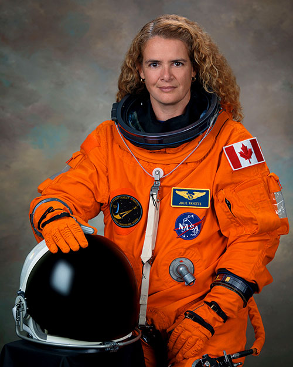
Who is Julie Payette?

by wemadeit

Who is Julie Payette?

Quick facts!

Who: Governor General Julie Payette is an engineer, former NASA astronaut, scientific broadcaster and corporate director.

What: In 1992, Julie was selected for the Canadian Space Agency (CSA) astronaut corps. She was a part of two spaceflights and served as the CAPCOM (Capsule Communicator) for many more. She went on to serve as the CSA’s chief astronaut for seven years.

Where: Julie graduated from McGill University with a degree in Electrical Engineering and from the University of Toronto with a Master’s in Computer Engineering. During Julie’s time in space, she worked on the International Space Station (ISS) and its Mobile Servicing System, now known as the Canadarm2.

When: Julie first visited space in 1999, and was the second ever spaceflight to the ISS. Her second spaceflight was in 2009 on the space shuttle Endeavor. In 2013, Julie retired from the CSA and in 2017, Julie was named the Governor General of Canada where she still serves today.

Julie was first invested into the Order of Canada in 2010, and is a Knight of the Ordre national du Québec. She stands as an inspiration to young girls that their dreams in STEM are within reach and is a role model to aspiring engineers and astronauts everywhere.

Filed Under: #shareABLE, engHEROES, Engineering Disciplines, engSPIRATIONAL, Getting There, Journeys Tagged With: engineering, general, governor, julie, payette

3 Ways Universities Support Female Engineering Students

by wemadeit

3 Ways Universities Support Female Engineering Students
Source: Medium

As a girl, it can be intimidating to study a profession that is very male-dominated. Thankfully, universities are making an effort to ensure that any of their female engineering students feel supported and empowered throughout their university career. Here are 3 ways that universities are making this possible:

Women in Engineering Societies

Societies (similar to clubs) are a great way to meet like-minded students and build a community at your school. Joining a Women in Engineering society will connect you with students in different years, invite you to exciting social events and even allow for leadership opportunities on campus.

Scholarships

Schools are offering scholarships specifically for females entering or currently in their engineering programs (like this Women for STEM fund at Ontario Tech University). These scholarships are usually promoted on the university’s website, but you can also learn more about them through high school guidance counsellors or a quick call to the university’s Student Awards department.

Conferences

Conferences can be a great way to build your network of female engineering students beyond your own university. They can also be an amazing opportunity to hear from industry professionals and introduce you to companies that you may work for one day!

There is no better time to be a woman in engineering and hopefully, these resources reignite your motivation to join the field.

Filed Under: #shareABLE, #surveySAYS, Engineering Disciplines, Journeys Tagged With: engineering, in, Support, three, ways, Women

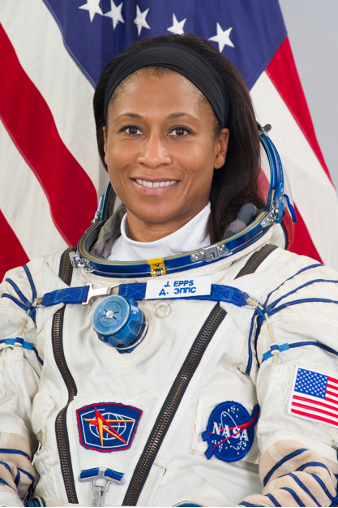
Jeanette Epps

by wemadeit

Jeanette Epps

The First Black Woman to Join an International Space Station Crew

ttps://www.nasa.gov/astronauts/biographies/jeanette-j-epps/biography

Astronaut Jeanette Epps is making history by joining NASA’s Boeing Starliner-1 mission, planned to take off in 2021.

This is pretty groundbreaking – she will be the first Black woman to be a part of an International Space Station crew as well as the first to spend a prolonged period of time, working and living in space!

Epp’s resume is definitely an impressive one. Originally from Syracuse, New York, she earned a doctorate in aerospace engineering at the University of Maryland in 2000. She went on to work at the CIA for 7 years before joining NASA’s astronaut corps in 2009!

This will be her first journey into space, where she’ll be living for 6 months aboard the International Space Station.

The ISS is a research laboratory in space. It orbits the Earth, and allows it’s partnering countries to run important experiments and tests.

In 2018, Epps was supposed to go on a different ISS mission and had already been trained when NASA took her off of the job without explanation. Normally, astronauts only get replaced for health or family related issues. Many speculated the reason for this, and some, including Epps’ brother, cited racism as the reasoning behind the decision. In a statement afterwards, a NASA spokesperson said “A number of factors are considered when making flight assignments; these decisions are personnel matters for which NASA doesn’t provide information.”

All in all, Jeanette Epps is making major moves at NASA, and has been her entire career. Her hard work and dedication can serve as inspiration to us all!

References

  • https://www.cnbc.com/2020/08/27/astronaut-jeanette-epps-to-become-first-black-woman-to-join-an-international-space-station-crew.html
  • https://www.nasa.gov/press-release/nasa-astronaut-jeanette-epps-joins-first-operational-boeing-crew-mission-to-space
  • https://www.cnn.com/2020/08/25/tech/nasa-jeanette-epps-starliner-scn/index.html
  • https://www.asc-csa.gc.ca/eng/iss/about.asp

Filed Under: #shareABLE, #surveySAYS, engHEROES, Engineering Disciplines, engSPIRATIONAL Tagged With: black, epps, first, jeanette, space, woman

3 Lessons that 2020 Taught STEM Fields

by wemadeit

3 Lessons that 2020 Taught STEM Fields
source: eSchool News

2020 has been an eye-opening year for many of us, teaching us how to work remotely, attend school virtually and communicate with our loved ones from a distance. STEM fields also learned lot this year as they adapted to the global pandemic. Here are a few of the biggest lessons that the world of STEM learned.

The Interdisciplinary Approach

The pandemic has shown us that when we have people of different perspectives and skills coming together, our work is stronger. Take the COVID-19 vaccine, for example. It wouldn’t have been possible without the work of biomedical engineers, chemical engineers, epidemiologists and researchers (to name few!).

We are Adaptable Beings

To think of ourselves in April, when the seriousness of the pandemic was intensifying, we wouldn’t have been able to imagine adapting to this new normal. Whether you took classes from your bedroom, worked from your living room, or attended meetings online, you adapted to a challenging situation in a very short amount of time. You should be proud of yourself!

Why Wait? Start Now.

If you have ever had an interest in STEM, why wait to explore it? The online resources are more abundant than ever (check out ONWie or VEX Code for inspiration), and the importance of science and technology has never been greater! There is an incredible STEM community waiting for you to join.

Filed Under: #shareABLE, Engineering Disciplines, engSPIRATIONAL Tagged With: engineering, Lessons, STEM

engHERO: Zarana Bavishi

by wemadeit

engHERO: Zarana Bavishi

Q#1: What are you doing these days?

I work as a stress analyst in a landing gear place — it’s called Heroux Devtek. Basically, my job is to make sure that the landing gear we design is structurally strong, and it’s good for any kind of landing. I’m not sure if you remember the time the aircraft had to land on the Hudson River in the United States? So, we have to make sure the landing gear is intact and that it doesn’t cause any problems. 

Q#2: When did you know you wanted to be an engineer?

I actually knew in around grade 10. I was a part of this team that was called Formula 1 in school where we had to design tiny wooden cars that were propelled using carbon dioxide canisters. It would have to propel down 20 metres of track, and the challenge was to complete that in less than a second. Obviously, we couldn’t finish it in less than a second, but we were pretty good. We went through nationals, even an international competition [after] that. So, that was an eye opener, and I absolutely loved my time working on it, so I wanted to be an engineer. 

Q#3: How does your work contribute to society? 

I think it helps make sure that people are traveling safely, because these days it’s not just a car or a train; there’s more to that then traveling. I also think it’s very important that engineers know what they’re doing because if a doctor messes up, I mean I’m sure it happens, but that is one life. If an engineer messes up, there [are] millions of lives at stake. I think me doing my job would really benefit society in that way. 

Q#4: Why do we need more women in engineering?

Honestly, I just think that shouldn’t be a question to be asked these days because women should be everywhere. We’re in no comparison to guys, we’re equal! We’re in a world where everything [has equal value], where equality is something we shouldn’t have to fight for. So, honestly, if a woman wants to be in engineering, she should be! 

Q#5: Do you have any hobbies/passions that give you a unique perspective in engineering?

I do some puzzles here and there, but I don’t really have a specific kind of hobby that gives me an edge to engineering. Engineering is my passion and my job but I do things outside of that as well to make myself a little bit well rounded — still not there yet.

Q#6: What advice would you give to young girls who are thinking about pursuing a career in the STEM field?

Don’t get overwhelmed by who you talk to or who you see. Just think, what’s going to make you happy. [What] if 20 years from now, your fear stopped you from doing something, or actually enjoying what you do? If you want to delve into [engineering], try different things like solving puzzles or playing games that stimulate your mind. And if that still inspires you, you should go into engineering! Don’t get scared or overwhelmed by anybody you talk to who sounds like they know everything. No, we don’t know everything!

Filed Under: #shareABLE, engHEROES, Engineering Disciplines Tagged With: engHERO, engineering, hero, Ryerson

« Previous Page
Next Page »

Primary Sidebar

Categories

  • #shareABLE (70)
  • #surveySAYS (8)
  • engHEROES (50)
  • Engineering Disciplines (35)
  • engSPIRATIONAL (59)
  • Getting There (17)
  • Grade 11 (4)
  • Health (3)
  • Journeys (20)
  • Listen Up (5)
  • listenUp! (2)
  • More2Life (7)
  • Our Favourite Articles (2)
  • Press (3)
  • Recipes (2)
  • Reviews (5)
  • TED talk (17)
  • TheFieldTrip (5)
  • Uncategorized (4)
  • weTHINK (15)

Teacher Login

Register | Lost your password?

Sign Up To Our Newsletter

Footer

Menu

  • About WEMADEIT
    • Donor
    • Partners
      • Toronto Metropolitan University
      • Ontario Tech University
      • University of Waterloo
      • Western University
  • For Students
    • Blog
    • Getting There
      • Engineering Disciplines
      • Student Life
      • Where Can I Study?
      • What You Don’t Know About Engineering
      • ENG BLING
    • Black Students
    • Indigenous Students
    • 2SLGBTQIA+ Students
    • Women and Girls
  • For Parents
    • Where Can You Study Engineering?
    • What is Engineering?
  • For Undergrads
    • Gaining work experience
    • Peer Mentorship
    • One Awards
    • Next Generation in Power
    • New Grad Program
  • For Teachers
    • Teacher Resources
  • Getting Involved
  • Contact Us
    • Newsletter Signup

Search

Teacher Login

Register | Lost your password?

  • Facebook
  • Instagram
  • Twitter

© 2026 · WEMADEIT | Site Design by rtraction