
• Skip to primary navigation
  • Skip to content
  • Skip to primary sidebar
  • Skip to footer

We Made a Difference. We Made it Together. WEMADEIT.

  • About WEMADEIT
    • Donor
    • Partners
      • Toronto Metropolitan University
      • Ontario Tech University
      • University of Waterloo
      • Western University
  • For Students
    • Blog
    • Getting There
      • Engineering Disciplines
      • Student Life
      • Where Can I Study?
      • What You Don’t Know About Engineering
      • ENG BLING
    • Black Students
    • Indigenous Students
    • 2SLGBTQIA+ Students
    • Women and Girls
  • For Parents
    • Where Can You Study Engineering?
    • What is Engineering?
  • For Undergrads
    • Gaining work experience
    • Peer Mentorship
    • One Awards
    • Next Generation in Power
    • New Grad Program
  • For Teachers
    • Teacher Resources
  • Getting Involved
  • Contact Us
    • Newsletter Signup

engHEROES

Superheros are not just cartoons, they’re real people too! From rocket scientist to entrepreneur, our team interviewed some of the most incredible female engineers out there. Check out these engHEROES’ stories for some serious inspiration.

ENGHERO: Baraa Daher

by wemadeit

ENGHERO: Baraa Daher

What is one thing you wish you knew about engineering when you were in high school?

I wish I knew about the different engineering disciplines and research opportunities available within this field. Engineering was not something I knew a lot about in high school, so I did not consider applying to Engineering at Western. I thought it was only about building towers and bridges. However, being a lab member of the Human Biomechanics Laboratory team and taking undergraduate engineering courses, I learned that engineering is a vast and diverse field with disciplines, including electrical, mechanical, chemical, civil, industrial and biomedical engineering.

It was interesting to see the application of engineering concepts to different settings such as healthcare. As I discovered the field during my undergraduate studies, I became interested in the biomechanics of the musculoskeletal system, which led me to pursue a Master’s Degree in Biomedical Engineering.

What made you want to pursue engineering? 

Engineering is a broad field that allows for tons of creativity and discoveries. It has many hands-on experiments and projects that enable students to express their skills and strengths in different ways. It feeds my curiosity about how the world and technology work together, and challenges me to solve complex problems in our society. For example, engineers create solutions by designing devices to create reusable energy or detect diseases like cancer. They are always changing the world by coming up with new solutions and inventions, and I want to be part of this field and improve everyone’s life.

I see engineering concepts applied in daily living activities, like how airbags know when to inflate or how television screens make a colorful image. With engineering, I can combine different skills and knowledge to make people’s dreams come true. Engineers are the wizards of our society; everyone needs them to solve their problems. Being an engineer is exciting as I would get to use magic to create and invent something new every day. I believe that I can make a difference and a change in our society, and for these reasons and more, I wanted to pursue engineering.

What branch of engineering is your major and how did you decide on it?

I did my undergraduate studies in science, and I am now pursuing a Master’s Degree in Biomedical Engineering. Biomedical engineers play an essential role in our healthcare system. During my undergraduate studies and past volunteering at the Human Biomechanics Lab, I learned how to apply mechanical engineering concepts to understand how muscles and bones work when exercising and why our knee or hip breaks.

This subdiscipline of biomedical engineering, known as biomechanics, helps surgeons develop treatment plans after an injury to restore function and mobility. It also helps us understand how the human body moves to design reliable medical devices, such as orthopedic implants. Orthopedic implants are manufactured to restore function by reinforcing or replacing a damaged bone or joint. I find this very interesting because the structure and chemical properties of implants require the application of biomedical engineering principles. Biomedical engineers combine their diverse skills and knowledge to play an essential role in our healthcare system. I decided to pursue a master’s degree in biomedical engineering as I want to play a role in our healthcare system and contribute to the biomechanics discipline.
What do you plan on doing with your engineering degree?

After I graduate, I plan on working in the industry for a couple of years, hopefully, in a consulting firm designing joint implants or prosthetics. Later in my career, I plan to have my own company that will include designing, developing, testing and modifying products, equipment and medical devices.

What advice would you give to a young female who is considering the field of engineering, but isn’t sure if it’s right for them?

Imagine yourself in 5 years from where you are at right now. Where and how do you see yourself? If you see yourself as an engineer, this is the right field for you, and it is worth all the hard work, and I promise you the ride will be rewarding. Ask questions, reach out for help, and be a resource to others who might be struggling or need encouragement. Do not be overwhelmed by a room full of men or people who do not look like you. Follow your passion, learn as much as you can, and do your best. As long as you believe that engineering will light you up, everything else will follow.

What do you recommend doing outside of school?

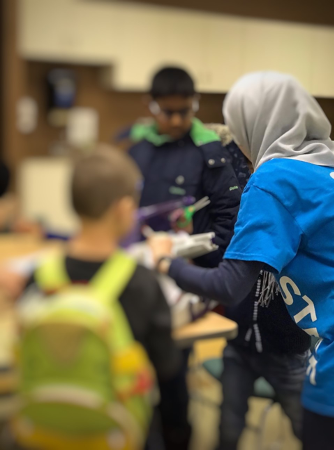
I recommend looking for an engineering undergraduate club on campus and getting involved in your university’s community by volunteering for different events. I loved working with Western Engineering Outreach program, where I had the chance to learn more about engineering and its various disciplines. I worked with many people from different backgrounds and learned from their expertise. I also had the opportunity to teach children at different ages about engineering through a wide range of activities and events. I would recommend getting involved in similar initiatives. They are always looking for an extra set of hands and will make your study break worthwhile and fun!
Filed Under: #shareABLE, engHEROES, engSPIRATIONAL, Journeys Tagged With: biomedical, Biomedical engineering, engHERO, engineering, masters

ENGHERO: Elizabeth Norman

by wemadeit

ENGHERO: Elizabeth Norman

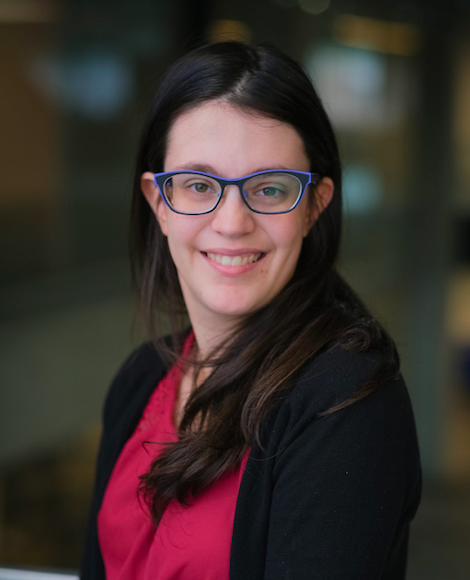
Elizabeth Norman has an undergraduate degree in Biomedical Engineering and is currently pursuing her Master’s in Biomedical Engineering.

What is one thing you wish you knew about engineering when you were in high school?

One thing I found surprising in first year was the diversity of courses that I was required to take. Courses I would have never imagined that I would need to take such as the history of science and technology. In retrospect, I found these courses enlightening and helped to provide a solid foundation for the rest of my education.

What made you want to pursue engineering?

I have always had an aptitude for math and science and an analytical approach to life. I was fortunate enough to have engineers in my family which exposed me to this field. In addition, I have always wanted to help people and there are endless ways in which engineers can not only help individuals but also society as a whole. I always admired how engineers find solutions to the root of problems not just fixing the current issue at hand.

What branch of engineering is your major and how did you decide on it?

From a young age I wanted to help people.  My grandparents needed physical assistance at times due to arthritis hand implants and other ailments.  In looking through the various fields of engineering it was made clear to me that I could combine my passions, helping people, along with math and science.  Therefore, I chose to major in Biomedical Engineering.

What do you plan on doing with your engineering degree?

I am currently pursuing a Masters in Biomedical Engineering and aspire to design the next generation of medical devices that will enable and empower people to live a healthy and fulfilling life.

What advice would you give to a young female who is considering the field of engineering, but isn’t sure if it’s right for them?

Do your research and talk to professionals that are currently in the field that interests you. Have the confidence to pursue your passions and remember the world needs more female engineers!

Filed Under: #shareABLE, engHEROES, engSPIRATIONAL Tagged With: biodmeical, engineering, undergraduate, western university

EngHERO: Markio Shimoda

by wemadeit

EngHERO: Markio Shimoda

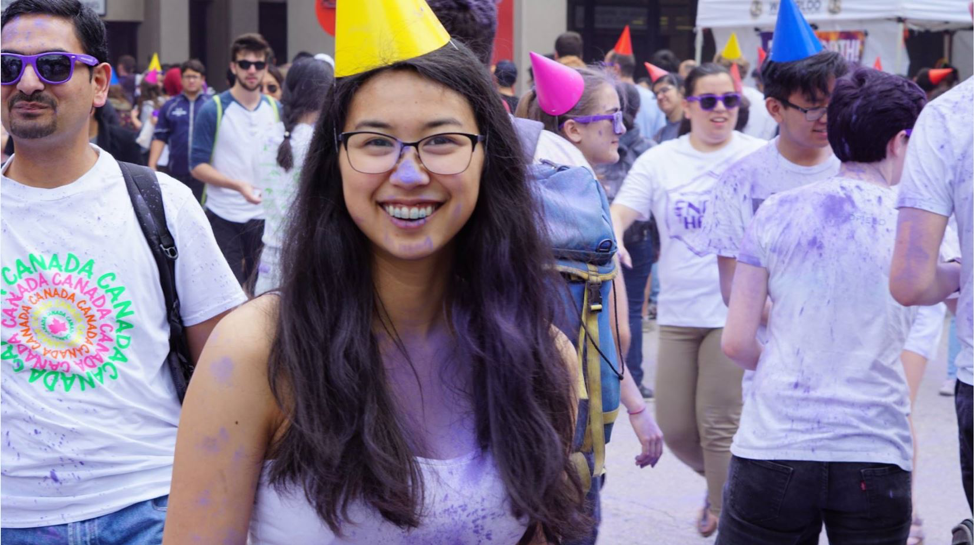
Markio Shimoda is in her final year of engineering at the University of Waterloo. Although she was a little nervous about how much studying she thought she would have to do, she knew she wanted to be an engineer and “Professional Problem-Solver”.

What’s one thing you wish you knew about engineering back when you were in high school?

I wish that I knew that engineers are typically knowledgeable in a lot of different fields! That means in university you have to do a bit of everything, which can be really annoying when you come across a subject you don’t like. But it is also great because it opens a lot of doors for future careers and industries!

When you decided to go to school to become an engineer, were you nervous and stressed out about all the math and science? What made you push through and become an engineer? What’s your proudest accomplishment so far?

I wasn’t too worried about all the math and science.. although maybe I should have been! I was actually nervous about how much time and studying it would be. I’ve always pushed through because I believe that changing the world through technology is what I want to do with my life. I am most proud of making it through each year so far! Engineering isn’t easy and it’s a huge accomplishment to say you finished a semester!

Were you sure that you wanted to become an engineer when you were in grade 12?

I was very sure. As soon as I heard someone call engineers “professional problem-solvers” I knew that was what I wanted to do with my life. Engineering is the best way to combine science, math, creativity, and change!

Tell me about a time during your studies when your work has been about discovery or curiosity?

All engineering work has aspects of creativity. Whether it’s design work, optimizing a process, or managing a project, every engineering job allows you to transform your ideas into reality and finding the best possible solution. In school, there are plenty of opportunities to use creativity in your design projects and extracurriculars.

What are you doing these days/what do you plan to do after you graduate?

I’m heading into my final year of engineering when I’ll be working on my big final design project! After graduation, I’m hoping to work in project management, in a company doing robotics, health entrepreneurship, or anything that is new and exciting!

Filed Under: engHEROES, engSPIRATIONAL Tagged With: engHERO, engineering, university, waterloo

ENGHERO: Sasha Gollish

by wemadeit

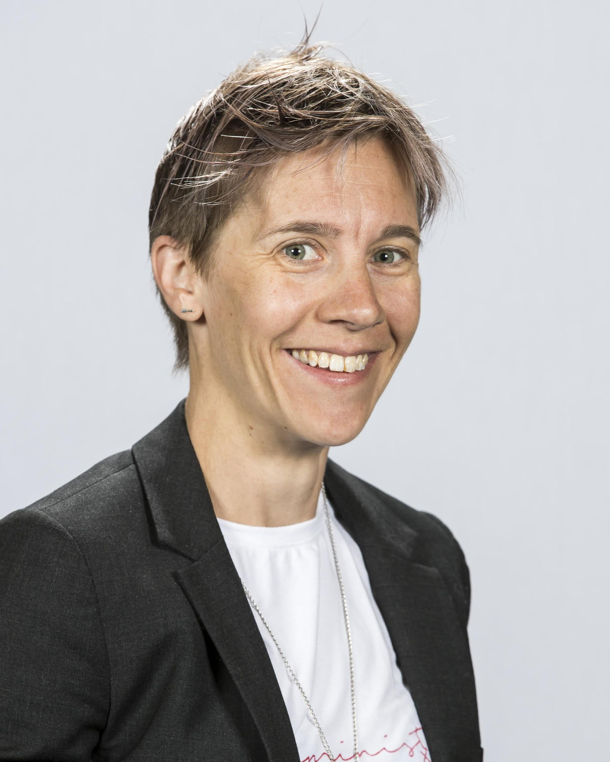
Sasha Gollish is a tremendous role model for her dedication to not only the world of engineering, but public speaking and athleticism. Her education started in 2003 at Western University when she began her degree in civil and environmental engineering. Today she is continuing her education to expand her horizons, by getting her PHD in engineering education. Sasha’s journey is unconventional and unique, but one thing remains true, she has a true passion for learning and helping society. 

When did you know you wanted to be an engineer? 

Sasha realized she wanted to become an engineer during her second year of university at UofT (at the time she was completing an arts degree). After finishing her arts degree Sasha went to Western to pursue her true passions and interests, which was engineering. Sasha noted that in high school she had no idea what engineering even was, but was excelling in both math and science classes. Perhaps if engineering was a career that was better explained in earlier education, she would have pursued engineering at an earlier age. 

What do you wish you knew about engineering in high school?

As previously mentioned engineering was not something that Sasha knew anything about in high school. She wishes that she had been exposed to female role models in the industry, while still in high school. If she had seen powerful female role models, it would have been easier to see herself in that profession and connect with the job. Exposure is a common theme that comes up when talking about the STEM field in high school. We need to have more real life discussions about what engineering is, and what pursuing a career in that field looks like. 

What are you doing right now?

At the moment Sasha is working towards her PHD in engineering education at UofT. Previously she has had jobs in road safety, specifically as the senior project engineer for Safe Roads Engineering Inc, and as the project environment engineer and sustainability expert at the Ministry of Transportation Ontario. 

What’s your proudest accomplishment as an engineer?

One of Sasha’s biggest accomplishments is when she worked with the Ministry of Transportation as an engineer working on their cycling strategy. The goal behind this project was to create safer roads. The strategy was to get more roads in municipalities because those are typically safer than provincial roads. Sasha’s passion for this project came from knowing these lanes would make it safe for more children to bike to school. This reminded her of when she was young and was doing the same thing. This project was also very rewarding because it blended all she had learned about engineering and used it in a way that would help better people’s lives.

Do you feel your work contributes to society? How so?

Sasha believes that any engineer that operates under the “do no harm” principle has a great opportunity to contribute to society positively. She has done this through her work with road safety, and she didn’t even know that career path existed before studying at Western. Sasha wants to make clear that going into engineering may seem like a constraint, in which you are limited to what you can do and what your every day looks like. But, that is simply not true engineering can be whatever you want it to be, that’s why it is important to work on projects in sectors you are passionate about. 

Do you have any passions/hobbies that would give you a unique perspective in your career?

Sasha combines her professional career as an engineer, with her love for physical activity. Previously she has been an Alpine ski coach, which was an interesting experience because it too is a field that is typically dominated by men. This experience gave more time to work against stereotypes and challenge the way people see her professionally. She is also a professional runner, which is a skill Sasha is very thankful to have being an engineer. Professional running is one of the first industries in which the pay is equal for both men and women. Being able to take a step back from her work, and take a run is very useful and helps her gain a lot of perspective. Sasha knows that it is nearly impossible to solve a problem, by staring at it and only thinking about the issue for hours on end. Instead, it can help to participate in physical activity to clear your mind. In that way, her hobbies complement her career choice and provides a unique tool in problem-solving that anyone can take advantage of. 

Has your job ever involved curiosity and or discovery? 

The PhD that Sasha is currently working on is all about curiosity, specifically rethinking the way math is taught to engineering students. For example oftentimes students are given unrelated and close-ended math problems, which easily frustrates and stumps students. What Sasha is exploring is the idea of instead giving students open-ended questions that involved real-life situations. This way students will become curious and interested in discovering the answer or how to reach the solution. Therefore her entire PhD has been about discovery and curiosity, which has been very rewarding and educational. 

What has been the hardest part of being an engineer? And how have you overcome that?

The hardest part of being an engineer in Sasha’s eyes is gender inequality. She is tired of men asking if it is hard being a female in the field, and is looking forward to the day where there is no question of the gender roles in engineering. In an ideal world, there shouldn’t be, gender should not be a roadblock for anyone in any profession. Whenever faced with a situation where her qualifications are being questioned because of her gender, Sasha stays calm and explains herself. She finds it better to not get upset, or defensive. Instead of continuing to operate in a way that she feels out of place, she operates in a way that makes her feel like she belongs. “If you wear a super cape that says I belong, other people will believe it”. 

What are some stereotypes around being an engineer? 

Everyone seems to think that being in engineering means you are a math genius, but Sasha assures people that she is good at math but not great. She also recognizes that engineers are not only people that are interested in math and science, they are almost always very creative people that have the desire to create. In fact, she sees this as one of the best parts of hiring an engineer, they are very creative and forward-thinking people because of their interests. 

Why do we need more women in engineering? 

Having more women makes for “stronger teams, and a wealth of different strengths”. Sasha knows that having differing opinions and skills helps any project and will lead to finding new and exciting solutions to problems. In fact, if we only have white men, there will only be one viewpoint, “it’s not just about diversity it’s about having more robust teams to come up with more innovation and solutions”. Therefore it is clear that we need more women in engineering, to discover things that otherwise never would have been seen. 

Where do you see yourself in ten years?

Simply put, she is not too sure right now. One thing that she does know is that she will one day return to working in road safety, because of her passion for protecting people. Since Sasha has skills from coaching she hopes to one day merge that with engineering by bringing those strategies to an engineering firm. She also aspires to write a book, and maybe even teach. The future for Sasha is open, and she is excited to see what it holds for her because a career in engineering has infinite possibilities. 

What advice do you have for highschool students wanting to pursue a career in STEM?

Sasha recommends students to walk around the city and see what people do. In fact, take any opportunity you can where you can learn more about what life is like in jobs that interest you. This may look like taking advantage of take your kid to work day or join the co-op program at your school (if it is offered). Sasha wishes that there were more chances for students to be exposed to different careers because it is hard to figure out what you want to do all by yourself with no experience. Her final piece of advice is, to not rush university and not to rush into any career because you feel pressured to. It is more important to figure out who you are, and what you are passionate about because doing what you love is very rewarding.

Filed Under: #shareABLE, engHEROES, engSPIRATIONAL, Journeys

ENGHERO: Stephanie Hill

by wemadeit

ENGHERO: Stephanie Hill

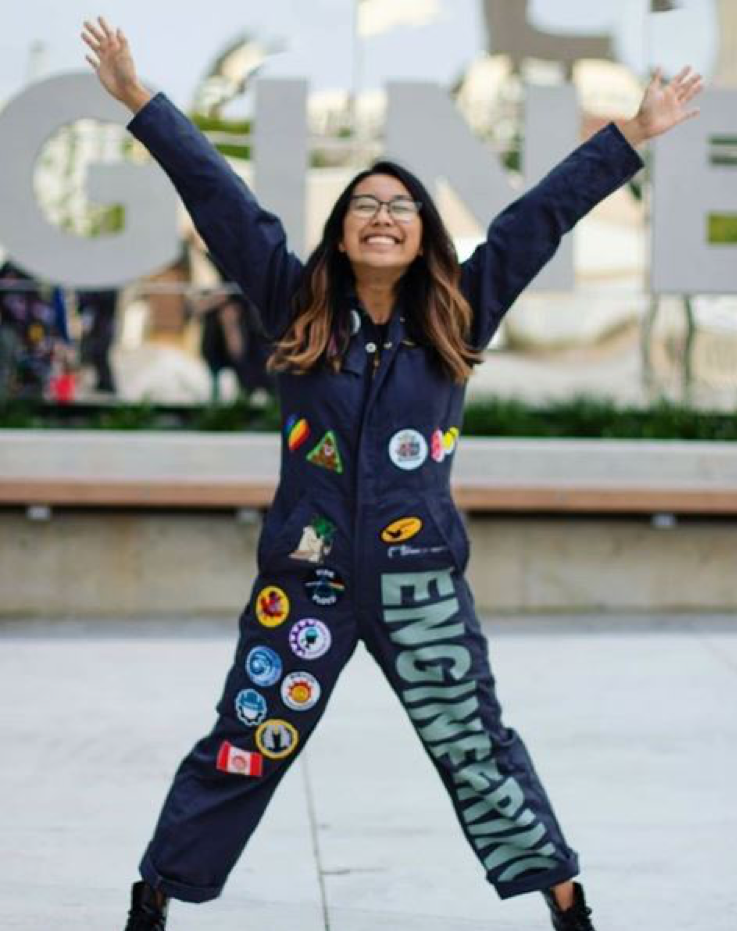
Stephanie Hill is a recent Ontario Tech University graduate in Mechanical Engineering with Mechatronics Specialization. She also recently won the capstone contest at Ontario Tech University.

Tell us a little about your capstone project:

My capstone project was a 3-axis CNC (computer numerical controlled) milling/engraving machine that was able to mill and engrave plastic, wood, and wax.

What made you decide that you wanted to be an engineer?

Growing up I wanted to be an inventor or scientist. When I was in grade 7 there was a presentation about engineering at my school and since that day, I realized that I Engineering was a potential career for me that combined everything that I loved about being an inventor or scientist and was slightly more realistic for me. Then in grade 10 attended Go Eng Girl and after that day I knew I really did want to go into engineering.

Which branch of engineering is your major? How did you decide on that specialty?

I choose Mechanical with Mechatronics specialization because in grade 11 and 12 I took computer engineering courses and loved the units on robotics, electronics and programming. All three of these are major components of mechatronics.

What do you plan to do with your engineering degree?

I plan to go into the automation field to help create or improve robotics to increase the applications, especially where it is dangerous for a human to complete the task. Another way I would like to use my engineering degree eventually is to help indigenous communities.

What advice would you give to someone who’s considering engineering but doesn’t know if it’s right for them?

I would suggest finding something in there that provides some type of experience, like a workshop or Go Eng Girl, to learn more about engineering and some of the things that engineers are responsible for.

In your opinion, how do you feel about the lack of women in engineering? What are some ways you have positively contributed to inspiring more women in engineering?

I feel that as a society we need more women in engineering, in recent years this has improved however there is more that needs to be done to help inspire more women to pursue engineering.  

Throughout my undergraduate degree, I have positively contributed to inspiring more women and other underrepresented groups to pursue engineering by volunteering each year for Go Eng Girl and Go Code Girl. I also have worked at engineering or STEM day camps to show that indigenous women can become engineers if they wish.

I also was a women in engineering mentor for female students in first year
engineering, helping them through the transition to university being.

Filed Under: #shareABLE, engHEROES, engSPIRATIONAL

ENGHERO: ZARA GEORGIS

by wemadeit

ENGHERO: ZARA GEORGIS

Zara Georgis is an Engineer-in-Training with practical experience in municipal transportation engineering. She received a Bachelor of Engineering in Civil Engineering from Ryerson University in 2016 and is an active member of Professional Engineers Ontario (PEO) and the Institute of Transportation Engineers (ITE). Her expertise includes using mathematical modeling to interpret data pertaining to traffic flow and to help make decisions about future developments.

What’s one thing you wish you knew about engineering back when you were in high school?

Do not be afraid to ask questions! Asking questions is one of the simplest and most effective ways of learning. It identifies gaps in knowledge and in turn strengthens your overall comprehension. In my experience, I found that studying in groups created a comfortable space to ask questions while also maintaining a healthy social life without burning out.

What’s your proudest accomplishment as an engineer?

I work on a lot of development planning applications in the City of Toronto and Greater Toronto Area and it is incredibly rewarding to see my work and projects come to fruition. I feel proud and accomplished knowing that I have done my part to ensure the safe and efficient operation of road networks upon completion of the developments.

What are you doing these days?

I work as a Transportation Engineer-in-Training at Nextrans Consulting Engineers.

Do you feel your work contributes to society? How so?

Absolutely! Civil engineers design, build and maintain the foundation for our modern society. As a Transportation Engineer-in-Training, it is my job to ensure the safe and efficient operation of road networks and to identify the need for road improvements. For example, determining safe speed limits for curves or proposing additional lanes to improve traffic flow.

Why do we need more female engineers?

We need more female engineers to encourage and inspire the next generation of young women. Gender stereotypes should not change the outcome of a women’s career potential. I like math and science. I like solving problems. I own a hard hat and steel-toe boots. I have a rewarding career in engineering and I am a woman!

Do you have any hobbies/passions that give you a unique perspective in engineering?

I used to be a gymnast so I pushed the limits of physics almost every day. I would apply my knowledge of physics to my training to determine the most effective way to execute a skill. I believe this made me more aware as a gymnast but also more informed as a student. I was more readily able to visualize concepts such as angular momentum and torque in class.

When you were becoming an engineer, were you nervous and stressed out about all the math and science? What made you push through and become an engineer?

I was a little nervous but I have also always enjoyed the challenge of sinking my teeth into a good math or physics problem. There is a great level of accomplishment that comes with solving difficult problems. This was my driving force to push through! I did not know I wanted to be an engineer in Grade 12 but I was told that engineering opens doors. Engineering teaches you how to think; it teaches valuable skills like critical thinking and problem-solving that are crucial to your success not only as an engineer but also in business, communication, and life.

Tell us about a cool project you’ve worked on.

I worked on a large-scale residential subdivision in the Greater Toronto Area. It required more creativity than a standard Transportation Impact Study. I had to design traffic calming measures within the road network and create a pedestrian and bicycle circulation plan with connectivity to the local parks and recreation area.

Filed Under: #shareABLE, engHEROES, engSPIRATIONAL

« Previous Page
Next Page »

Primary Sidebar

Categories

  • #shareABLE (70)
  • #surveySAYS (8)
  • engHEROES (50)
  • Engineering Disciplines (35)
  • engSPIRATIONAL (59)
  • Getting There (17)
  • Grade 11 (4)
  • Health (3)
  • Journeys (20)
  • Listen Up (5)
  • listenUp! (2)
  • More2Life (7)
  • Our Favourite Articles (2)
  • Press (3)
  • Recipes (2)
  • Reviews (5)
  • TED talk (17)
  • TheFieldTrip (5)
  • Uncategorized (4)
  • weTHINK (15)

Teacher Login

Register | Lost your password?

Sign Up To Our Newsletter

Footer

Menu

  • About WEMADEIT
    • Donor
    • Partners
      • Toronto Metropolitan University
      • Ontario Tech University
      • University of Waterloo
      • Western University
  • For Students
    • Blog
    • Getting There
      • Engineering Disciplines
      • Student Life
      • Where Can I Study?
      • What You Don’t Know About Engineering
      • ENG BLING
    • Black Students
    • Indigenous Students
    • 2SLGBTQIA+ Students
    • Women and Girls
  • For Parents
    • Where Can You Study Engineering?
    • What is Engineering?
  • For Undergrads
    • Gaining work experience
    • Peer Mentorship
    • One Awards
    • Next Generation in Power
    • New Grad Program
  • For Teachers
    • Teacher Resources
  • Getting Involved
  • Contact Us
    • Newsletter Signup

Search

Teacher Login

Register | Lost your password?

  • Facebook
  • Instagram
  • Twitter

© 2026 · WEMADEIT | Site Design by rtraction