
• Skip to primary navigation
  • Skip to content
  • Skip to primary sidebar
  • Skip to footer

We Made a Difference. We Made it Together. WEMADEIT.

  • About WEMADEIT
    • Donor
    • Partners
      • Toronto Metropolitan University
      • Ontario Tech University
      • University of Waterloo
      • Western University
  • For Students
    • Blog
    • Getting There
      • Engineering Disciplines
      • Student Life
      • Where Can I Study?
      • What You Don’t Know About Engineering
      • ENG BLING
    • Black Students
    • Indigenous Students
    • 2SLGBTQIA+ Students
    • Women and Girls
  • For Parents
    • Where Can You Study Engineering?
    • What is Engineering?
  • For Undergrads
    • Gaining work experience
    • Peer Mentorship
    • One Awards
    • Next Generation in Power
    • New Grad Program
  • For Teachers
    • Teacher Resources
  • Getting Involved
  • Contact Us
    • Newsletter Signup

#shareABLE

Saving Lives Through Warmth

by wemadeit

Saving Lives Through Warmth

Reference Article

For many of us, it’s hard to imagine going through the winter without your favourite sweater or coat – the things that keep us warm! Being exposed to really low temperatures for a period of time can result in a condition called hypothermia. Did you know that 1.5 million babies die from preventable and treatable causes every year according to the World Health Organization? And, that one of the preventable causes of death babies face around the world is hypothermia?

Grace Hsia, a materials science engineer, noticed this issue which led her to create Warmilu, a company dedicated to saving lives through spreading warmth!

The heating pack technology she worked on could produce heat by pushing on an activator disk, operating like a thermal battery and using stored heat. Unfortunately, it was prone to overheating. Grace and her team solved this problem by adding a thermal layer to act as a buffer. Once the heating pack is activated and placed within a pouch in a Warmilu blanket, it heats up, and can maintain a preterm baby’s body temperature for 5-8 hours!

This has the potential to save tons of lives.

Infant fatalities caused by preventable hypothermia across the globe are normally the result of a lack of access to resources like electric incubators. Incubators are small enclosed beds that warm up babies to the temperature they should be. Newborn babies, especially premature ones, have difficulty regulating their own temperature so these devices provide the warmth they need to stay alive. In areas with limited access to incubators, infants occasionally have to share the device, with multiple babies in one machine, which is far from ideal.

Grace and her team’s flagship product is thus a warming incubator blanket for infants, which is now distributed in 30 hospitals in 11 different countries.

Grace and Warmilu exemplify how you can use engineering to build a better world. Combining science and technology with social issues you care about is an incredibly powerful way to create change!

References

https://www.cake.co/conversations/9g8BY7f/grace-hsia-ceo-cofounder-of-warmilu-and-inventor-of-its-warming-technology-stops-by-for-a-cake-panel

https://warmilu.com:

https://warmilu.com/about-us/

Infant Warming
Tech
Why are incubators important for babies in the NICU?

Filed Under: #shareABLE, engSPIRATIONAL Tagged With: engineering, lives, saving, through, warmth

engHERO: Anna Mandra

by wemadeit

engHERO: Anna Mandra

What are you doing these days?

I am an Airworthiness Engineer at Bombardier Aviation (Canadian manufacturer of world-class business jet aircrafts). Currently, I am the Foreign Validation Focal. I support the certification of Bombardier aircraft designs with government authorities in each country that oversee the approval and regulation of civil aviation. In the past, I have been involved in aircraft design, certification and development, including working on the world’s largest and longest-range business jet, the Global 7500.

Also, now that I completed my PhD degree a year ago, I am working on publishing an article in an academic journal.

When did you know you wanted to be an engineer?

I always knew I was going to do something related to math and science – I did well in those subjects. At the same time, I knew I did not want to focus my higher education strictly on mathematical subjects. I liked the idea of the practical application of engineering. I had an appreciation for aircraft after participating in the air cadet programme throughout high school. This and my academic interests led me to pursue aerospace engineering.

What is your proudest accomplishment as an engineer?

My proudest academic accomplishment is completing my PhD, while working full time. Back in high school and undergrad, I never thought I would be capable of developing a complex math model which provided an innovative way of improving the efficiency of drilling. I never imagined I would be able to defend my research in front of experts. It took skills outside of engineering, and I had to push myself beyond my comfort zone. But I am really glad I did.

Work-wise, the best moments are when I am able to bring together a team of engineers with different expertise to complete a project. I was proud to overcome technical and non-technical obstacles within these projects and leverage everyone’s skill sets to come to a solution.

How does your work contribute to society?

As professionals, engineers commit to serve and protect the public in all their engineering endeavours.

In my current role, I guarantee that a design meets the certification standards wherever it is delivered around the world, ensuring the safety of the product. I am part of a team that makes sure Bombardier aircrafts are airworthy, meaning they continue to meet the standards required to fly safely.

My PhD contributes to society because scientific progress is one of the factors driving society. It shapes the next generation of engineers, designs or applications.

Bombardier’s Global 7500 Business Jet
Image Source

Why do we need more women in engineering?

Inventions made by engineers often shape our society, and our future. When women are equally represented in the profession, this will give them an equal opportunity to bring inventions to the market, and to benefit from rewarding careers. Having female representation in engineering brings different perspectives and shows it’s truly for everybody.

What advice would you give to young girls who are thinking of pursuing a career in the STEM field?

When I was in grade 9 and 10, I didn’t think that engineering was something that I would ever pursue. It seemed like this job, where you’re stuck at a desk all day, alone. But, engineering is so much more than that. If you really enjoy math and science, you should follow those passions, which can open many doors.

There are many different opportunities within engineering and in fields such as AI (artificial intelligence), programming (gaming, VR, robotics), and social media, that didn’t exist decades ago. It is never just sitting at a desk– engineering also involves working with large teams of smart, creative people.

Filed Under: #shareABLE, engHEROES, engSPIRATIONAL Tagged With: bombardier, engHERO, engineer, jet

engHERO: Zarana Bavishi

by wemadeit

engHERO: Zarana Bavishi

Q#1: What are you doing these days?

I work as a stress analyst in a landing gear place — it’s called Heroux Devtek. Basically, my job is to make sure that the landing gear we design is structurally strong, and it’s good for any kind of landing. I’m not sure if you remember the time the aircraft had to land on the Hudson River in the United States? So, we have to make sure the landing gear is intact and that it doesn’t cause any problems. 

Q#2: When did you know you wanted to be an engineer?

I actually knew in around grade 10. I was a part of this team that was called Formula 1 in school where we had to design tiny wooden cars that were propelled using carbon dioxide canisters. It would have to propel down 20 metres of track, and the challenge was to complete that in less than a second. Obviously, we couldn’t finish it in less than a second, but we were pretty good. We went through nationals, even an international competition [after] that. So, that was an eye opener, and I absolutely loved my time working on it, so I wanted to be an engineer. 

Q#3: How does your work contribute to society? 

I think it helps make sure that people are traveling safely, because these days it’s not just a car or a train; there’s more to that then traveling. I also think it’s very important that engineers know what they’re doing because if a doctor messes up, I mean I’m sure it happens, but that is one life. If an engineer messes up, there [are] millions of lives at stake. I think me doing my job would really benefit society in that way. 

Q#4: Why do we need more women in engineering?

Honestly, I just think that shouldn’t be a question to be asked these days because women should be everywhere. We’re in no comparison to guys, we’re equal! We’re in a world where everything [has equal value], where equality is something we shouldn’t have to fight for. So, honestly, if a woman wants to be in engineering, she should be! 

Q#5: Do you have any hobbies/passions that give you a unique perspective in engineering?

I do some puzzles here and there, but I don’t really have a specific kind of hobby that gives me an edge to engineering. Engineering is my passion and my job but I do things outside of that as well to make myself a little bit well rounded — still not there yet.

Q#6: What advice would you give to young girls who are thinking about pursuing a career in the STEM field?

Don’t get overwhelmed by who you talk to or who you see. Just think, what’s going to make you happy. [What] if 20 years from now, your fear stopped you from doing something, or actually enjoying what you do? If you want to delve into [engineering], try different things like solving puzzles or playing games that stimulate your mind. And if that still inspires you, you should go into engineering! Don’t get scared or overwhelmed by anybody you talk to who sounds like they know everything. No, we don’t know everything!

Filed Under: #shareABLE, engHEROES, Engineering Disciplines Tagged With: engHERO, engineering, hero, Ryerson

3 Super Cool Engineering Traditions

by wemadeit

3 Super Cool Engineering Traditions

Engineering has a very rich history with many fun traditions that have been performed by engineers all around the world for decades. Many of these traditions are still alive and well and are practiced regularly by engineering students in Canada and many other countries. Today we are going to learn about the history of three notable traditions that all engineers-to-be can look forward to participating in one day! 

Iron Ring Ceremony

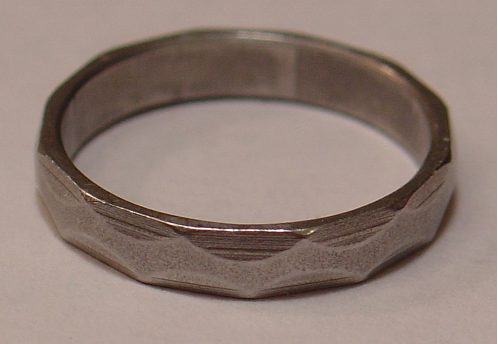
  • The Iron Ring is presented to graduating engineering students as a symbol of their dedication to holding up ethical standards in the profession once they are practicing engineers
  • The Iron Ring ceremony is primarily a Canadian Engineering tradition although there are some similar ceremonies in the United States
  • The first Iron Ring ceremony was performed in 1925 in Montreal 
  • The idea was created in 1922 by a University of Toronto professor, H.E.T Haultain
  • Now this ceremony happens annually at school across Canada! 

Purple!

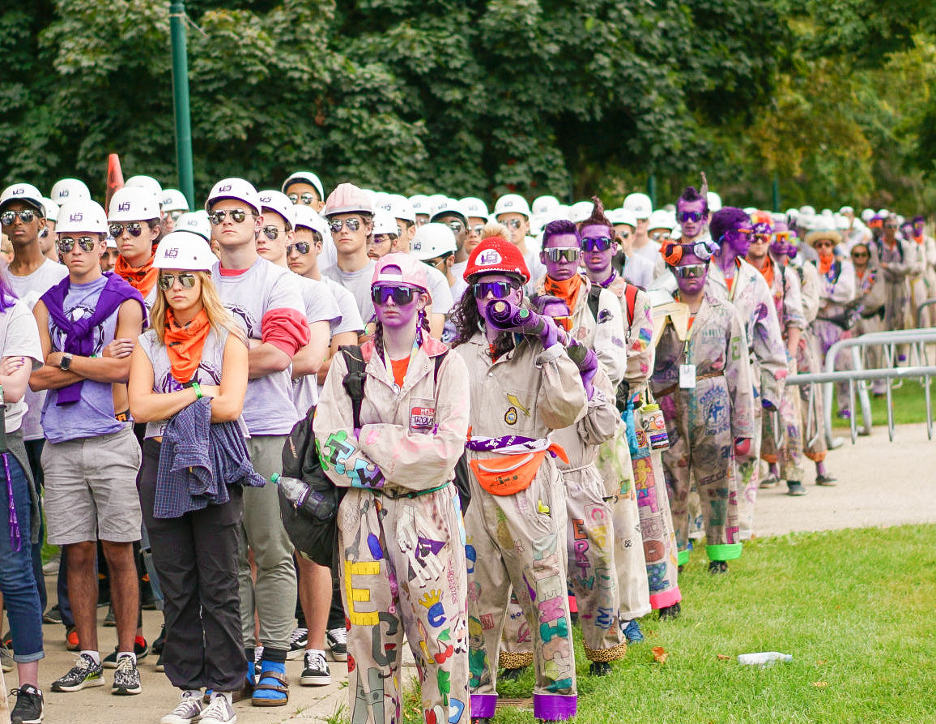
  • This was probably the strangest sight to see during the first week of university! Engineering students walking around with purple skin! 
  • Purple is a very significant colour for all engineering students. The origin of the purple traditions is not verified but it is said that this colour is used because it was the colour worn by the marine engineers on the Titanic, it is also speculated that it is because purple was the colour of the engineering corp in the British Miltary. 
  • During orientation week, new engineering students dye their skin purple in this super funny tradition!

Boiler Suits/ Patches 

  • Boiler suits are another very fun engineering tradition to look forward to! 
  • This tradition started in Sweden in the late 1960s and spread to Finland, Canada and other countries after that
  • Engineering students would write all over their boiler suits and attach different patches to their suits. They also trade patches with other students and collect as many as they can!

Filed Under: #shareABLE, engSPIRATIONAL, Journeys Tagged With: engineering, traditions, university

5 Weird things you can do with a Chemical Engineering Degree

by wemadeit

5 Weird things you can do with a Chemical Engineering Degree

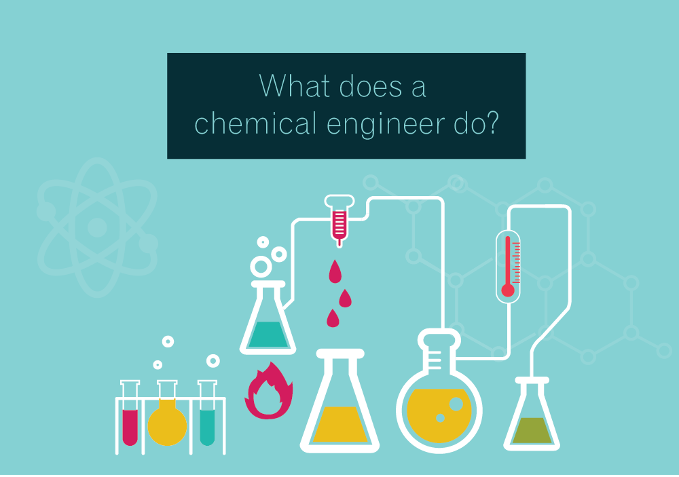
What is chemical engineering? Chemical engineering is a discipline of engineering that involves transforming raw materials and creating innovative processes in products to solve global issues. However, a chemical engineer is NOT a chemist. In fact, the two are quite different! Chemists spend most of their time conducting research with novel substances in a laboratory. While chemical engineering does involve the study of chemistry, chemical engineering focuses on applying the research done by chemists, and it also involves the application of biology, math and physics to create useful tools for society. There are lots of ways to apply a chemical engineering degree to help society. Below are some interesting industries you could work with as a chemical engineer:

1. Cosmetics

Many chemical engineers work in research labs and manufacturing plants that develop chemical-based products. New cosmetic products are the result of blending different chemical products, so you could work in a cosmetics industry as a chemical engineer!

2. Ice Cream

Similarly, to pharmaceutical, chemical and consumer product companies, ice cream development is a multiphase system. Chemical engineers in the ice cream industry control many different aspects that impact texture, taste and shelf life.

3. Toilet Paper

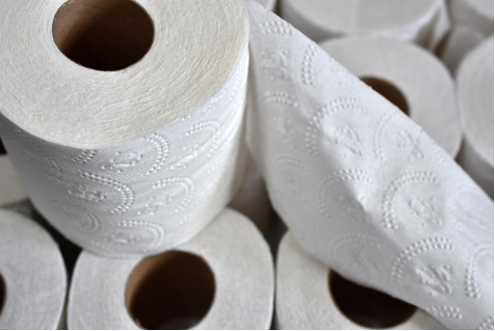
2020’s hottest commodity: toilet paper! Toilet paper can be manufactured from new or recycled paper. Then, chemical engineers use water, bleaches and different chemicals to break down the raw materials into usable fibers.

4. Toothpaste

Toothpaste is another must-buy product for most households An important ingredient in toothpaste in fluoride, as well as binders, abrasives, foaming agents, flavours and colourants. Chemical engineers experiment with these substances to find the perfect product to make our teeth sparkle!

5. Medicine

There are many opportunities for chemical engineers to get involved in the advancing medical and health sciences fields. One way is to develop new pharmaceuticals or medications like ibuprofen, acetaminophen, etc. Chemical engineers may also use bacteria, animal, and plant cells to increase the understanding of diseases, disease pathways, and human responses to drugs.

Filed Under: #shareABLE, Engineering Disciplines

Self-Employed Civil Engineers

by wemadeit

Self-Employed Civil Engineers

Being Your Own Boss is very Compelling

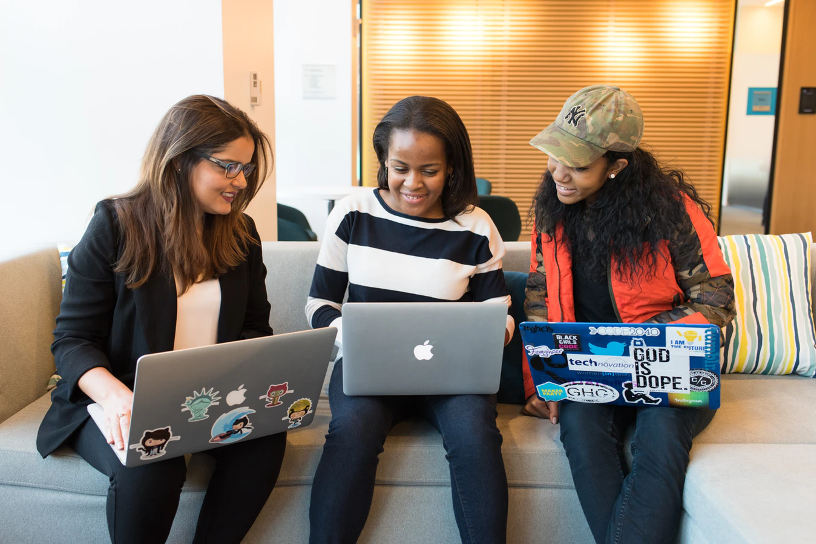
Making your own rules, and having complete control over your workload and earnings. This comes with freelance work and running your own business. Unfortunately, when people think of freelancers they often only think of IT workers. However, self-employed IT workers only make up 15% of the industry and is dropping steadily. Engineering is a profession that is often done in firms and large groups of collaborators, however, there is a new wave of civil engineers who are changing that landscape.

Why is Civil Engineering Heading Towards Self-Employment?

The number of civil engineers working for themselves rose by 33% between 2013 and 2018. An interesting point in this research is that large portions of these engineers are women. Currently, 4% of self-employed civil engineers are women (2,250) compared to 1.6% in 2013 (659). Self-employment is great when the work you are doing can be completed primarily independently, and works on a per gig basis. Access Financial chief executive Kevin Austin said the civil engineering sector’s project-based work “lends itself to self-employment”.

Kevin Austin also stated that there is a skills shortage in the transportation sector, which paves the way for civil engineers to fill that gap by working independently. Gig based work is also becoming an increasing trend in the economy today, this can be attributed to deteriorating employee benefits in companies. It is becoming harder to find a stable job that offers everything you want both financially, through the form of benefits,  and long term needs.

What Types of Gigs Can You Expect?

The initial stages of freelancing work often take place online. As a freelancer, you want to make sure you are utilizing as many platforms as possible to ensure that your schedule is busy with clients and work. This can be difficult if your network is just beginning to grow, and you need to build a strong reputation. Instead of clients coming to you directly, freelancers often use websites such as; freelancer.ca, workana.com, and upwork.com.

Once you have logged onto these sites and the search has begun, what can you expect to find as a civil engineer? Well, there is a great deal of speciation and variety when it comes to civil engineering postings online. Take this, for example, there is gig-based work posting on freelancing.ca calling for designers of racetracks. The posting can also be more generalized such as; construction manager, structural engineer, and concrete designer. There are also other job postings on these sites including; 3D design artists, and report writing experts.

There is a Demand

As you can see, there is a demand for independent contractors among all positions under the umbrella of civil engineering. With this demand comes a huge opportunity for upcoming civil engineers. Since freelance civil engineers are becoming very popular, there are more and more reasons to join this profession. Becoming your own boss has never been so easy.

Filed Under: #shareABLE, Engineering Disciplines

« Previous Page
Next Page »

Primary Sidebar

Categories

  • #shareABLE (70)
  • #surveySAYS (8)
  • engHEROES (50)
  • Engineering Disciplines (35)
  • engSPIRATIONAL (59)
  • Getting There (17)
  • Grade 11 (4)
  • Health (3)
  • Journeys (20)
  • Listen Up (5)
  • listenUp! (2)
  • More2Life (7)
  • Our Favourite Articles (2)
  • Press (3)
  • Recipes (2)
  • Reviews (5)
  • TED talk (17)
  • TheFieldTrip (5)
  • Uncategorized (4)
  • weTHINK (15)

Teacher Login

Register | Lost your password?

Sign Up To Our Newsletter

Footer

Menu

  • About WEMADEIT
    • Donor
    • Partners
      • Toronto Metropolitan University
      • Ontario Tech University
      • University of Waterloo
      • Western University
  • For Students
    • Blog
    • Getting There
      • Engineering Disciplines
      • Student Life
      • Where Can I Study?
      • What You Don’t Know About Engineering
      • ENG BLING
    • Black Students
    • Indigenous Students
    • 2SLGBTQIA+ Students
    • Women and Girls
  • For Parents
    • Where Can You Study Engineering?
    • What is Engineering?
  • For Undergrads
    • Gaining work experience
    • Peer Mentorship
    • One Awards
    • Next Generation in Power
    • New Grad Program
  • For Teachers
    • Teacher Resources
  • Getting Involved
  • Contact Us
    • Newsletter Signup

Search

Teacher Login

Register | Lost your password?

  • Facebook
  • Instagram
  • Twitter

© 2026 · WEMADEIT | Site Design by rtraction